
Energy industry celebrates Supreme Court ruling in favor of Chevron
The U.S. Supreme Court’s ruling in favor of Chevron is being celebrated by the energy industry, but it does not end Louisiana’s coastal litigation.
The justices ruled 8-0 that Chevron can pursue the Plaquemines Parish case in federal court, handing the company a significant procedural win without resolving the underlying liability claims. More than 40 related coastal cases remain pending, and while the decision could help other defendants push for federal jurisdiction, those disputes will still have to be litigated individually and are likely to face years of further appeals.
In other words, the ruling may reshape where these cases are fought more than whether the companies ultimately prevail. For industry defendants, that alone is a major victory. Federal court is generally viewed as a more favorable venue for challenging the scope of the claims, the historical evidence and the state-law theories underlying Louisiana’s long-running coastal lawsuits.
Attorney General Liz Murrill and the state have been at odds with the oil and gas industry over their support for Plaquemines Parish and they remain confident in the merits of the alleged damages.
“A jury in one of the most conservative, pro-oil and gas communities in the country found that Chevron was liable for billions of gallons of toxic waste dumped into the Louisiana marsh,” Murrill said in a statement. “It doesn’t matter whether this case is in state court or federal court – I am confident the outcome will be the same.”
Pro-industry groups were quick to frame the ruling as more than a technical jurisdiction decision, casting it instead as a broader rebuke of what they see as litigation-driven energy policy.
“The ruling is a downpayment on protecting United States energy dominance,” Mike Toth, research director at the Civitas Institute, told The Center Square. Toth said the decision could help chart a path not only for Louisiana’s coastal suits, but for other climate cases targeting the energy industry now moving toward the high court.
One such case is Suncor Energy v. County Commissioners of Boulder County. That case, though distinct from Chevron v. Plaquemines, also raises major questions about whether federal law should displace or limit state-law claims aimed at energy companies for harms tied to broader interstate and international emissions.
Christopher Mills, a constitutional lawyer and former law clerk to U.S. Supreme Court Justice Clarence Thomas, cast the decision as a defense of federal contractors more broadly.
“The Supreme Court unanimously vindicated the promise of a neutral federal forum for those who help carry out the federal government’s duties,” Mills said. “Especially in a time when the government increasingly relies on outside contractors and others to fulfill essential functions, this protection is vital to the government’s operation and the rule of law.”
The Louisiana Oil and Gas Association struck a similarly celebratory tone, calling the Chevron ruling only the “first step toward justice.”
“This is a huge, but incremental win for our industry,” the group said in a statement. “For far too long, frivolous lawsuits, whether it be coastal or legacy, have pushed investment out of our state.”
The group argued that the defendants were encouraged and permitted by the state to develop Louisiana’s coastal region decades ago, while the state simultaneously collected severance taxes and royalty revenue tied to that activity. LOGA also tied the litigation to what it described as a long decline in drilling, production and oilfield service activity in Louisiana’s state leases and inland waters.
“This case is as frivolous as the ones by liberal cities like Baltimore who sue oil and gas for climate change — while they sit in their air-conditioned offices,” the group said. “Today’s ruling from the Supreme Court is the first step towards justice.”





Mostly Sunny
Latest News Stories

Key races across U.S., redistricting at stake as voters head to polls Tuesday

Meeting Summary and Briefs: Casey Township Library Board of Trustees for October 2, 2025

Nigeria leaders deny Christian genocide, UN attributes violence to ‘climate change’

Congressional Perks: House members, staff get daycare, on-call doctor
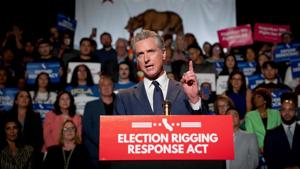
California leaders hope for high voter turnout for Prop. 50

Voters to decide two statewide measures, nearly 100 local proposals

WATCH: Coalition sues to protect student loan forgiveness

WATCH: California attorney general talks about Prop. 50

Illinois quick hits: Man charged with threatening Trump; judge grants injunction in shelter funding case

WATCH: IL GOP Rep: Sanctuary expansion bill may expose many to civil lawsuits

Senators introduce legislation to codify Antifa terror designation

DHS proposes billion dollar expanded DNA testing for immigrants