‘Plaintiffs’ lawyer paradise:’ IL lawsuit-friendly courts jack up costs, report says
Illinois is falling behind the rest of the country at reforming its court system, and in some ways is headed in the opposite direction. And the costs to the state’s economy and its residents are mounting, a new report says.
The U.S. Chamber of Commerce’s Institute for Legal Reform has released a report diving into what it calls the “plaintiffs’ lawyer paradise” of the Illinois state court system.
“Personal injury lawyers flock to Illinois for a reason: Its courts are open to no-injury class actions and provide an inviting environment for asbestos and other mass tort litigation,” the ILR said in its report. “Illinois’s laws have not kept up with the times and subject businesses to excessive liability.
“The costs of this environment are borne by Illinois residents. Excessive litigation drives up the price of goods and services, increases insurance premiums for drivers and homeowners, discourages investment, and strains public resources.
“A liability system that is perceived as unpredictable and unfair drives businesses away from investing in the state and weakens Illinois’s economic competitiveness.”
The report, issued earlier this month, notes that what it calls “lawsuit abuse” is proving increasingly costly to Illinois and its residents. Citing data from a study conducted by the Brattle Group, the ILR report indicates lawsuits soak up about 2.1 percent of Illinois’ economic output, or more than $21 billion annually. And that places an estimated burden of $4,281 in increased insurance premiums and other economic tolls per household per year, the report said.
While not the worst in the country — lawsuits, for instance, place an estimated burden on Florida residents of $5,768 per household, and 3.3% of their state’s GDP, while New Yorkers are hit with estimated costs of $7,027 per household and 2.6% of GDP — the costs are significantly greater than those carried by residents of Illinois’ neighboring states.
Wisconsin, for instance, has an estimated per household lawsuit cost burden of $2,538 per household, while Indiana’s and Missouri’s estimated lawsuit costs are $2,962 and $3,387 per household, respectively, the report says.
The report blames the increased costs primarily on the willingness of Illinois’ Democratic supermajority legislature to make Illinois an increasingly welcoming destination for trial lawyers and lawsuits.
The report notes that, across the country, many U.S. states are enacting reforms to curb perceived lawsuit abuse and address “emerging issues of concern” in a bid to reduce the cost impact on their economies and residents.
However, in Illinois, the report said “Illinois has not adopted significant reforms in decades,” and those reforms it does enact come only after years of lawsuits so economically harmful that the situation becomes “so untenable that the ordinarily liability-friendly Illinois legislature was compelled to intervene.”
That occurred most recently in 2024, when Illinois Democratic lawmakers reformed the state’s unique and stringent biometrics privacy law, addressing what courts called “absurd” and “astronomical” payout demands from trial lawyers who unleashed a torrent of thousands of class actions under the Biometric Information Privacy Act (BIPA) against businesses of all sizes and types operating in Illinois and beyond.
The reforms notably did not cut off the class action path, but only made them less potentially lucrative.
In the meantime, the report noted, Illinois lawmakers have taken steps in recent years to make Illinois more attractive to lawsuits, enacting measures that greatly expand the number of businesses from throughout the country that could be dragged into Illinois courts and that tack on potentially costly “prejudgment interest” to judgments entered against businesses who choose to attempt to defend themselves against lawsuits.
At the same time, the ILR report noted Illinois courts continue to operate under an increasingly rare standard of evidence, known as the Frye standard, which makes it easier for plaintiffs to introduce what has been called “junk science” testimony and evidence in civil lawsuit cases, to boost their chances of securing a significant payday.
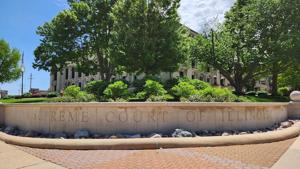
And the ILR said the Illinois Supreme Court remains among the most friendly venues for trial lawyers, not only swatting down attempts at reform, but also allowing trial lawyers to expand theories of liability under which businesses can be targeted and their resulting payouts.
They noted Illinois’ refusal to limit potential lawsuit payouts has led to the state ranking fifth in the country for so-called “nuclear verdicts,” or jury verdicts in civil lawsuits that order payouts of $10 million or more.
The state had tied with Georgia for that figure. But Georgia has responded by enacting reforms to limit such damage awards, while Illinois has ignored calls for such reforms, the ILR said.
The report noted three Illinois county court systems, Cook County and Madison and St. Clair counties, account for massive amounts of the state’s overall litigation, thanks in large part to their reputations as friendly venues for asbestos-related lawsuits.
And the report said Illinois further ranks among the leaders at expanding theories of so-called “public nuisance,” converting the category into a “catch-all doctrine that could apply to an almost limitless range of circumstances” to produce lawsuits against companies who sell legal and essential products, “including fuel, paint, automobiles, firearms, pharmaceuticals, and even beverages sold in plastic bottles.”
They noted, for instance, trial lawyers have partnered with the city of Chicago to attempt to secure potentially billions of dollars from oil and gas companies to account for the “societal costs” associated with the use of essential petroleum-based fuels, such as gasoline and diesel.
The report asserts such lawsuits threaten harm to the U.S. economy and Illinois, by “destabilizing essential sectors of the economy” and “creating uncertainty about whether lawful commercial conduct may later be reframed as a ‘public nuisance,'” allowing “entire industries” to be exposed to “potentially boundless liability untethered from established legal principles.”
The ILR report asserts such a permissive environment for massive, costly lawsuits makes Illinois a less attractive destination for businesses seeking to launch or expand, harming the state economy.
The new ILR report builds on other data released earlier this year by other legal reform advocates, including Citizens Against Lawsuit Abuse. The CALA report indicated, for instance, that the cost burden on Illinoisans from so-called lawsuit abuse is only continuing to increase.
Just as the ILR, the CALA group urged Illinois to enact reforms, including new measures to rein in so-called “third party litigation financing.” Under such an arrangement, investors loan money to trial lawyers to file lawsuits, in exchange for a promise of a share, and perhaps the lion’s share, of any settlement or judgment.
In some instances, such arrangements have empowered such third-party lawsuit funders to intervene directly to shut down settlements the investors believe fall short of what they believe the lawsuit should have been worth, extending the time such lawsuits remain in court.
Critics say such third-party funding leads to more lawsuit activity and increased burdens on Illinois’ already backlogged courts, while driving up insurance costs.
“Illinois families are paying a lawsuit tax whether they realize it or not,” said Phil Melin, Executive Director of Illinois CALA, in a statement released earlier this year announcing the CALA study. “This new data confirms what homeowners, small businesses, and employers already feel every day. Lawsuit abuse is driving up costs, suppressing jobs, and weakening our state’s competitiveness.”
In response, however, the Illinois Trial Lawyers Association asserted such conclusions miss the mark.
In a statement in early April, Timothy J. Cavanagh, a trial lawyer and president of the ITLA, called such claims about a “hidden tax” caused by lawsuit activity “nothing more than a misleading marketing slogan pushed by corporate front groups aiming to enable companies to avoid paying a price for hurting people.”
Cavanagh asserted lawsuit activity in Illinois is actually decreasing, as total civil filings “have fallen by 61 percent over the past decade.”
“Rising costs for food, gas, electricity, and insurance are affecting every state, including those with weaker legal protections. It is misleading to blame Illinois’ civil justice system for a nationwide issue,” Cavanagh said.






Sunny
Latest News Stories

Gilbert’s Shutout and Seven-Run Fourth Inning Propel Casey-Westfield Past Centennial, 10-0

District to Purchase Discounted Floor Burnisher for Junior/Senior High School

Casey-Westfield Capitalizes on Oakwood Errors, Holds On for 6-3 Victory
Casey-Westfield Capitalizes on Free Bases in 14-1 Rout of ALAH

Board Grants Fire Department Building Access, Upholds Wednesday and Sunday Sports Restrictions

Marshall Board of Education Approves Over $88,000 in Emergency Repairs and Fine Arts Upgrades

Meeting Summary and Briefs: Casey Township Library Board for February 5, 2026

Casey Township Library Announces “Plant a Seed, Read” Summer Program and Imagination Library Milestones
Goble Dominates in the Circle, Casey-Westfield Offense Explodes in 15-0 Rout of Woodlawn

Casey-Westfield Board Approves Principal Contracts, Hires New Head Football Coach

Everyday Economics: The Fed faces a slowing economy and a new inflation shock
Poll: Slim majority of Americans unhappy with Trump’s job performance, economy
Most voters support bans on transgender athletes in female sports