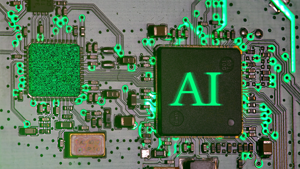
Human capabilities focused in student, teacher artificial intelligence guide
Teacher’s guide learning modules and self-assessment tools for students are part of the third annual Student Guide to Artificial Intelligence, a production of Elon University, the American Association of Colleges and Universities, and The Princeton Review.
“Capacities such as critical inquiry, ethical reasoning, creativity and communication are more important than ever because they enable students to engage AI thoughtfully, question its outputs and apply knowledge with judgment and purpose,” said President Lynn Pasquerella of the AAC&U.
Authors say, “The guide draws on 10 voices across centuries and cultures – from Aristotle, Cicero and Descartes to Mencius and Ptahhotep – whose enduring insights into human judgment, creativity, ethics and wisdom take on new urgency as AI reshapes how we learn and work.”
Artificial intelligence is a burgeoning influence on the world. In American, second-term Republican President Donald Trump has reversed a number of Biden era policies inclusive of deregulation, accelerating private-sector innovation and promotion of “ideologically neutral” artificial intelligence. He’s concerned with competition from China.
In April, the Elon University Imagining the Digital Future Center and Elon University Poll found 82% believing artificial intelligence will play “a significantly larger role in shaping people’s lives and key societal functions in the next 10 years or less.” The resilience infrastructure is to “counterbalance the human and systemic challenges posed by widespread AI adoption.”
The sampling Dec. 26 to Feb. 12 invited more than 4,000 experts to weigh in.
“The central risk described by these experts is not a single catastrophic AI event,” said Janna Anderson, professor of communications and senior researcher for the center. “They said accelerated AI use will lead to a cumulative reallocation of human agency until people and institutions find it harder to question, contest or even notice what has changed. That drift can look like ‘progress’ in the short term, but it has a price – the gradual weakening of human judgment, accountability, shared truth and the social fabric that makes self-government possible.”
Rob Franek, editor in chief at The Princeton Review, said students are “both excited by AI and uncertain about how to use it well.”
“What they’re really looking for is guidance,” he said. “This field guide meets that moment by translating big ideas – like critical thinking, creativity and ethical decision-making – into practical habits students can use every day.”
More than 4,000 colleges, universities, schools and organizations access Student Guide to Artificial Intelligence publications. More than 87,000 users in 170 countries have been provided information through the guide’s website.
The American Association of Colleges and Universities, headquartered in Washington, is an international organization billing itself as “a global membership organization dedicated to advancing the democratic purposes of higher education by promoting equity, innovation, and excellence in liberal education.”
The Princeton Review, headquartered in New York City, is not affiliated with Princeton University. The private organization provides test preparation, tutoring and college admission services.




Mostly Cloudy
Latest News Stories

WATCH: WA Democrat income tax supporter questions ‘necessity clause’ nixing public vote

DOJ to face audit for handling of Epstein files release

ISU strike enters third week; union sues over alleged strikebreaking

Trump extends Jones Act waiver, citing national securit

Trump admin continues to crack down on fraudulent visa schemes

Virginia 1 of 4 in courtroom battles for congressional redistricting

Mt. Carmel Offense Explodes Early in 12-4 Rout of Casey-Westfield

Goble Tosses Shutout, Casey-Westfield Outlasts Mt. Carmel 1-0 in Extra Innings

Illinois Quick Hits: State gaming board renew Rockford casino license

Arizona GOP pushes to protect Colorado River’s limited water

Republicans challenge Clyde in Georgia’s 9th District

Fort Bragg soldier’s case continues Tuesday in New York