
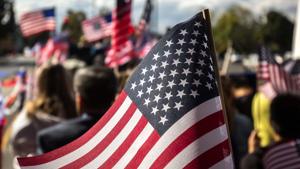
U.S. House to vote on bills targeting fraudulent, foreign election donations
The U.S. House committee that oversees election laws advanced multiple bills Thursday to stop fraudulent campaign donations and foreign influence in elections.
Three of the Republican-led bills arose out of committee Chairman Bryan Steil’s, R-Wis., three-year investigation into online campaign fundraising platform ActBlue.
“Our current campaign finance laws were not written for the digital age,” Steil said during the Thursday markup. “Through our investigation, we’ve learned that fraudsters and foreign nationals could exploit the current system to make illegal campaign finance contributions. That’s an unacceptable vulnerability and we have an opportunity to fix it.”
Steil’s three-year investigation into ActBlue not only revealed the platform’s “weak” fraud prevention practices, but more importantly identified security gaps in America’s existing campaign financing laws.
To close those potential loopholes for fraud, the Campaign Finance Transparency Act would require political donations made via credit or debit card to include a CVV/CVC number, billing zip code, and a name that matches the name of the donor.
It would also prohibit political contributions via prepaid gift cards and require platforms to report all political donations, not just those over a certain dollar amount.
Contributions made from donors without a U.S. mailing address would require document verification to ensure that foreign actors are not using American identities to funnel money to preferred political candidates.
The other two bills sent to the House floor – the Preventing Foreign Interference in American Elections Act and the Stop Foreign Funds in Elections Act – aim to prevent foreign money from influencing how U.S. elections are conducted and what proposals make it to the ballot.
“Foreign nationals cannot be allowed to influence American elections,” Steil said. “That’s why I introduced the Preventing Foreign Interference in American Elections Act, which bans foreign nationals from donating to electioneering activities. This includes voter registration, get out the vote efforts, and ballot harvesting.”
In 2024, foreign billionaires moved money through nonprofit “dark money” groups like the Sixteen Thirty Fund to support progressive ballot initiatives related to abortion access and automatic voter registration in multiple states, including Ohio, Arizona and Nevada. Such activities are currently legal under federal election laws.
With the midterm elections quickly approaching, the Republican-controlled Congress has amped up attempts to reform or restructure election and voting laws, arguing that both federal and state-level election rules are inadequate to protect election security and prevent fraud.
The House-passed SAVE America Act, which would strengthen voter identification requirements nationwide, faltered and effectively died in the Senate after it became clear that every Democratic senator would oppose it.





Chance Showers And Thunderstorms
Latest News Stories
Costco faces lawsuit as consumers seek refunds from invalid tariffs

Insurer won’t back Gori defense vs asbestos lawsuit fraud claims

With teachers union support, committee approves charter school mandates

Allstate can’t delete class action over alleged secret app tracking
Chicago voters view housing affordability as bigger issue than crime

New Illinois gun bill aims at glock switches; critics say it misses the real problem
Illinois quick hits: Cook County spends nearly $20 million on food, housing services; Chicago Teachers Union tells teachers, students to skip school; Russell Dickerson to play Du Quoin State Fair

Meeting Summary and Briefs: Casey-Westfield School Board for Feb. 23, 2026

Illinois quick hits: Services Saturday for teen killed by line drive
Critics concerned seizure detection bill impacts Illinois’ small businesses
CTA security enhancement plan follows federal push, complaints
Lawyers who specialize in suing Chicago cops seek special prosecutor to go after ICE
IL Labor Relations Board director: Rideshare unionization bill could double budget
Meeting Summary and Briefs: Casey City Council for March 2, 2026
