Hundreds of Uber drivers demand union-permitting bill move in Springfield
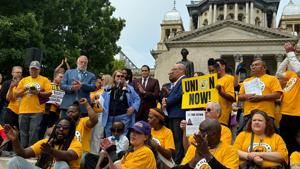
(The Center Square) – Nearly 400 drivers for platforms like Uber and Lyft appeared at the Illinois Capitol, where they urged lawmakers to move forward with Senate Bill 2906, which would give collective bargaining rights to many of the independent contractor drivers.
Aside from the unionization, the current Senate version would also impose a new fee of 4 cents per trip, which would go to a Rideshare Workers Support Fund, and could be increased based on the Consumer Price Index each calendar year.
Sponsor of the bill, state Sen. Ram Villivalam, D-Chicago, characterized the bill as one that would result in better working conditions, wages and increased job benefits.
“We would like the corporations that are making, I think, $43 billion dollars in profit to do the right thing. But because they won’t on their own, we’re going to make them,” Villivalam said.
The Illinois Labor Relations Board, however, has pushed back. In March, Director Kimberly Stevens told a House committee that their chamber’s version of the bill presents a conflict of interest in the per-ride fee.
Stevens said the conflict is that the board would be managing funds for unions it also regulate.
She told lawmakers her agency doesn’t collect fees and would not be able to provide information or data about employers to the union, as it isn’t within their purview.
The amended Senate version attempts to correct the conflict by allowing the board to contract a third-party organization for the services.
Sen. Robert Peters, D-Chicago, spoke of affordability in the state, and issues drivers face, including sometimes suspending driver accounts over unfounded claims.
“It is our time and our moment to get what we need. So, we’re going to get a union in the state and we won’t take no for an answer,” Peters said.
Ronnie Gonzalez, a representative with the International Association of Machinists Union, explained why the group feels it needs the ability to bargain with the companies, even though they are not traditional employees.
“While these advancements and technologies have been enjoyed by the passengers, the workers are left behind by federal and state labor laws that do not recognize their changing in work environment,” Gonzalez said.
Gonzalez previously told The Center Square that stakeholders concerned with the per-ride fee over cost to riders are unfounded, and if they required the companies to instead pay into the fund, there would be less transparency for consumers.
The bill has been continuously postponed in the Labor Committee since mid-April, with no hearing scheduled.






Sunny
Latest News Stories

Meeting Summary and Briefs: Casey City Council for Feb. 2, 2026
Council Votes to Reclaim Downtown Properties After Development Stalls
Meeting Summary and Briefs: Casey-Westfield Board of Education for Jan. 26, 2026

Casey-Westfield FCCLA Ranked No. 1 in Region for Service Hours
Senate Bill Secures $1 Million for Casey Sewer Improvements
EXCLUSIVE: 5 largest U.S. cities don’t have enough money to pay bills: report
INVESTIGATION: Wisconsin university closes DEI unit but keeps most staff working on equity issues
Board Approves Updated School Resource Officer Agreement
Casey Advances Housing Strategy with Land Bank Transfers and Inspection Contract
Chicago’s $41 billion financial hole exposes city’s pension crisis
Trump seeks $1B from Harvard in federal funding dispute
Lawmakers react to U.S. Supreme Court’s ruling on Prop. 50