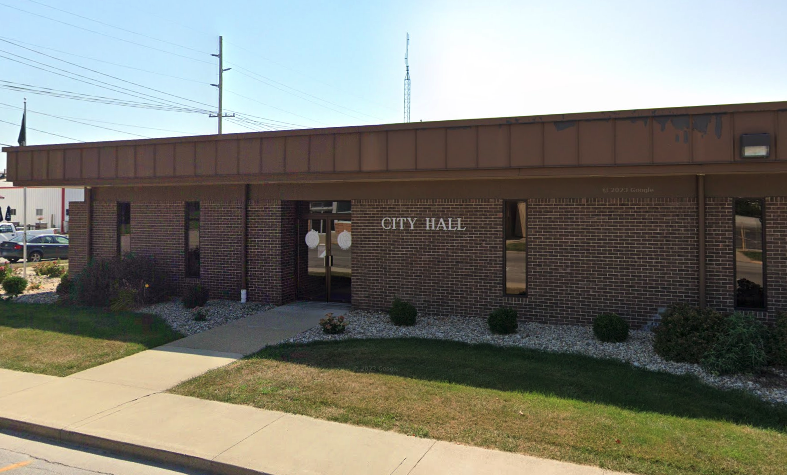
Casey to Raise Utility Rates Across Gas, Electric, Water and Sewer After $900,000 Shortfall
Casey City Council Meeting | May 18, 2026
Article Summary: The Casey City Council on Monday, May 18, 2026, approved increases to gas, electric, water and sewer rates after the city’s utility operations fell more than $900,000 into the red, driven largely by the loss of roughly 170 billing households. Officials said the average resident’s bill will rise between about $16 and $24 per month.
Casey Utility Rate Increase Key Points:
- The council passed three separate ordinances — No. 627 (gas), No. 629 (electric) and No. 630 (water and sewer) — each on unanimous votes, effective with the June billing cycle.
- Sewer rates rise 8 percent; water adds a $2 base-rate increase plus 4 percent; gas adds a $1 base-rate increase plus 3 percent; and the electric change eliminates an existing discount.
- The city has lost roughly 170 billing households, amounting to about $40,000 a month in lost revenue, and utility operations are more than $900,000 in deficit.
- The committee will review the rates every 90 days, with a fuller review planned after August billings are collected.
CASEY — The Casey City Council on Monday, May 18, 2026, voted to raise rates across all four of the city’s municipal utilities, with officials describing the increases as a difficult but necessary step to stabilize a utility system that has fallen more than $900,000 into deficit.
Acting on a recommendation from the Public Utility Committee, which met May 13, the council approved three rate ordinances in succession. Alderman Lori Wilson, who presented the committee’s report, said the increases stem from years of deferred action and rising costs. “Unfortunately, we are going to have to raise rates,” Wilson said. “This all stems from previous councils not doing anything and just repairs in general and the cost of just the cost of living is where we’re at with this.”
Wilson said the committee — consisting of herself, Alderman Steve Jenkins and Alderman Marcy Mumford — met with Mayor Mike Nichols and City Treasurer Gail Lorton to work through the figures before bringing them forward.
The Numbers Behind the Increase
Under the approved changes, the sewer rate rises 8 percent. The water rate adds a $2 base-rate increase plus a 4 percent increase. For electric, Wilson said the only change is the elimination of an existing discount. Gas rates rise 3 percent plus a $1 base-rate increase. The committee report from May 13 confirms each of these figures.
Wilson said the underlying problem is a shrinking customer base. “We’ve lost basically 170 households that we had billing and that works out to about 40,000 a month that we’ve been losing,” she said. “This is going to help offset that a little bit.”
To illustrate the impact on residents, Wilson said the treasurer ran sample bills for four council members. Her own bill rose by a total of $16 across all utilities, she said, while the largest increase among the four samples was $24. “It’s not a huge increment, but if you take that over 170 households, it’s going to make up quite a bit of the difference that we’ve got,” Wilson said.
Nichols framed the increases as the price of keeping Casey’s utilities locally owned and operated. “We’re very fortunate to have our own electric, gas, water, sewer,” he said, noting the city is one of few small communities to run all four. “I will gladly pay the 16 bucks to keep all my utilities independent, self-owned, and our own people working on them.”
Why Three Separate Ordinances
State procedure required the rate changes to be split into three ordinances, one for each utility category. The council approved Ordinance No. 627, amending the chapter of the city code governing gas rates, on a unanimous roll call. It then approved Ordinance No. 629, amending Ordinance No. 589 and the electric-rate chapter of the code, also unanimously. Finally, the council approved Ordinance No. 630, amending the chapters governing water and sewer rates, with amendments, on a unanimous vote. Alderman Jeremiah Hanley made the motions on the gas and water/sewer ordinances.
Wilson said the increases must take effect for the June billing cycle. She added that the committee has set up a system to monitor the rates every 90 days, once per quarter, with adjustments made as needed. A fuller review is planned after August billings are collected, around September.
Nichols said the deficit took shape over recent months. “We had to do something because we was over 900,000 in the hole,” he said. He tied the city’s financial recovery to growing its population, pointing to ongoing work with a regional land bank to bring new homes to Casey. The mayor said the city’s household count has fallen from roughly 3,240 before the COVID-19 pandemic to about 2,550 now.
Partly Sunny
Latest News Stories

GOP congressional candidate calls single-stream recycling a ‘sham’

Minnesota GOP calls for removal of Rep. Gomez after ‘sickening’ exchange

Census: Majority of fastest growing cities in U.S. are in Texas

Michigan House Republicans demand Benson release SPLC records

Lone Tennessee U.S. House Democrat, Cohen, says he’s done

Illinois Quick Hits: Madigan: ‘Accept the federal scholarship tax credit’

Lawmakers spar with Fairfax County leaders over sanctuary policies

Advocates call on tax reform to reduce national debt

Supreme Court allows mail-order abortion drugs

McCuskey, coalition of AGs urge SEC to review OpenAI

Springfield strains for balanced budget; Illinois revenue forecast shifts down

DOJ targets healthcare fraud in California, Arizona, Nevada