Walz appoints members to Operation Metro Surge ‘Truth Council’
Minnesota Gov. Tim Walz has appointed members to a new council tasked with documenting the impacts of Operation Metro Surge and Operation PARRIS, two federal immigration enforcement operations that sparked controversy, litigation and criminal investigations that remain ongoing.
Walz, a Democrat, announced the appointments to the Governor’s Council on Recording the Truth of Operation Metro Surge and Operation PARRIS on Minnesotans, also referred to as the Minnesota Truth Council.
The council will be chaired by former Hennepin County District Court Judge Peter Cahill, who presided over the 2021 murder trial of former Minneapolis police officer Derek Chauvin following the death of George Floyd.
“Documenting history requires trusted leaders who are committed to listening, preserving people’s experiences, and ensuring that Minnesota’s story is not forgotten,” Walz said. “These council members bring deep expertise, lived experience, and a shared commitment to the truth. Their work will help create a lasting public record of both the harm endured and the resilience Minnesotans demonstrated during this difficult chapter in our state’s history.”
Members include representatives from education, civil rights, business, health care, law enforcement and community organizations across Minnesota.
The council was created through Executive Order 26-05, signed by Walz in March. That order directed the group to gather testimony, data and firsthand accounts related to Operation Metro Surge and Operation PARRIS and develop recommendations aimed at preventing similar events in the future.
The order described Operation Metro Surge, launched by the Department of Homeland Security in December 2025, as the largest immigration enforcement action in agency history. Operation PARRIS followed in January 2026 and focused on refugee communities in Minnesota.
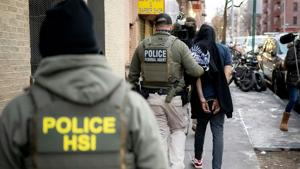
“Over a period of more than 10 weeks, masked and armed immigration agents detained children, indiscriminately used chemical agents, violated the civil rights of peaceful protestors, detained American Indians, and conducted unwarranted stops and arrests of our neighbors simply because of the color of their skin,” the order said.
The council will work alongside The Advocates for Human Rights, which has been contracted to collect stories and testimony from people affected by the operations. The American Civil Liberties Union of Minnesota and The Advocates for Human Rights each appointed one member to serve on the council.
The council will issue preliminary findings by Oct. 31 and submit a final report by Dec. 1 to the governor, legislative leaders and Minnesota’s congressional delegation. The council plans to collect information through public forums, testimony, video evidence and other records. At least four public meetings will be held before the final report is issued.
This effort comes as legal and political controversy surrounding Operation Metro Surge is ongoing.
Minnesota Attorney General Keith Ellison, along with the cities of Minneapolis and Saint Paul, is pursuing a federal lawsuit seeking to have the operation declared unconstitutional and unlawful. State officials have argued the enforcement surge caused extensive economic damage, citing estimates of more than $240 million in lost wages and over $600 million in business losses.
At the same time, state prosecutors have filed criminal charges against two federal immigration agents tied to incidents that occurred during the operation. Hennepin County Attorney Mary Moriarty has said additional investigations remain ongoing.
Federal officials have disputed Minnesota Democrats’ characterization of the operation.
An Immigration and Customs Enforcement spokesperson previously told The Center Square that state prosecutions of federal agents are “unlawful” and a “political stunt.” Federal officials have also defended the larger operation, saying agents apprehended more than 4,000 individuals, including violent offenders and gang members, as part of Operation Metro Surge.
The Advocates for Human Rights’ website describes the council as an “independent, non-partisan” effort to create a historical record of both alleged human rights violations and the community response that followed.
The council has no law enforcement authority and cannot prosecute individuals or award compensation. Instead, its final report is intended to document the impacts of the operations and recommend potential policy and legislative reforms.
“The only way we move forward is with accountability,” Walz said in the executive order. “Minnesotans demand and deserve a public record that reflects the violent, cruel, inhumane, and deeply disturbing actions of federal immigration agents, and the dignity of our response. This record can help serve as a step towards our state’s long-term recovery.”




Mostly Sunny
Latest News Stories
Illinois quick hits: Pritzker tax payments revealed; teen abortion rate 3rd highest
Poll: Majority of Americans concerned with rise in political violence
Brief filed in effort to restore Fourteenth Amendment, end birthright citizenship
Federal judge extends order on NYC anti-terrorism funds
Trump says he may attend Supreme Court case challenging tariffs
L.A. County declares state of emergency for immigrants

Governors announce new multi-state health alliance

Horton resigns from DeKalb County School District
Second nationwide ‘No Kings Day’ protest set for Saturday
Trump, Patel tout ‘historic’ crime crackdown

Illinois quick hits: Business optimism index declines; Medicare open enrollment help offered
WATCH: California seeks investigation into big tech merger