Debt burden, pensions burden Chicago Public Schools
(The Center Square) – The author of a new Civic Federation report says taking on more debt would be a death knell for the stability of Chicago Public Schools.
Danny Vesecky, senior research and policy associate at the Civic Federation, is the author of “Understanding Municipal Debt: A Case Study of the Chicago Public Schools.”
The report found that CPS’s estimated $9.3 billion in outstanding debt is high compared to peer school districts, and its below-investment-grade credit rating significantly increases borrowing costs.
Vesecky said the district considered a short-term loan to cover operational costs last year.
“It’s something that would, I think, really be a death knell for the district’s stability,” Vesecky told The Center Square.
The report said most of CPS’ individual issuances of debt are severely backloaded, resulting in a steadily climbing debt load.
Vesecky said more debt would make future deficits even worse.
“It would probably have severe impact on CPS’s credit rating, which is already junk status, and it could easily send the district on a path to a real level of fiscal insolvency that we haven’t yet seen,” Vesecky said.
Vesecky said CPS is making decisions on a short-term basis when they should be long-term in nature.
“And in so doing, in every individual year, it’s sort of triaging somewhat emergency circumstances. But in the long term, it’s potentially not saving itself as much money as it could be by managing its debt in a better way,” Vesecky said.
Vesecky said CPS has a very large amount of unfunded pension liability, or debt that has to be paid back over the next three decades.
“Last year, the district’s budget was about $10 billion, and it picked up about $300 million in pension costs,” Vesecky said.
CPS budgets have increased by more than 50% over the last decade.
According to a separate report by the Civic Federation, CPS’ adopted budget appropriations increased from $6.4 billion in fiscal year 2016 to $9.9 billion in fiscal year 2025.
CPS proposed a $10 billion budget for next school year, with a projected deficit of $732.5 million.
The largest revenue source for CPS in the current fiscal year is a property tax levy of $4.2 billion, followed by evidence-based funding from state of Illinois taxpayers at $1.8 billion.
The district is also funded by tax increment financing surpluses, state taxpayer-funded pension support and money from federal taxpayers.
Vesecky said the state of Illinois pays for about one-third of pension costs in Chicago and about 98% of those costs for other districts.
“It’s a pretty wide discrepancy,” Vesecky said.
State taxpayers have provided more assistance to CPS since the state enacted its evidence-based funding formula in 2017.
Vesecky’s report said debt management must be part of the solution for CPS to achieve structural balance and improve its long-term fiscal outlook.
“Functionally, backloading debt can crowd out future non-debt spending, contribute to capital backlogs like the one CPS faces, and eventually become unsustainable,” the report stated.





Chance Showers And Thunderstorms
Latest News Stories

New health sharing program has seen 236% growth rate, with high hopes for 2026

Lawmaker, physician: Politicians are micromanaging medical education

FBI probes Michigan synagogue attack as targeted violence, antisemitism

Iran to see ‘highest volume of strikes’ yet on Friday
Illinois Quick Hits: One confirmed dead from Kankakee tornado

Four service members killed in KC-135 crash

U.S. military jet goes down over Iraq; incident not attributed to hostile fire

Casey-Westfield Explodes for 12 Runs in Third Inning, Downs Neoga 17-5
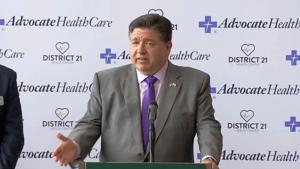
Pritzker: ‘God was looking out for people’ in storm-damaged Kankakee County

Illinois Quick Hits: Correctional officer charged with sexual misconduct

Costco faces lawsuit as consumers seek refunds from invalid tariffs

Insurer won’t back Gori defense vs asbestos lawsuit fraud claims