
Record tornado numbers impact Illinois economy
(The Center Square) – This year will likely be a record year for tornadoes in Illinois, but the financial impact of severe storms that pounded the state Wednesday and Thursday may not be known for months.
The National Weather Service confirmed at least 20 tornadoes in Illinois last week.
Illinois State Climatologist Trent Ford of the Illinois State Water Survey and Prairie Research Institute at the University of Illinois Urbana-Champaign said the state’s 130 tornadoes confirmed this year, before the events of last Wednesday and Thursday, ranked third all time.
“It is very possible, if not likely, that these events pushed us to the top of that list,” Ford told The Center Square.
Ford said Illinois has had 147 tornadoes reported but not necessarily confirmed this year, while neighboring Indiana has had 37.
As teams continued damage assessments on Monday, Ford said the economic impact might not be known for weeks or months.
Ford said the location where a storm hits will often have more economic impact than its severity.
“Obviously, a tornado moving through corn that has emerged or soybeans that have emerged causes impact, but from an economic standpoint, it is pretty limited,” Ford said.
Ford said one event last year showed that a storm’s location can have a bigger financial impact than storm strength.
“It was a fairly strong tornado, but fairly short-lived. I think the last estimates were hundreds of millions of dollars to communities on the north side of St. Louis,” Ford said.
Ford pointed to an EF-3 level tornado that ravaged the Kankakee area in March as another storm that had major economic impact. The twister and associated storms destroyed at least 30 homes and affected about 500 structures.
A little more than a month later, the U.S. Small Business Administration approved a disaster declaration for the Kankakee weather event.
Ford said strong winds are even more damaging than tornadoes from an economic standpoint. When it comes to insurance costs, Ford said the biggest problem is hail.
Jim Chilsen of the Citizens Utility Board said it’s too early to tell if storm damages could lead to higher electricity rates.
*The utilities have already spent a considerable amount of customer money modernizing their distribution systems using a formula rate system that was not kind to customers,” Chilsen said in a statement to The Center Square.
Chilsen said consumer protections are stronger now, with multi-year grid plans in which the utilities have to justify their spending.
Hundreds of thousands of power outages were reported in the wake of the storms.
A ComEd spokesman said, due to the company’s continued focus on restoration efforts, the utility would not be able to provide an immediate response to The Center Square’s inquiry about potential consumer impacts.
Ameren did not respond to The Center Square’s request for comment.





Chance Showers And Thunderstorms
Latest News Stories
Public education budgets balloon while enrollment, proficiency, standards drop

Illinois news in brief: Cook County evaluates storm, flood damage; Giannoulias pushes for state regulation of auto insurance; State seeks seasonal snow plow drivers

Governor defends mental health mandate, rejects parental consent plan

Illinois quick hits: Arlington Heights trustees pass grocery tax
Casey Joins Land Bank, Secures EPA Grant for Sewer Planning
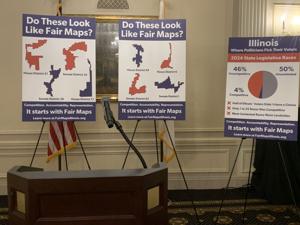
Plan launched to place redistricting amendment before voters in 2026

Rose G. (Crandall) Penrod
Casey Targets Two Dilapidated Properties for Remediation
Illinois GOP U.S. Senate candidates point to economy, Trump gains

Lawmaker criticizes $500 student board scholarships amid lowered K‑12 standards

Illinois news in brief: Work begins on $1.5 billion O’Hare expansion; Police catch man accused of road rage, shooting
Newsom files FOIA request on border patrol’s appearance