Social media platforms challenge Chicago tax; Pritzker confident in statewide plan
(The Center Square) – Chicago faces an ongoing lawsuit over a tax ordinance on social media platforms that was imposed four months ago, but city officials said this week they have confidence in its legality.
The measure has also already brought in revenue far beyond expectations.
Chicago Mayor Brandon Johnson and the city council have both discussed the above-expected revenues generated by the City’s Social Media Amusement and Responsibility Tax this week.
Johnson announced Tuesday the tax is now projected to bring in $49.2 million, rather than the previous $31 million expected to be brought in during 2026.
“By making sure that we pass innovative progressive revenue streams, like the first of its kind Social Media Amusement Responsibility Tax or the smart tax. We can fund critical services like our mental health clinics and our crisis response teams,” Johnson said.
The tax is imposed, according to statute, on social media platforms with more than 100,000 users, at a rate of 50 cents per user after the minimum threshold.
The millions of dollars in revenue has yet to be counted toward the city’s budget however. The stated reason is because the measure is being challenged in court, according to city officials.
Deputy Corporation Counsel with the Chicago Department of Law Susan Jordan said the lawsuit is in an early stage.
“Nothing has happened thus far and we are defending it,” Jordan said.
Jung Yoon, policy chief for the mayor, added that the mayor’s office isn’t too worried about the merits of the case.
“We did look in the research phase drafting this to be very mindful of those limitations and we do believe we have strong defensible arguments,” Yoon said.
A similar policy that passed through the Illinois General Assembly in May seeks to tax the platforms statewide.
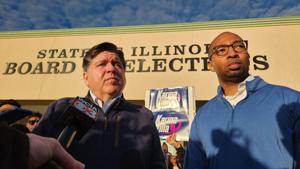
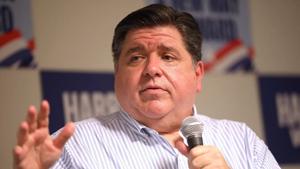
Gov. J.B. Pritzker defended the measure’s inclusion toward the projected tax base in the coming year’s budget to members of the media Tuesday.
“I have been, over the many years, not counting revenue that we don’t know that we’re going to get,” Pritzker said. “We in fact didn’t include things like the digital ad tax and things like that because we’re a little unsure about what could result from there.”
NetChoice, a trade group representing industry giants like Meta and X, filed a lawsuit against Chicago in March on the grounds that the city isn’t allowed to place an amusement tax on the companies.
A representative with the group told The Center Square that the group may also sue the state over other legislation, which has to do with the safety of children online.






Mostly Cloudy then Chance Showers And Thunderstorms
Latest News Stories
U.S. Senate passes bill to release Epstein files, heads to Trump’s desk
Abbott designates Muslim Brotherhood, CAIR as foreign terrorist organizations

Judge blocks feds from freezing California education funding

Texas appealing El Paso court ruling against new congressional maps
Elections board drops campaign finance fines against IL Senate President

Illinois corrections officials say they are on schedule for prison mail scan rule

Calhoun’s Late Touchdown Ends Casey-Westfield’s Playoff Run, 28-21

DOJ probes Berkeley riot; Illinois TPUSA warns hostility isn’t just in California
‘Consequential’ day ahead for future household electricity costs

WATCH: Chicago committee rejects proposed tax hikes; Hemp industry wants regulation

Illinois quick hits: Bipartisan BABES Enhancement Act ready for Trump
Clark County Approves New Heating System for Animal Control Building After Pipes Freeze
Chicago council committee rejects mayor’s proposed tax hikes