Report: More than 1M Minnesotans could face Social Security cuts by 2032
More than 1 million Minnesotans could see their Social Security benefits reduced by 2032 if Congress fails to address the program’s looming insolvency.
This is according to a new report from the Committee for a Responsible Federal Budget.
The report, “No State Spared: Mapping the Impact of Social Security’s Insolvency,” examined the potential effects of benefit reductions if Social Security’s retirement trust fund is exhausted.
Currently, roughly 63 million Americans pull from Social Security’s retirement program, including retirees, spouses and dependents. That is one-in-five Americans.
According to the latest report from the Social Security Board of Trustees, the Old-Age and Survivors Insurance Trust Fund is projected to be depleted in 2032.
Under current law, once the trust fund is exhausted, benefits begin to be automatically cut. The Committee for a Responsible Federal Budget estimates that would result in an immediate 24% across-the-board benefit cut for all Americans receiving Social Security.
For Minnesota, the impact could be significant.
The report estimates that 1,025,961 Minnesotans – 17.7% of the state’s population – would be affected by the reductions. That means retirees in the state could see an average monthly benefit cut of $530, the seventh-largest projected reduction among all states.
It is also above the national average of $500.
Researchers estimate the cuts would reduce Social Security payments in Minnesota by about $6.3 billion annually, equivalent to about 1.2% of the state’s economy.
Nationally, the report estimates the reduction in benefits would reduce payments by $345 billion in a single year. The committee is calling for legislators to act.
“No state would be spared from the potentially devastating effects of insolvency,” the report states. “With less than seven years until Social Security is projected to be insolvent, policymakers need to enact changes to the program as quickly as possible.”
John Phelan, an economist with the Minnesota-based Center of the American Experiment, argued in an article published Tuesday that Social Security’s financial challenges have been decades in the making.
Phelan said that Social Security largely operates as a “pay as you go” system, with taxes paid by current workers funding benefits for current retirees. Yet, as birth rates dropped off in recent decades, that meant fewer workers paying into the system.
“Since 2021, however, payments out have exceeded payments in,” Phelan wrote. “As a result, the trust fund is running down to cover the gap.”
Policymakers have known about the program’s long-term funding problems for decades but have repeatedly failed to address them, according to Phelan.
“We can’t say we weren’t warned,” Phelan argued. “Given that we have been aware of this problem for longer than three quarters of Americans have been alive, how has it got right down to the wire like this?”
Overall, the Committee for a Responsible Federal Budget report found that average monthly benefit cuts are anticipated to exceed $500 in 29 states, while the economic impact of the reductions would exceed 1% of gross domestic product in 40 states.
An analysis released Wednesday by SmartAsset identified Aitkin County as Minnesota’s most-exposed county to potential Social Security cuts. According to the report, 11.8% of all local income in Aitkin County comes from Social Security benefits, with 5,145 residents receiving payments.




Mostly Sunny
Latest News Stories

Starry Night

WATCH: Police officer, legislator: Seize opportunity to reform Illinois’ cashless bail

WATCH: IL Hospital Association: $50B rural hospital fund ‘woefully inadequate’

Rotarian Shane Todd presents program at Rotary Club

Illinois quick hits: Chicago businesses at 10-year low; school admin survey closes soon

Pritzker unveils Illinois LGBTQ hotline amid debate over transgender athletes

Meeting Summary and Briefs: Lake Land College Board of Trustees for July, 2025

Marine’s mother takes on troop transport duties for family visits

Trump plans to clean up Democrat-run cities over local objections
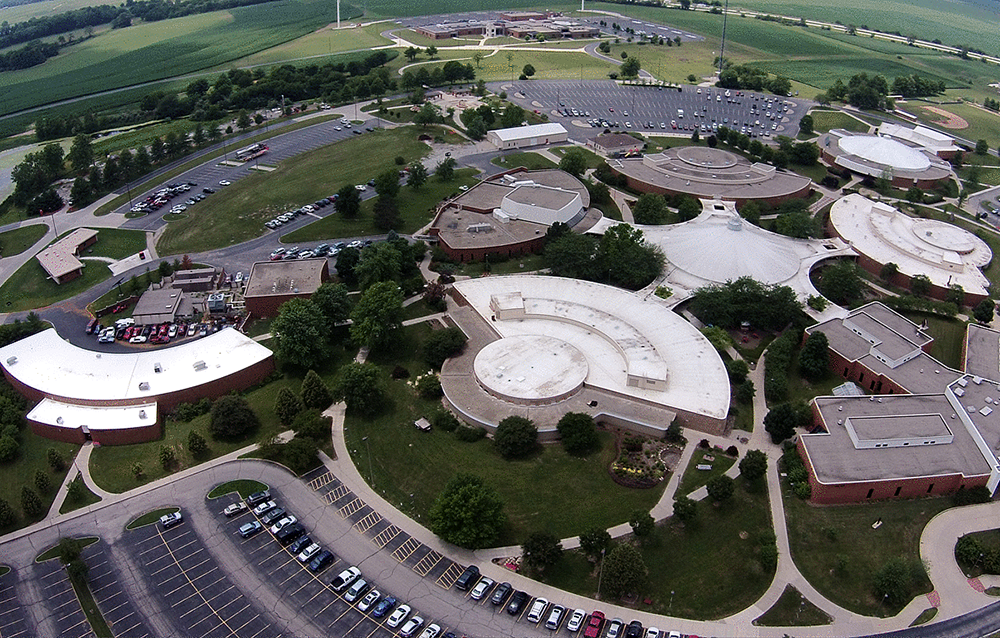
Lake Land Seeks State Funding for Major Renovations to Four Campus Buildings
Energy advocate applauds oil and gas commingling updates
Texas legislature passes redistricting map, governor to sign into law