Minnesota special districts report $5.4B debt, federal aid declines
Minnesota’s special districts reported $5.4 billion in outstanding long-term debt in 2023, while increasingly relying on state funding as pandemic-era federal aid declined.
This is according to a new report from the Minnesota Office of the State Auditor.
The 91-page report examined 572 special districts that submitted financial data to the auditor’s office. Special districts are local government entities created to provide specific services such as transportation, housing, public safety, watershed management, airports and economic development.
These entities receive taxpayer funding from local, state and federal governments, as well as revenue from taxes, charges for services, and special assessments.
‘Minnesota Special Districts Finances’ Report
The report found special districts generated $1.6 billion in governmental fund revenue in 2023, with state grants accounting for the largest share at 37%, followed by charges for services and taxes at 16% each and federal grants at 14%.
Christy John, a research analyst intermediate for the auditor’s office, said one of the most notable trends was a decline in federal and local grants following the expiration of COVID-era funding programs.
“All local governments received federal funding related to the pandemic era,” John told The Center Square. “In 2023, the federal and local support is falling. That’s normal.”
From 2022, federal grants declined 16%, or $42 million, while local grants fell 28%, or $63.6 million. At the same time, state grants increased 23%, or $107.6 million, helping offset the reductions.
John said the decreases largely reflect the winding down of federal pandemic programs such as the Coronavirus Aid, Relief and Economic Security Act and the American Rescue Plan Act that infused large amounts of money into states and localities.
While governmental fund revenues increased overall from the previous year by 7%, special district enterprise operations reported significant operating losses. Enterprise funds are designed to function similarly to private businesses, covering costs primarily through fees and user charges.
According to the report, special district enterprise operations reported $2.2 billion in operating revenue and $3 billion in operating expenses, resulting in an operating loss of $825.8 million.
The Metropolitan Council, a Twin Cities regional planning organization, accounted for much of that deficit, posting $642.8 million in operating losses across four of its five enterprise operations. The only operation to not was environmental services.
However, those losses were largely offset by $1.4 billion in nonoperating revenue. That revenue included federal, state and local grants, and resulted in overall net profit of $177.4 million for the council and allowed special district enterprises overall to report a net profit of $369.1 million.
The report also found that four entities accounted for 80% of all special district long-term debt in Minnesota. The Metropolitan Council, Metropolitan Airports Commission, Western Minnesota Municipal Power Agency and Southern Minnesota Municipal Power Agency collectively held $4.3 billion of the $5.4 billion total.
John said the concentration of debt is not a sign of financial distress.
“It’s generally consistent,” John explained. “These four entities carrying the large amount of long-term debt is mainly because they are responsible for financing, constructing, and maintaining main in large infrastructure projects across Minnesota.”
These large entities typically issue revenue bonds to finance major projects, then repay the debt over time through dedicated taxes, fees and other revenue sources, John said.
Although 572 districts reported financial information, the report found that revenue and spending are concentrated among a relatively small number of entities. Of the 412 districts reporting governmental fund revenue, just 33 accounted for 65% of all governmental fund revenue.
The Metropolitan Council, Three Rivers Park District and Southwest-West Central Service Cooperative alone accounted for 35% of total governmental fund revenue.
Government Funding
State Auditor Julie Blaha said the report highlights the importance of stable funding relationships among federal, state and local governments.
“Local government, their whole goal is to keep things steady,” Blaha told The Center Square. “Chaos out of the federal level . . . makes [long-term planning] really difficult.”
Blaha expressed concern that uncertainty surrounding federal funding could complicate funding and long-term planning for special districts.
“If the federal government decides to basically abdicate their role in all of this, it’s going to have an impact, and it’s going to be significant,” Blaha said.
She warned that if federal support declines, costs could shift to other funding sources.
“If a federal partner drops out, what you see is this starts to shift to property tax,” Blaha said. “That changes people’s day-to-day lives.”
John Jernberg, a research analysis specialist at the auditor’s office, hoped to assuage concerns about special districts potentially coming to rely too heavily on federal funding during the COVID era.
“They were making very conservative decisions on how they used that money, so that they won’t be stuck with an ongoing bill,” Jernberg told The Center Square.
That said, Jernberg said he is concerned that residential property taxes could rise as declining commercial property values in Minnesota’s largest cities place additional pressure on local governments to make up lost revenue elsewhere.
“The tax base paid by those largest buildings in St. Paul and Minneapolis whose value has gone down means something else has to pick that up,” Jernberg said. “It’s going to be residential properties.”
Minnesota had 621 special districts required to report financial information in 2023, though 49 failed to comply with reporting requirements.
Blaha said the report serves as an important benchmark for tracking how special districts fund their operations and whether they can continue meeting long-term financial obligations, particularly as federal funding levels continue to fluctuate.
“The lesson of this report is that this relationship is really important,” Blaha said. “If that relationship changes, people are going to feel it.”


Mostly Sunny
Latest News Stories

Comptroller, Chicago officials debate tax fund sweeps
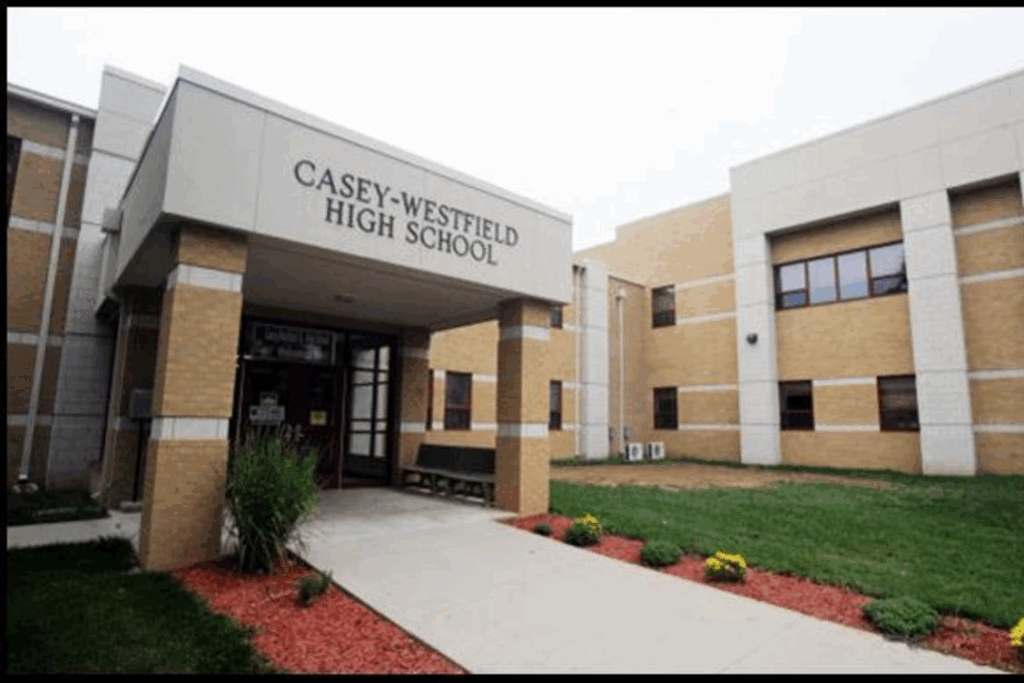
Casey-Westfield School Board Approves $560,000 HVAC Phase 2, Annexes Tennis Court Parking Lot

No public funds for new transit safety group
The future of American troops in Europe; Iran lead Rubio’s meeting with NATO

Tennessee congressman files articles of impeachment against Roberts

Illinois Quick Hits: Chicagoland chamber opposes ditigal ad tax
Board suspends Camp Mystic co-owner’s nursing license

Illinois bill banning ‘easily convertible’ handguns could pass this session

Deadline approaches for $1 million school choice award

Biometrics privacy law’s territorial reach limited, appeals court says
Watchdog says Biden Education Department defied court order on Title IX enforcement
Congress skips town without passing $72B immigration enforcement bill