

California sets high income taxes for World Cup players
Athletes and support staff for World Cup national teams training in California are set to face the second-highest income tax rates for the duration of the matches.
The only one with higher taxes is Canada.
Professional soccer players are salaried by their teams. During the World Cup, salaries, as well as the combination of prize money and match fees paid by a nation’s soccer federation to the player, are subject to a “jock tax.”
Jock taxes refer to the taxes that athletes, coaches, trainers, support staff, etc. pay to another state or country for the percentage of their income that they earn while away from their primary residency.
According to Andrew Wilford, director of state policy for the National Taxpayers Union Foundation, jock taxes are not a tax within themselves, but rather a special enforcement of income taxes.
“Usually jock taxes only really impact domestic American players who are all playing in the same league and are all playing against each other, and in that context, they do nothing,” Wilford told The Center Square.
Take professional football. When the Los Angeles Rams travel to Philadelphia to play the Eagles, the Rams’ players and staff will be expected to pay income tax to Pennsylvania, proportionate to the amount of their salary they earn while in the state. The very next week when the Buffalo Bills travel to Los Angeles to play, the Bills’ players and staff will be expected to do the same for the state of California.
According to Wilford, over the course of the NFL season, everything tends to even out in terms of state revenues.
“States all do this to each other. It’s a circular firing squad where they’re all taxing each other’s athletes, and then they all have to give tax credits to their own resident athletes for the taxes they had to pay to other states,” Wilford said. “States pretty much end up with the same amount of revenue that they would have had if no one did this.”
The addition of foreign, nonresident athletes coming to the United States for the World Cup adds entirely different complexities.
According to the National Taxpayers Union Foundation, the tax burden facing World Cup athletes and support staff for each nation is determined by three factors: the location of the team’s matches, the location of the team’s base camp, and any tax treaties that exist between the team’s nation and Mexico, Canada and the U.S. FIFA determined where each team would play their matches. Each nation’s soccer federation chose where to set up its base camp.
According to US Soccer, seven nations, including the United States, chose to station their base camp training facilities in California, where the state income tax reaches as high as 14.4%.
Athletes whose nation placed their training sites in states with no income tax such as Texas, Tennessee or Florida are just subject to the 30% federal tax rate for nonresidents.
According to the foundation, excluding Canada, athletes and staff from New Zealand and Panama face the highest estimated jock tax liabilities of everyone at the World Cup.
New Zealand and Panama each drew two matches in Canada, where tax rates can be as high as 53.5% in Ontario and British Columbia. New Zealand drew an additional match in Inglewood in the Los Angeles area, and Panama drew an additional match in East Rutherford, N.J.
What puts the tax liability facing New Zealand and Panama ahead of everyone else, is their choice of base camp training location. New Zealand chose San Diego where the highest state income tax rate is 14.4% on top of the 30% federal tax rate. Panama chose New Tecumseth, Ontario, where the highest provincial income tax rate is 20.5% on top of the 33% federal tax rate.
According to Wilford, the World Cup is different from the NFL in terms of jock taxes because the U.S. is receiving revenue from nonresident, foreign athletes.
“I think in this context, because we are sort of importing a ton of athletes from other countries, and we’re not really sending many American soccer players to other countries that are earning a ton of income, we will probably end up benefiting,” Wilford said.
Cristiano Ronaldo is the highest paid soccer player in the world. Al Nassr in the Saudi Pro League pays him a salary of $235 million, according to reports. This means that if Ronaldo spends 30 days training with the Portuguese national team in Palm Beach Gardens and works 250 days in a year, depending on tax treaties between the U.S. and Portugal, the federal government can tax 12% of his salary at the 30% nonresident income tax rate.
According to reports, players such as Kylian Mbappe in 2018 have donated their entire allotment of World Cup prize money to charity, avoiding taxes.
While most athletes do not make as much money as Ronaldo or Mbappe, it is the athletes who have low salaries who will be affected most by the tax laws, according to Wilford.
“The cost of doing all of this tax compliance can be pretty significant, from like five to $10,000, which if you’re a World Cup athlete for England, you’re probably making that in days. But if you’re playing for Cape Verde, you might not, so it can be a really significant expense for players who are not making tons of money to begin with,” Wilford said.
In 2019, Ronaldo was convicted of tax evasion in Spain. In 2016, Argentinian soccer player Lionel Messi was convicted of tax evasion in Spain. Both players paid fines and avoided jail time.
The Center Square reached out to the United States Soccer Federation and a representative of a New Zealand athlete, but did not hear back by the time of publication.





Chance Showers And Thunderstorms
Latest News Stories

About Us!
Casey Approves Major Park Recreation Project, Hires Firm to Find New Utilities Chief
Casey in Action Secures $40,000 Grant for Park Walking Path
Casey Council Briefs

Warriors Advance to Face Red Devils on 14-Game Win Streak
Casey City Council Awards Sidewalk Contract, Approves Utility Rate Increases
Utilities Chief Announces December Retirement; Police Department Adds Officer
Casey Council Meeting Briefs

Casey-Westfield Board Approves Major Technology Upgrades, Facility Improvements
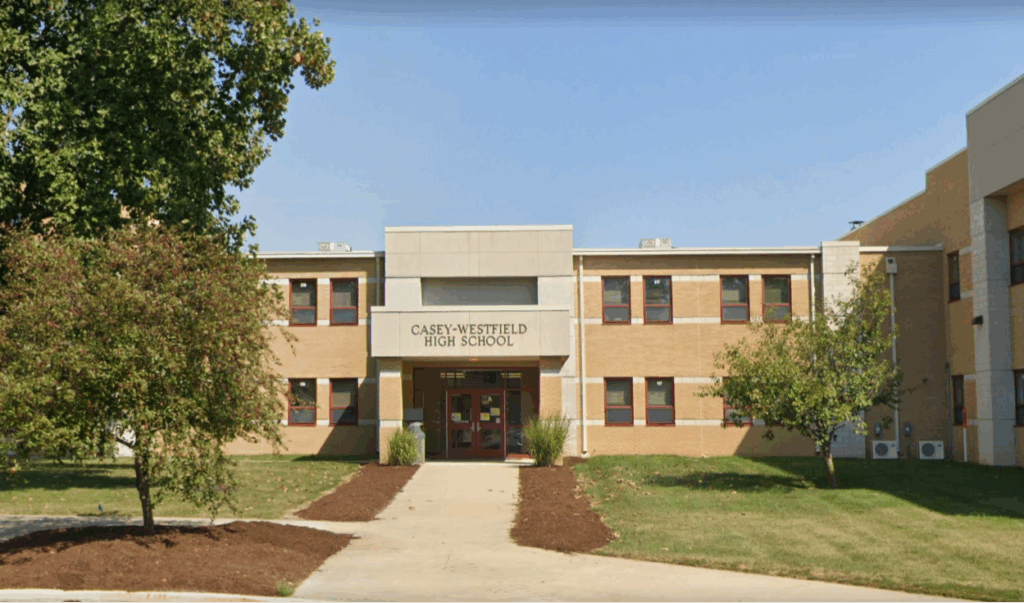
Casey-Westfield Students Excel in Academics and Community Service

SCHOOL BOARD MEETING BRIEFS
Casey-Westfield School Board Reorganizes Leadership, Seats New Member