Senator pushes $1.5T fix as Social Security’s 2032 deadline closes
More than 70 million Americans face an automatic 22% cut to Social Security benefits in 2032 if Congress doesn’t act, and a bipartisan Senate proposal to address the shortfall has yet to be introduced as legislation.
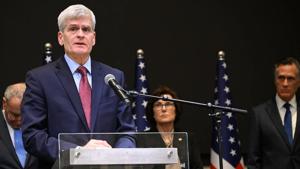
U.S. Sen. Bill Cassidy, R-La., who lost his primary reelection bid to a Trump-backed challenger in May, is pushing a proposal as a priority before he leaves office in January, but independent analysts say it fails to pay back its debt more than half the time.
Social Security’s trustees warned in a June 9 report that the program’s retirement trust fund will be depleted in 2032, one year earlier than projected last year.
At that point, the program would be able to pay 78% of scheduled benefits, triggering an automatic 22% cut for the Americans who rely on it, averaging $500 a month per beneficiary by 2032, according to the Committee for a Responsible Federal Budget.
The trustees attributed part of the deterioration to the One Big Beautiful Bill Act, signed by President Donald Trump in July 2025, which reduced federal income tax rates in ways that lowered projected revenue to the trust funds.
Cassidy and Sen. Tim Kaine, D-Va., outlined the plan in a July 2025 Washington Post op-ed, proposing a new $1.5 trillion investment fund – separate from Social Security’s trust funds – to be invested in stocks, bonds and other assets for 75 years, with proceeds used to pay back the Treasury and offset the program’s long-term shortfall.
“There is a nationwide appetite to implement a bipartisan, commonsense plan like ours,” Cassidy and Kaine wrote. “Waiting until the Social Security Trust Fund is on the eve of crisis would have difficult and preventable consequences.”
Cassidy has said the proposal is modeled after the National Railroad Retirement Investment Trust, a diversified fund Congress created in 2001 that has consistently paid benefits on schedule.
A May analysis by the Boston College Center for Retirement Research, a retirement policy research center, found the plan unlikely to work. Running 10,000 simulations, researchers found the investment fund would fail to pay back all borrowing 64 out of 100 times under optimistic return assumptions. That dropped to 83 out of 100 times under more realistic projections.
The Committee for a Responsible Federal Budget, a nonpartisan fiscal watchdog, reached a similar conclusion in a March analysis, titling its findings “A Sovereign Debt Fund Can’t Save Social Security” and warning that significant new borrowing posed risks to bond markets already strained by the nation’s growing debt.
Romina Boccia, director of budget and entitlement policy at the Cato Institute, a nonprofit that advocates for limited government and fiscal restraint, said the proposal fails to address the underlying challenges.
“Senator Cassidy’s plan avoids politically difficult choices by ignoring the program’s structural problems, not by solving them,” Boccia told The Center Square. “It makes a $27 trillion leveraged bet with taxpayer money. The wager is very unlikely to pay off, and the most likely outcome is that taxpayers will pick up the losses.”
Cassidy pushed back on the independent analysis in a statement to The Center Square.
“The proposal has been shown to cover the majority of the shortfall,” Cassidy said. “Social Security is running out of money, and the longer we do nothing, the worse the outcome is for workers, retirees, and taxpayers. The plan would leave Congress with a much smaller gap to close than the full shortfall retirees face if Washington fails to act.”
Sen. Chuck Grassley, R-Iowa, who chairs the Senate Finance Committee and presided a Wednesday hearing on Social Security, said neither party’s standard approach is sufficient.
“This fiscal hole cannot realistically be plugged simply through tax hikes on the wealthy, that’s the Democrats’ favorite solution, or by cutting waste, fraud, and abuse, which is the Republicans’ favorite,” Grassley said.
Sen. Thom Tillis, R-N.C., warned that Social Security’s insolvency and the nation’s growing debt burden could “come to roost at the same time.” Shai Akabas, a fiscal policy expert at the Bipartisan Policy Center, who testified at Wednesday’s hearing, agreed, saying any bridging mechanism must be paired with structural reform or it simply shifts the burden to future taxpayers.
“Bridging without reforming is not a solution,” Akabas said. “It is a more expensive version of the current problem, financed at the expense of future taxpayers.”
Cassidy finished third in the May primary with 24.8% of the vote, behind Rep. Julia Letlow and state Treasurer John Fleming, and is leaving the Senate in January. Following the trustees report, Cassidy joined Sens. Thom Tillis, R-N.C., Dick Durbin, D-Ill., and Tim Kaine, D-Va., in a joint statement urging Congress to act. Three of the four senators who signed the statement – Cassidy, Tillis and Durbin – are leaving the chamber at the end of their terms.
Tillis said Social Security’s looming insolvency was a factor in his decision not to seek re-election.
“The reality that I would be running hard to then inherit an insolvency issue with Social Security was a real consideration for me,” he said at Wednesday’s hearing.
“If you knew how scared members of Congress of both political parties are of the issue of Social Security, you’d be laughing at us,” Grassley said.



Chance Showers And Thunderstorms
Latest News Stories
Texas House sues six Democrats absconding in California

With antisemitism on the rise, a glimmer of hope at Jewish delis

‘Exactly what we need’: First expedited coal lease advances

In six months, ICE arrests 350 gang members in Houston

Faculty Union Asks for Delay, But Lake Land Board Approves New Stipends and Postpones Grievance Response
Multiple briefs filed with Texas Supreme Court in Abbott lawsuit against Wu
Pasco Mayor Pete Serrano to take Trump appointment as Eastern WA U.S. attorney

President Trump hosts Armenia, Azerbaijan for peace treaty signing

Trump, Putin to meet next week

Bill would codify Trump’s executive order banning ‘woke’ debanking

Illinois quick hits: Pritzker sends bill back to legislature; cannabis loans announced

Dem, GOP candidates begin signature-gathering for 2026