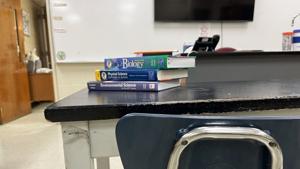
New law sparks debate over Illinois school mergers, communities fear loss
(The Center Square) – A new law that could push school districts to study possible consolidation, aiming for efficiency and savings, but critics warn it could threaten local control.
House Bill 2966 creates a state grant program, through the Illinois State Board of Education, for districts to study potential reorganization, but former Republican state Rep. Jim Nowlan doubts it will drive much change given communities’ strong ties to their schools.
“The tiny community of Ohio, north of Princeton, recently voted on whether to consolidate its 20-student high school with a neighboring school and the measure was rejected,” Nowlan told The Center Square. “This illustrates the strong feelings people have about their local schools. Many believe that losing the school would mean losing the vitality of their community, which often outweighs what outsiders might see as rational consolidation.”
Nowlan noted that consolidation can make sense in some cases, like in La Salle County, where seven or more grade school districts feed into La Salle-Peru High School, but the issue is often highly emotional.
“It makes little sense for there to be eight school districts in that situation,” Nowlan said. “You have eight school superintendents, and you have different pedagogy across the respective school districts. So the kids may come into the freshman year with different foundations of education”
HB 2966 passed unanimously out of the House and Senate.
Proponents of the new law argue that overlapping administrative structures cost taxpayers millions, and that grants to study potential mergers could highlight opportunities for efficiency. But Nowlan cautioned that financial savings from consolidation are not guaranteed.
“I think many of the savings would be illusory. You might save by cutting some superintendents, but in my research on consolidating municipalities and other local governments, I found that savings often didn’t materialize,” said Nowlan. “Consolidation usually wouldn’t move forward unless employees were guaranteed salaries at least equal to the highest-paying district involved.”
Instead of focusing on forced restructuring, Nowlan suggested Illinois should look at ways to improve education directly.
“The key to successful education is not the number of school districts, but the vision of the school boards, which are elected, and their school leadership,” he said. “You can have great small schools, and you can have great big schools, and the reverse.”
He also pointed to alternatives like open enrollment, already used in Iowa, which allows students to attend schools outside their home district with funding following the child.
“For example, a child with musical talent can enroll in a neighboring district with a strong music program, or another student could join a school with an excellent [Future Farmers of America] program. I wish Illinois would consider open enrollment, since it also encourages healthy competition among schools,” said Nowlan.





Sunny
Latest News Stories

Analysts: Civil rights defined Supreme Court term

Officials: Trans athlete bans won’t change Illinois school sports

From Nebraska to Connecticut: more TdA ATM jackpotting arrests, sentencings

Advocates worry new law will raise drug prices, harm self-insured businesses

Republican voter ID bill bogs down crucial Pentagon funding

Texas Republican leaders blast Supreme Court ruling on birthright citizenship

Illinois Quick Hits: Toll burden 5th in U.S.

Complaint: District used tax dollars for referendum campaign

America 250: Pastors in politics shaped American Revolution and policies today

Supreme Court to hear Chicago assault weapons ban challenge

Study: Warner Bros.-Paramount merger could generate $20B in economic activity

Op-Ed: Solving the data center conundrum – America’s next boomtowns may be nuclear towns