
GOP scrutinizing litigation group that ‘educated’ 2,000+ judges on climate change
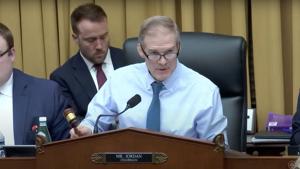
Republicans on the House Judiciary Committee have launched a probe into the Environmental Law Institute over allegations the group has tried to influence the impartiality of judges hearing climate-related cases.
In a letter requesting ELI to disclose external funding sources and judicial clients, Committee Chairman Jim Jordan, R-Ohio, and two other lawmakers claimed ELI’s Climate Judiciary Project – which provides judges with what it says is climate science and litigation information – “appear[s] to be designed to bias judges in climate-related cases.”
“Public reports have documented concerns around apparent efforts by [ELI] to influence judges who potentially may be presiding over lawsuits related to alleged climate change,” the lawmakers wrote. “These efforts appear to have the underlying goal of predisposing federal and state judges in favor of plaintiffs alleging injuries from the manufacturing, marketing, or sale of fossil-fuel products.”
According to ELI, more than 2,000 state and federal judges have participated in the curriculum, which ELI says on its website is a nonpartisan effort “to aid better understanding of climate science and how it is likely to interact with the law.”
The committee, however, disputes the neutrality claim, given that “ELI-selected experts who instruct the judges on questions of supposed climate ‘science’ are not neutral third parties, but are known associates of organizations (including funding entities) closely allied with the radical decarbonization movement.”
More concerning, the lawmakers added, is the fact that participating judges are kept anonymous, meaning defendants “have no way to meaningfully evaluate whether the judges should recuse from their cases.”
In a Tuesday email to The Center Square, ELI argued that “[a]ny attempt to suggest that the Climate Judiciary Project’s judicial educational activities are improper is entirely without merit.”
“CJP provides evidence-based and factual information to judges about climate science and how it is arising in the law in partnership with leading national and state judicial education institutions through their established programs,” ELI said. “These programs are no different than other judicial education programs providing training on legal and scientific topics that judges voluntarily choose to attend.”
ELI added that CJP “does not participate in litigation, provide support for or coordinate with any parties in litigation, or advise judges on how they should rule on any issue or in any case.”
The committee has given ELI until Sept. 12 to produce all documents since April 2019 that pertain to any external funding sources or improper judicial financing, and the names of every judge who has participated in the CJP curriculum.
Jason Isaac, CEO of the American Energy Institute, called the committee’s action “a long-overdue step to expose the coordinated campaign between climate activists and the judiciary.”
“Our research shows that CJP’s materials, funding sources, and presenters are closely aligned with the plaintiffs’ bar and the radical climate agenda,” Isaac told The Center Square. “Congress is right to investigate. Taxpayers deserve judges, not activists in robes.”
Events

Latest News Stories

Illinois quick hits: Armed robbery charges after incident at Senate President’s office
Clark County Hires Legal Experts to Strengthen Solar Farm Ordinances Amid Citizen Concerns

Michigan school board passes controversial sex ed policies
Everyday Economics: Jobs data returns as government reopens

Supreme Court case could have major effect on 2026 midterms

Meeting Summary and Briefs: Clark County Board for September 19, 2025

Clay Target Shooting Team Finishes Second at USA College Clay Target Nationals

Illinois sports wagers decline after implementation of new tax

Competing crypto plans create ‘narrow path’ for adoption

Congress used government funding bill to ‘erase’ $3.4 trillion in deficits

Illinois patient relies on ACA tax credits, experts warn they drive higher premiums

County Employee Challenges Health Plan Accuracy at Board Meeting