What are data centers and why do they matter?
Data centers may not be visible to most Americans, but they are shaping everything from electricity use to how communities grow.
These facilities house the servers that process nearly all digital activity, from online shopping and streaming to banking and health care. As the backbone of artificial intelligence and cloud computing, they have expanded at a pace few other industries can match.
Research from Synergy Research Group shows the number of hyperscale data centers worldwide doubled in just five years, reaching 1,136 by the end of 2024. The U.S. now accounts for 54% of that total capacity, more than China and Europe combined. Northern Virginia and the Beijing metro area together make up about 20% of the global market.
John Dinsdale, chief analyst with Synergy Research, said in an email to The Center Square that a simple way to describe data centers is to think of them as part of a food chain.
“At the bottom of the food chain, you’re sitting at your desk with a desktop PC or laptop. All the computing power is on your device,” Dinsdale said.
The next step up is a small office server room, which provides shared storage and applications for employees.
“Next up the chain, you can go two different directions (or use a mix),” he explained.
One option is a colocation data center, where companies lease space instead of running their own physical facilities. That model can support a multitude of customers from a single operator, such as Equinix.
The other option is to move to public cloud computing.
“You buy access to computing resources only when you need them, and you only pay for what you use,” Dinsdale said.
Providers like Amazon, Microsoft and Google run massive data centers that support tens of thousands of servers. From the customer perspective, it may feel like having a private system, but in reality, these servers are shared resources supporting many organizations.
Cloud providers now operate at a scale that was “unthinkable ten years ago” and are referred to in the industry as hyperscale, Dinsdale added. These global networks of data centers support millions of customers and users.
“The advent of AI is pushing those data centers to the next level — way more sophisticated technology, and data centers that need to become a lot more powerful,” he said.
What is a data center?
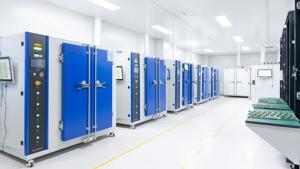
At its simplest, a data center is a secure building filled with rows of servers that store, process and move information across the internet. Almost every digital action passes through them.
“A data center is like a library of server computers that both stores and processes a lot of internet and cloud data we use every day,” said Dr. Ali Mehrizi-Sani, director of the Power and Energy Center at Virginia Tech told The Center Square. “Imagine having thousands of high-performance computers working nonstop doing heavy calculations with their fans on. That will need a lot of power.”
Some are small enough to serve a hospital or university. Others, known as hyperscale facilities, belong to companies such as Amazon, Microsoft, Google and Meta, with footprints large enough to be measured in megawatts of electricity use.
How big is the industry?
Synergy’s analysis shows how dominant the U.S. has become. Fourteen of the world’s top 20 hyperscale data center markets are in the U.S., including Northern Virginia, Dallas and Silicon Valley. Other global hotspots include Greater Beijing, Dublin and Singapore.
In 2024 alone, 137 new hyperscale centers came online, continuing a steady pace of growth. Average facility size is also climbing. Synergy forecasts that total capacity could double again in less than four years, with 130 to 140 new hyperscale centers added annually.
The world’s largest operators are American technology giants. Amazon, Microsoft and Google together account for 59% of hyperscale capacity, followed by Meta, Apple, and companies such as Alibaba, Tencent and ByteDance.
How much power do they use?
Large data centers run by the top firms typically require 30 to 100 megawatts of power. To put that into perspective, one megawatt can power about 750 homes. That means a 50-70 megawatt facility consumes as much electricity as a small city.
“Building one data center is like adding an entirely new town to the grid,” Mehrizi-Sani said. “In fact, in Virginia, data centers already consume about 25% of the electricity in the state. In the United States, that number is about 3 to 4%.”
That demand requires extensive coordination with utilities.
“Data centers connect to the power grid much like other large loads, like factories and even towns do,” Mehrizi-Sani said. “Because they need so much electric power, utilities have to upgrade substations, lines and transformers to support them. Utilities also have to upgrade their control and protection equipment to accommodate the consumption of data centers.”
If not planned carefully, he added, new facilities can strain local power delivery and generation capacity. That is why every major project must undergo engineering reviews before connecting to the grid.
Why now?
The rapid rise of AI has supercharged an already fast-growing sector. Training models and running cloud services requires enormous computing power, which means facilities are being built faster and larger.
“AI and cloud drive the need to data centers,” Mehrizi-Sani said. “Training AI models and running cloud services require massive computing power, which means new data centers have to be built faster and larger than before.”
Dinsdale noted in a report that the industry’s scale has shifted sharply.
“The big difference now is the increased scale of growth. Historically the average size of new data centers was increasing gradually, but this trend has become supercharged in the last few quarters as companies build out AI-oriented infrastructure,” he said.
Why certain states lead the market
Different states and regions offer different advantages. According to a July 2025 report by Synergy Energy Group, Virginia became the leading hub because of relatively low electricity costs when the industry was expanding, availability of land in the early years and proximity to federal agencies and contractors.
Texas and California are also major markets, for reasons ranging from abundant energy to the presence of technology companies.
Internationally, Synergy’s analysis shows that China and Europe each account for about a third of the remaining capacity. Analysts expect growth to spread to other U.S. regions, including the South and Midwest, while markets in India, Australia, Spain and Saudi Arabia increase their share globally.
What is at stake?
For most Americans, data centers are invisible but indispensable. Almost everything digital depends on them.
“Streaming movies, online banking, virtual meetings and classes, weather forecasts, navigation apps, social media like Instagram, online storage and even some healthcare services” all run through data centers, Mehrizi-Sani said.
Synergy’s forecast suggests the trend is unlikely to slow.
“It is also very clear that the United States will continue to dwarf all other countries and regions as the main home for hyperscale infrastructure,” Dinsdale said.
This story is the first in a Center Square series examining how data centers are reshaping electricity demand, costs, tax incentives, the environment and national security.






Showers And Thunderstorms Likely
Latest News Stories

Man pleads guilty in killings of Minnesota House speaker, husband

Fraud, price gauging, terrorism concerns plague World Cup debut in US

Trump cancels impending strikes on Iran, final deal pending

FBI arrests eight accused of ‘terrorizing’ U-M leaders, Jewish Federation

Colorado’s only ICE detention center operator sues state

U.S. House fails to renew spy powers authority as World Cup begins

House panel opposes adding U.S. Supreme Court justices

Schools face bus funding, cost challenges

Ohio pulls 1,200 commercial truck licenses for immigration guidelines

First fugitive on FBI’s ‘Most Wanted Fraudsters’ list surrenders in Minneapolis

Pentagon on lockdown due to ‘hazardous materials incident’

Survey: Parents value life skills, support for school choice