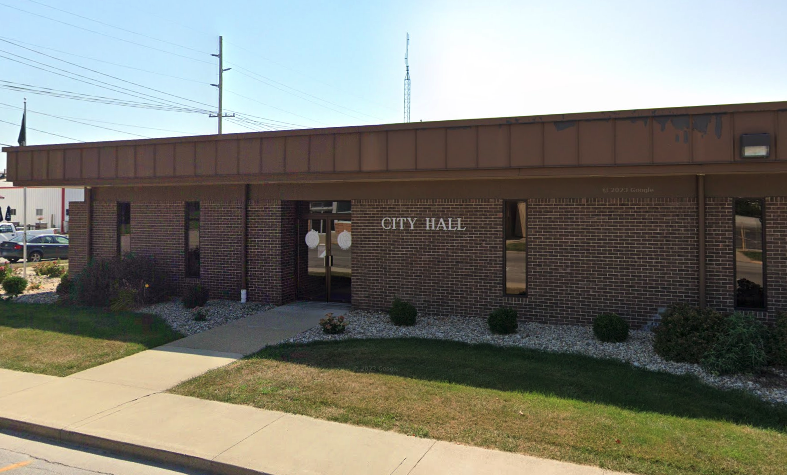
Casey Faces $1.1 Million Utility Deficit Amid Population Decline, Rate Hikes Likely
Article Summary: Mayor Mike Nichols revealed the City of Casey’s utility departments operated at a nearly $1.1 million loss last fiscal year, a financial crisis driven by a significant population decrease and rising operational costs that will likely necessitate further rate increases for residents.
Casey Utility Finances Key Points:
-
The city’s utility funds for water, sewer, electric, and gas collectively lost $1,098,000 in the last fiscal year.
-
Casey’s population has declined by 750 residents since the 2020 census, resulting in an estimated monthly revenue loss of approximately $87,000.
-
Mayor Nichols stated that while Casey’s electric rate remains lower than the state average and neighboring providers, adjustments are unavoidable to prevent future service cuts.
CASEY — The City of Casey is confronting a severe financial shortfall in its utility services, with officials warning that rate increases are likely unavoidable to keep the departments solvent. During the City Council meeting on Monday, September 15, Mayor Mike Nichols delivered a detailed financial breakdown in response to a resident’s concerns about steadily climbing utility bills.
The discussion began when a resident, Mr. Sales, addressed the council during the public forum, describing his struggle to pay “astronomical” utility bills on a fixed income while facing serious health issues. “I’d like to know what is going on with these prices,” he said, explaining that his pay would be cut in November when he becomes disabled after a third amputation.
In a candid response, Mayor Nichols explained the city’s precarious financial position. “I wish I had better news for you, but I don’t,” he began. “The rates are probably going to see more increases in order to stay above water. As of last year, we operated at a $1.1 million deficit in all utilities combined.”
Nichols attributed the crisis to a combination of rising costs and a shrinking population. He noted that since the 2020 census, the city’s population has fallen from about 3,200 to 2,450, a loss of 750 people, or roughly 250 households. This decline has created a significant revenue gap, which he estimated at $87,000 per month.
The year-end losses for the last fiscal year were substantial across all departments: the water department lost $187,000, the sewer department lost $370,000, the gas department lost $104,000, and the electric department incurred the largest deficit at $438,000. The combined total loss was $1,098,000.
“We can’t continue along that line,” Nichols stated, while assuring residents he does not intend to recoup the entire loss in a single year. “If we did, folks like yourself, me, and everybody sitting in this room would have a crunch that they couldn’t deal with. And I don’t intend to let that happen.”
Despite the planned increases, Nichols argued that Casey’s electric rates remain competitive. He said the city currently charges 10 cents per kilowatt-hour after a 1-cent discount, which he noted is unique among area municipalities. In comparison, he cited the state average of 18.62 cents, Norris Electric at 21 cents, and a recent Ameren increase to 27.5 cents per kilowatt-hour.
The mayor also addressed why funds from other city-related activities, such as the Popcorn Festival’s beer tent, cannot be used to offset utility costs. He explained that, by state law, each utility operates as a separate, self-sufficient fund. “You can’t use what you got in your left pocket to buy something you want that should be located in your right pocket. That’s the state of Illinois,” he said, illustrating the legal restrictions on co-mingling funds.
Nichols promised the council would work to minimize the impact on residents. “We’re not going to do anything we don’t have to do,” he said. “If we can find any way to reduce those rates and maintain those rates at the lowest level possible, we’re going to do it.”




Mostly Sunny
Latest News Stories

Med school dean questioned over antisemitism, DEI

Probe of Mamdani, possible Iran negotiation violation sought

As a Trump tariff expires, a new one takes its place

Leavitt: Trump’s primetime speech will ‘shock’ listeners about American election integrity
Antifa the focus at Rubio-hosted international summit

Illinois Quick Hits: Unemployment holds at 5.1% in Illinois
Thune handed $47B national security bill with poison pill

Ammons pleads not guilty, wants to delay House investigation

Minnesota extends Medicaid provider pause as fraud concerns reach U.S. Senate

Sonderling defends grant shift, vows fraud crackdown to senators

Advocate calls for stronger IDOC oversight after payroll fraud guilty plea

Illinois Quick Hits: FAFSA applications rise with increase in state taxpayer funding