Advocates debate free speech, executive power over student deportations
The Trump administration’s use of expanded executive power to engage in deportation operations has drawn a mix of praise and criticism from legal experts.
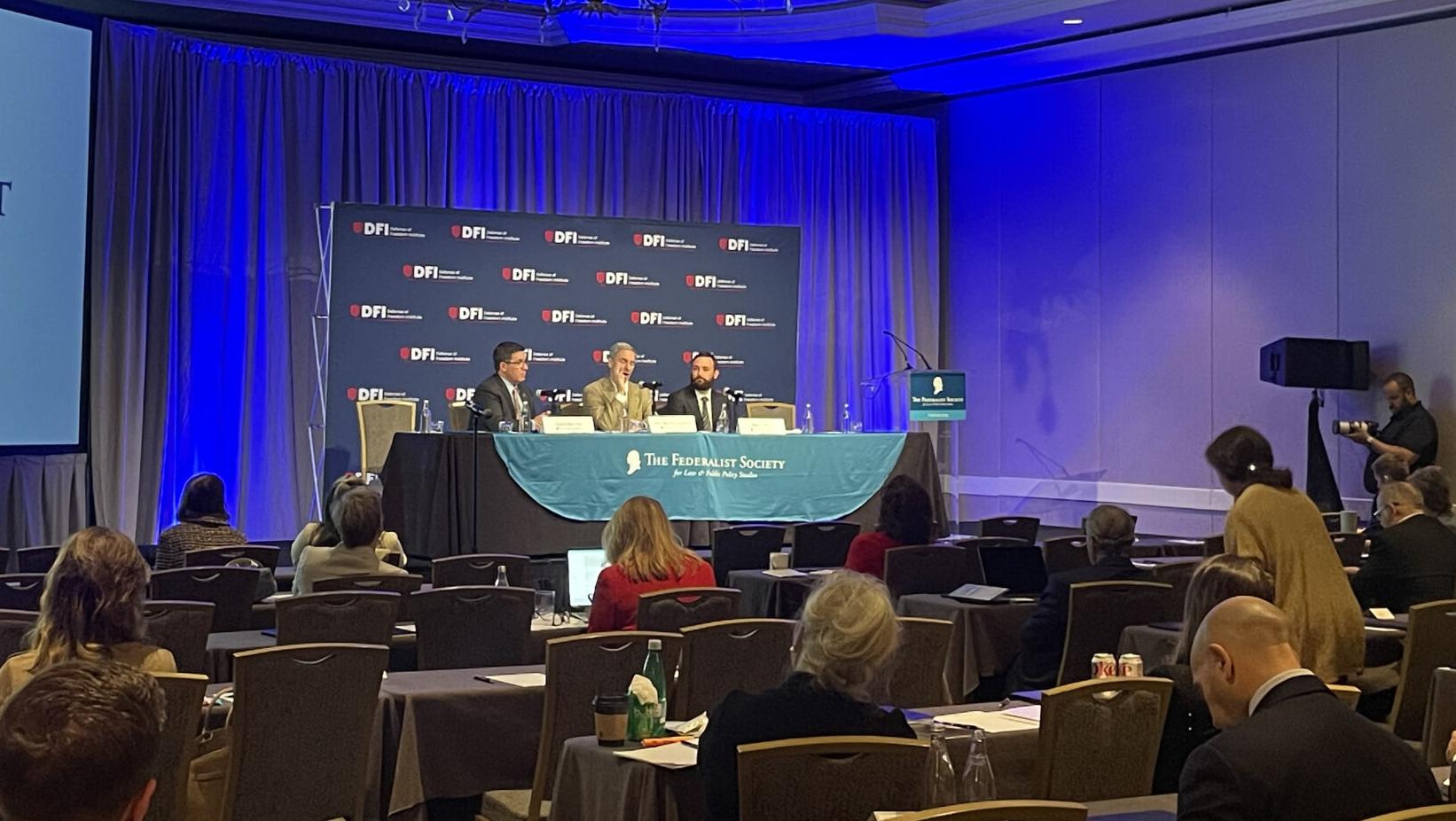
The Defending Freedom Institute and Federalist Society hosted a debate panel on Wednesday over the Trump administration’s role in deportation operations, especially on college campuses and with regards to freedom of speech.
Brian Hauss, a senior staff attorney at the American Civil Liberties Union, argued the administration’s executive power is holding broad authority over deportation efforts. He cited U.S. Secretary of State Marco Rubio’s visa revocations from students who expressed of pro-Palestinian views or celebrated the death of Charlie Kirk.
Hauss said that noncitizens in the United States should have mostly the same First Amendment protections as citizens, including freedom of speech. He clarified that noncitizens should not get the privilege to vote or serve on juries.
“When it comes to the ability to talk about public affairs, the First Amendment should still apply with full force,” Hauss said, referring to noncitizens rights in the United States.
Kenneth Cuccinelli, senior fellow for Homeland Security and Immigration at the Center for Renewing America, said the law needs to provide more clarity for how far the First Amendment can extend to noncitizens. However, he noted the deportation efforts over speech are relatively low.
“We’re dealing with the clash between the First Amendment and removing aliens with a relatively small proportion of the alien population in the United States” Cuccinelli said.
While Cuccinelli and Hauss agreed that a small number of deportations are taking place over speech, there is a “chilling effect” on foreign students’ speech over fears of deportation.
Cuccinelli recalled his experience during a fellowship at the University of Chicago where foreign students were more fearful to express their views compared to citizen students and professors because of certain students’ visa revocations and deportations.
“There’s no question that they view the potential for enforcement based on their expression as real,” Cuccinelli said. “I did not find U.S. citizens who were deterred along similar lines.”
However, Cuccinelli said foreign students afraid of expressing certain ideas due to the administration’s actions is a feature of immigration enforcement.
Hauss went further and said the administration’s deportation actions have a chilling effect that goes across campus discussions because a significant portion of the student body is not comfortable sharing their political views. He said this affects conversations on the Israel-Hamas war, for example.
“It’s impossible to know what people genuinely think about these propositions, whether you agree with them or want to rebut them, if they have strong incentives not to disclose their true opinions,” Hauss said.
He said Rubio’s broad discretion to revoke visas based on foreign policy goals can lead to an unclear definition of protected speech for noncitizens physically present in the United States.
“There are millions of non-citizens in the United States who could be removed at any time despite having lawful status purely because Secretary Rubio has made this determination and without any ground for appeal,” Hauss said.


Isolated Rain Showers
Latest News Stories
Trump urges arrests after church protest in St. Paul

Trump says ‘no going back’ on plans to annex Greenland
WATCH: GOP governor candidates forum highlights; Pritzker talks taxes increase, Bears

Illinois ‘RIFL’ act sparks fierce debate as lawmakers return to Springfield
SCOTUS declines to hear felony firearms cases

Illinois Quick Hits: No injuries reported in Tuesday earthquake
One year in: Reviewing Trump’s inaugural promises

Meeting Summary and Briefs: Casey Township Library Board for Dec. 18, 2025
GOP hopefuls seek support, blast Pritzker at IL gubernatorial candidate forum

Illinois lawmaker questions IDHS over years-long data breach

Trustees Approve 2025 Tax Levy and Bond Abatement
SCOTUS to hear Fed firing case Wednesday