Report: Congress authorized $15 trillion in ’emergency’ deficit spending since 1991
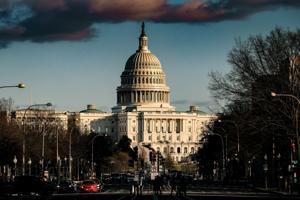
Over the past 35 years, Congress has used emergency funding rules to bypass budget controls and spend a cumulative $15 trillion, a new analysis reveals.
That sum, financed almost entirely through deficit spending, roughly equals the money spent on Medicaid and veterans programs combined from 1991 to 2025.
“What happens when there’s an emergency, because there’s so little oversight of this process, everyone will get their little piece of the pie, and [lawmakers] will add things that don’t need emergency funding,” Dominick Lett, a Cato Institute budget policy analyst and author of the report, told The Center Square. “That leads to waste and further weakens the U.S.”
On paper, there are measures in place meant to prevent Congress from overspending. Federal budget rules like PAYGO require that Congress offset increases in mandatory spending – that is, automatically renewed spending on mandated programs like Social Security – by deficit reduction measures.
Other laws, such as the Fiscal Responsibility Act of 2023, placed caps on discretionary spending, which is renewed annually and funds government programs.
But these controls contain exemptions for emergency spending. And though the Budget Control Act of 2011 mandates that emergency spending provisions must be “necessary, sudden, urgent, unforeseen, and not permanent,” the lack of standardized evaluations means lawmakers can classify nearly anything as “emergency” spending.
As a result, Congress has used this loophole to authorize $12.5 trillion in outlays since 1991, incurring $2.5 trillion in additional interest costs, when adjusted for inflation.
During the COVID-19 pandemic, Congress authorized hundreds of millions in non-emergency spending through emergency funding bills, Lett found. Examples include $70 million for tourism marketing campaigns in Puerto Rico, $12 million to renovate a New York baseball stadium, and $6.6 million for irrigation systems at two Colorado golf courses.
“This isn’t a question of whether or not we should be spending money on that or not,” Lett said. “It’s just that [lawmakers] use the process to get around budget rules, and that obviously adds to the debt.”
The national debt topped $37 trillion earlier this year, with the U.S. government racking up a $1.8 trillion deficit in fiscal year 2024 alone.
Some Republicans want to reduce deficit spending – particularly through health care entitlement program reform – using the annual appropriations process. Other Republicans are wary of voting for more spending cuts in any future legislation, and Democrats have vehemently opposed any funding plan that omits boosts to health care funding.
Lett, however, said there are plenty of ways Republicans can control deficit spending, which he includes in his report.
“There is an enormous amount of spending for a variety of programs that Americans have never even heard of,” Lett told The Center Square. “So I think there’s lots of opportunities for Republicans to cut spending further, without committing political suicide. Whether or not that will happen, I think, is a different matter.”






Sunny
Latest News Stories
U.S. gas prices at 4-year high as oil exports hit new record

Government leaders statewide call for cashless bail reform after CPD officer killed

Early Run Support Lifts Casey-Westfield Past Dieterich Baseball, 9-2

Freshman Ava Leo Powers Mattoon Softball Past Casey-Westfield, 11-8
Illinois Quick Hits: Pritzker announces new IBM investment at Quantum Park

ISU’s union says it cheaper to negotiate than paying

Iran conflict, refinery disruption play roles as Illinois gas price passes $4.50

Illinois Quick Hits: Ex-East St. Louis librarian sentenced for fraud, theft

Building Reports Highlight Testing Triumphs, Historic Track Records, and Career Exploration
Meeting Summary and Briefs: Casey City Council for April 20, 2026
Casey-Westfield Board Approves Nearly $100,000 for Monroe Elementary Technology Upgrades
City Awaits $2.5 Million in Federal Funding for Park Improvements and Sewer Relining