Lake Land College Adopts Stricter Hazing Policy in Line with New Federal Law
Article Summary: Lake Land College has updated its Student Code of Conduct to include more stringent anti-hazing rules, a move mandated by the recently enacted federal Stop Campus Hazing Act. The Board of Trustees waived a first reading of the policy revisions to ensure immediate compliance with the new law, which imposes new reporting and transparency requirements on colleges receiving federal student aid.
Student Code of Conduct Revisions Key Points:
-
The policy was updated to comply with the federal Stop Campus Hazing Act, which amends the Clery Campus Safety Act.
-
New requirements include publishing hazing policy statements and reporting all hazing incidents in the college’s annual security report.
-
The updated policy defines hazing as any act that endangers mental or physical health, causes humiliation, or is a condition for membership in a student organization.
-
The rules apply to all student clubs and athletic teams at the college.
EFFINGHAM — The Lake Land College Board of Trustees took swift action Monday to strengthen its anti-hazing policies, approving revisions to the Student Code of Conduct to align with new federal regulations. The changes bring the college into compliance with the Stop Campus Hazing Act, which creates new standards for transparency and accountability for all colleges and universities that receive federal student aid.
Chief of Staff Jean Anne Highland presented the proposed revisions, explaining that the new federal law amends the Jeanne Clery Campus Safety Act. She said the updates are necessary to ensure the college meets its legal obligations.
“The Act imposes new requirements on institutions receiving federal student aid, including community colleges,” Highland stated. “These requirements increase transparency, prevention, and accountability regarding campus hazing.”
Key among the new requirements are the mandate to include all hazing incidents in the college’s annual security report, to create and publish clear hazing policy statements, and to maintain a public report on campus hazing.
Because some components of the law took effect on January 1 and July 1, 2025, the administration requested that the board waive its standard first reading process and approve the policy changes immediately.
The updated policy defines hazing as any act committed as part of a person’s initiation or continued membership in a student organization that:
-
Endangers the mental or physical health or safety of another person.
-
Causes humiliation, intimidation, or degradation.
-
Is intended to cause physical or psychological harm.
-
Is a condition for acceptance or continued affiliation with a group.
-
Includes activities like forced consumption of substances, sleep deprivation, or physical abuse.
Highland noted that the policy applies to all of the college’s student clubs and athletic teams. She added that the Campus Police and Student Services departments have already been coordinating to ensure the new procedures are posted on the college’s website and that required training and reporting protocols are in place.
Trustee Chuck Deters moved to waive the first reading and approve the revisions, with a second from Trustee Scott Montgomery. The motion passed unanimously.



Showers And Thunderstorms
Latest News Stories
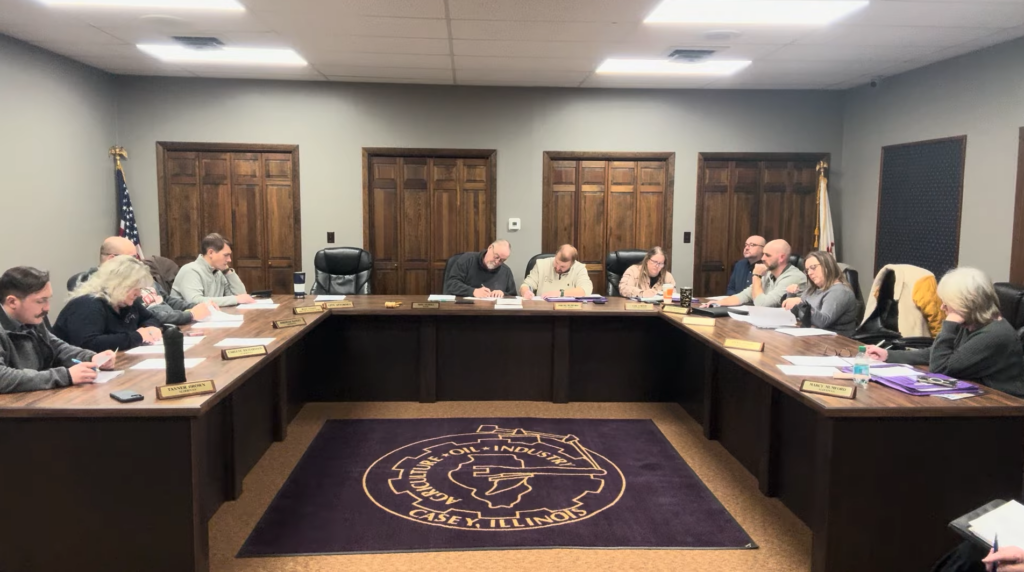
Casey Advances Housing Strategy with Land Bank Transfers and Inspection Contract

Chicago’s $41 billion financial hole exposes city’s pension crisis
Trump seeks $1B from Harvard in federal funding dispute
Lawmakers react to U.S. Supreme Court’s ruling on Prop. 50

WATCH: Senators slam fraud, call for welfare scrutiny in Minnesota

Nurses demand inclusion in professional degree definition
Early voting starts Thursday in most Illinois jurisdictions

Trump tells Iranian leaders they ‘should be very worried’

Illinois Quick Hits: Group files FOIA lawsuit vs. Pritzker

First lady meets with former Oct. 7 hostages

U.S. regulator licenses deepwater port in Gulf for oil exports
Supreme Court declines challenge to California’s congressional map