
Experts warn action needed to preserve Colorado River
The Colorado River has been in decline since the turn of the 21st century – and emergency action may be required sooner than projected, experts warn.
They say realistic water storage, accounting for less than half of typical Colorado River reservoir projections, could be drained within a few years if the issue is not taken seriously.
“ Unfortunately, if this coming winter is as bad as this past winter, we’re going to be dealing with a significant problem,” Dr. Jack Schmidt, director of the Center for Colorado River Studies at Utah State University, told The Center Square. He added later, “If we don’t change our behavior, we will be in a water management crisis. Things will get very difficult.”
Schmidt and five other researchers published the 13-page paper “Analysis of Colorado River Basin Storage Suggests Need For Immediate Action,” as negotiations between the seven Colorado River Basin states (Colorado, Nevada, California, Arizona, New Mexico, Utah and Wyoming) remain ongoing. Reports are widespread that negotiation progress has slowed, with the threat of federal involvement looming large.
The negotiations, which would draw up a new water usage plan starting in 2026, commonly referred to as the post-2026 agreements, have been ongoing for several years. The researchers warned states are neglecting the immediate threat.
“We’re so focused on making agreements that have a potential to work over a 20-40 year period, that people have just been hoping we could limp to the finish line,” said Schmidt.
Their paper aimed to draw attention to what they called “realistic storage,” or the water level in reserves that the U.S. Bureau of Land Reclamation has previously stated it would not go below. This is often well above the bottom of reserves, for reasons including hydropower functions and conservation efforts.
“We’re not claiming that in Las Vegas the taps would suddenly go dry,” said Schmidt. “The additional water that’s below [realistic storage] would still be there. It just gets complicated with hydropower production in (lakes) Powell or Mead.”
Hydropower in Nevada accounted for 3% of the state’s electricity in 2024, according to the U.S. Energy Information Administration.
Schmidt, who has worked on the Colorado River for nearly 40 years, including as the chief of the Grand Canyon Monitoring and Research Center at the U.S. Geological Survey, said the issue is one which has been in the making since the turn of the century.
“I’m 75 years old … When I started working in the Grand Canyon in the mid-1980s, all of the reservoirs were brim-full,” said Schmidt. “We’ve completely flipped.”
Between 1930 and 2000, the river swung between longer periods of dry and wet weather. For the last 25 years, the river has been on a dry streak, with wet years few and far between. The cause of this change is clear to researchers.
“The ultimate decrease in water available in the basin is all related to a warming world and a warming climate,” said Schmidt.
Water levels today are 13% lower than the 20th century and 30% from the 19th century, he said.
Schmidt has previously mentioned how agriculture in the Colorado Basin dominates water usage, including 55% just to grow livestock feed.
“ I think it is inevitable that agriculture is going have to be more efficient in water use,” he said.
With an estimated 40 million people relying on the Colorado River Basin for their water, early precautions may be warranted, according to experts.
“Human nature is to say, ‘Well, maybe it’ll snow a lot this year,’” said Schmidt. “There’s a political cost in all of this. Our paper is the warning to say: Simple numbers show that if it’s just the same as last year, it’s going to get really complicated.”
Events
Latest News Stories

Illinois quick hits: Record hotel tax revenues reported; grocer sentenced for SNAP, WIC fraud

WATCH: Policy questions loom as Pritzker announces ag investment, tax credits

Starry Night

WATCH: Police officer, legislator: Seize opportunity to reform Illinois’ cashless bail

WATCH: IL Hospital Association: $50B rural hospital fund ‘woefully inadequate’

Rotarian Shane Todd presents program at Rotary Club

Illinois quick hits: Chicago businesses at 10-year low; school admin survey closes soon

Pritzker unveils Illinois LGBTQ hotline amid debate over transgender athletes

Meeting Summary and Briefs: Lake Land College Board of Trustees for July, 2025

Marine’s mother takes on troop transport duties for family visits

Trump plans to clean up Democrat-run cities over local objections
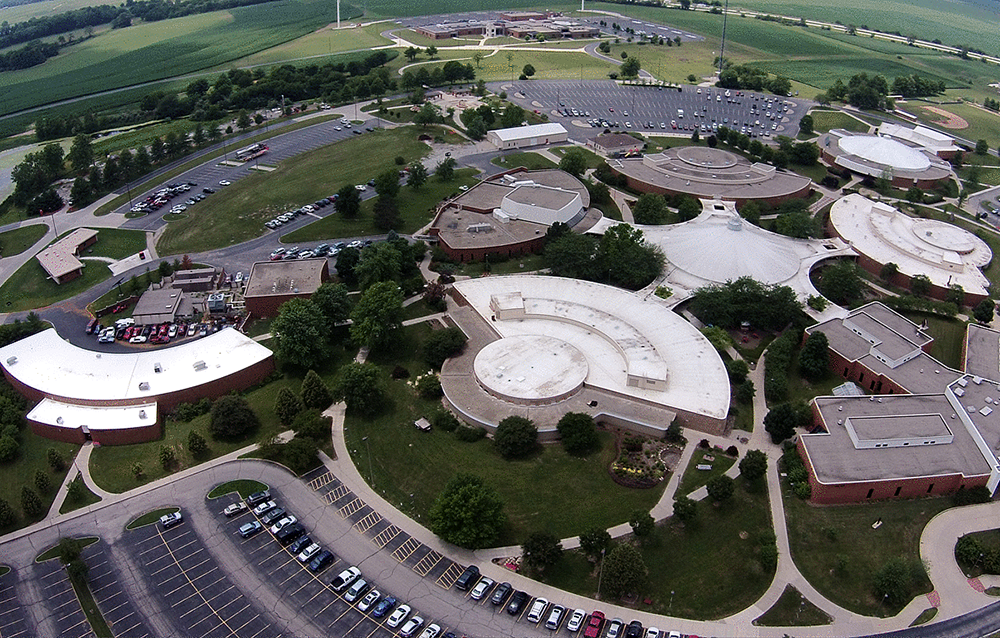
Lake Land Seeks State Funding for Major Renovations to Four Campus Buildings