
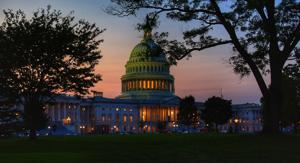
Bipartisan senators reintroduce H-1B visa reforms
(The Center Square) — As the Trump administration’s recent efforts to reform the H-1B visa process by adding a one-time $100,000 fee for new applicants, a bipartisan group of senators reintroduced legislation designed to reform the H-1B visa process.
Sens. Chuck Grassley, R-Iowa and Dick Durbin, D-Ill., reintroduced the H-1B and L-1 Visa Reform Act on Monday, which implements new wage, recruitment and attestation requirements for employers seeking H-1B and L-1 workers.
“Congress must step in again to bring integrity back to these programs and restore dignity for American and foreign workers,” Grassley said.
The legislation was first introduced by the two senators in 2007. H-1B visas are designed to recruit foreign workers for specialized roles in U.S. companies. These visas are typically used in science, engineering and technology fields. Amazon, Meta, Google and Apple were among the top companies to petition for H-1B visas last year.
L-1 visas are for U.S. employers to transfer employees from foreign offices to their equivalent roles in U.S. subsidiaries.
The legislation proposes requiring employers to make wage determinations for H-1B workers that are no less than the highest of either the locally determined prevailing wage level, the median wage for all workers in the occupation’s employment area or the median wage for skill level from the most recent occupational employment statistics survey.
The legislation would also require employers to post jobs for H-1B workers on a Department of Labor website to give laid-off H-1B workers and U.S. workers equal access to the program.
“Major companies are laying off thousands of American workers while filing thousands of visa petitions for foreign workers at depressed wages and poor working conditions. Congress must step in to protect American workers and fix our broken immigration system,” Durbin said.
The legislation would also place a higher preference on petitioners to the H-1B program who have advanced degrees in science, technology, engineering and math from a U.S. college or university.
For L-1 visas, the legislation proposes placing new time limits on and evidentiary requirements for employers petitioning to bring workers into the U.S. This appears to be in an effort to combat alleged fraud in the L-1 visa system.
“Congress created the H-1B and L-1 visa programs as limited pathways for businesses to acquire top talent when it can’t be found at home. But over the years, many employers have used them to cut out American workers in favor of cheap foreign labor,” Grassley said.
Sens. Tommy Tuberville, R-Ala., Richard Blumenthal, D-Conn., and Bernie Sanders, I-Vt. cosponsored the bill alongside Grassley and Durbin.
Grassley and Durbin said they sent letters to 10 U.S. employers last week, including Amazon, Google and Meta criticizing the companies practices of laying off American workers in favor of recruiting foreign employees.
“In evaluating the high unemployment rate for American tech workers, we cannot ignore the massive, ongoing layoffs ordered by you and your peers,” Grassley and Durbin wrote in the letters. “At the same time you have been laying off your employees, you have been filing H-1B visa petitions for tens of thousands of foreign workers.”




Sunny
Latest News Stories

Illinois Gov. Pritzker signs assisted suicide bill

Hochul weighs AI regulations as Trump sets federal rules

EXCLUSIVE: First Nation police chiefs want to participate in border security efforts
Justice Department sues Fulton County over election records

USPS electric fleet push sparks cost, security and job concerns

WATCH: Use of Guard debated; Trump singles out Pritzker on AI; Property tax ruling

Illinois quick hits: Chicago Fed president explains vote; Treasurer encourages Bright Start gifts

EXCLUSIVE: Canadian groups, First Nation police support stronger border security

More than 9,500 commercial truckers taken off U.S. roads nationwide

WATCH: ‘Unfortunate accident’: Miss. senator blasted for comment on Guard troop shootings
WATCH: House Homeland Security hearing filled with tense exchanges

Judge rules against Trump’s freeze on wind energy

