WATCH: Illinois Republicans propose law putting distance between protesters, police
(The Center Square) – Illinois statehouse Republicans are pushing for a measure to give police conducting official business some distance from protesters as immigration enforcement ramps up.
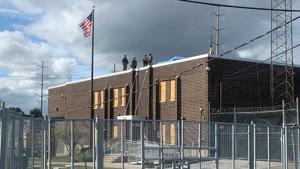
Speaking with members of the military at Quantico on Tuesday morning, President Donald Trump talked about how close protesters are getting to U.S. Immigration and Customs Enforcement officers, as has been seen in the village of Broadview, Illinois.
“People are standing, their mouth is this far away from their mouth, and they’re spitting at them, screaming at them,” Trump said.
Trump said “if they spit, we hit.” He also said Illinois “desperately” needs the military to address public safety.
The village of Broadview told the community of 8,000, that local police and first responders “did not attack demonstrators.”
“Actions taken during protests were by federal ICE agents, not by our local officers,” wrote Mayor Katrina Thompson. “I want to emphasize that while Broadview will always respect and uphold the Illinois Trust Act and protect your constitutional First Amendment rights, we ask that demonstrations remain peaceful and that confrontations with federal agents be avoided.”
The Illinois TRUST Act prohibits local and state law enforcement in Illinois from cooperating with federal immigration officials enforcing civil detention orders.
Last week, the U.S. Department of Homeland Security said protesters in Broadview were chanting “arrest ICE, shoot ICE.” Two individuals were later arrested and charged this week with illegally possessing firearms.
Iowa U.S. Senator Chuck Grassley told a Senate committee Tuesday that federal officials aren’t getting any cooperation from local officials.
“Just this month, the Department of Homeland Security reported that police under Governor Pritzker’s sanctuary jurisdiction refused to answer multiple calls for assistance when violent rioters physically assaulted federal immigration officers,” Grassley said.
The acting director of ICE sent a letter to the Broadview, Illinois, mayor saying they can “either continue to be part of the problem or choose to be part of the solution.”
“These rioters are laying siege and interfering with legitimate law enforcement operations,” wrote ICE Acting Director Todd Lyons. “Failure to help provide relief makes you a party to the obstruction of justice.”
Pritzker said he’s been in talks with law enforcement in Broadview.
“We’re in constant and consistent communication with Broadview police, with the Broadview mayor, offering every bit of assistance,” Pritzker said after an unrelated event Tuesday. “We are providing perimeter assistance, through state police. Continual conversation with the governor’s office and the mayor’s office.”
State Rep. Jeff Keicher, R-Sycamore, proposes House Bill 4142, setting a 14 foot distance for how close people can get to law enforcement conducting official activities.
“To allow our law enforcement the space that they need to operate and protect both the bystanders and the officers themselves,” Keicher said during a news conference about increased threats against ICE.
Keicher said he’s received positive feedback from law enforcement organizations for his bill. The measure has yet to be assigned to a committee.


Sunny
Latest News Stories
Bill to let felons vote from prison draws criticism from Republicans
Supreme Court yet to decide high profile cases

Government spending on seniors’ benefits soon to make up majority of federal budget
Illinois Dems seek to expand post-release convict support, housing
$580B federal highway bill clears committee; includes rail safety, EV fees
Tennessee smuggling charges against Kilmar Abrego Garcia dismissed
NASA reorganizes to accelerate Moon Base, lunar programs
Gabbard announces resignation, cites personal reasons

Illinois Quick Hits: Community College reimbursement bill passed
Powell out, Warsh in as new chair of Federal Reserve

Nessel pushes back as Trump administration extends order keeping coal plant open

Bipartisan praise for federal charges in Minnesota fraud cases