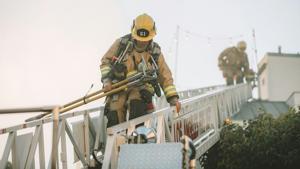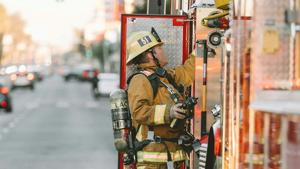
Palisades Fire report praises firefighters, cites challenges
Los Angeles’ initial response to the fast-spreading Palisades Fire was hampered by communications breakdowns and problems with the Los Angeles City Fire Department leadership, according to the city’s after-action report.
But the report also praised firefighters’ heroic efforts to save lives and properties during one of the most destructive blazes in the history of Los Angeles.
“Thousands of residents were safely evacuated,” the report noted, citing the 2020 census showing 22,864 people lived in the area of the fire.
The Palisades Fire killed 12 people, burned 23,448 acres and destroyed 6,833 structures, according to the California Department of Forestry and Fire Protection. It struck in the coastal Los Angeles neighborhood of Pacific Palisades and the nearby beach city of Malibu and inland areas.
“The Palisades Fire was one of the worst natural disasters in our city’s history. It is vital we learn from what was effective, like the relentless heroism of firefighters responding to the blaze, and the challenges we faced in order to build a stronger emergency response system to prepare for whatever may come our way,” Mayor Karen Bass said in a statement after the report was released Wednesday. The release was delayed until the conclusion of a U.S. Department of Justice investigation, per an agreement with the city. Acting U.S. Attorney Bill Essayli Wednesday announced the arrest of Jonathan Rinderknecht, 29, a Melbourne, Fla., resident who was charged with destruction of property by means of fire.
The Los Angeles City Fire Department prepared the after-action report, which was based on almost 100 interviews with officials, units and support staff.
The report praised the department for effective collaboration with local, state and federal partners and for effective air operations, including those at night. It said training and operational planning maintained control and reduced injury, but noted the challenges firefighters faced.
“Responders were faced with the inevitable consequences of a perfect storm: dry vegetation, unrelenting and unusual wind activity, significant ember cast, a landscape packed with combustible vegetation, large vulnerable structures, a diminishing water supply and a loss of aerial suppression support,” according to the report. It said some winds exceeded 100 mph.
“The local water infrastructure was never designed to support firefighting operations at this scale and intensity, while at the same time experiencing thousands of breaches in residential supply lines due to open pipes,” the report said.
The report noted the volume of the water in the fire hydrants decreased over time.
And the report said the fire department leadership made decisions at the start of the fire that caused a lack of a full, all-hands resource deployment.
In February, Bass fired Los Angeles Fire Chief Kristin Crowley, who filed a legal claim in August against the city and the mayor for “a campaign of misinformation, defamation and retaliation.” Crowley’s claim said her dismissal came as retaliation for Crowley telling city leadership and the public that the mayor’s budget cuts and years of neglect from the city caused the fire department to be underfunded, understaffed and ill-equipped.






Slight Chance Showers And Thunderstorms then Chance Showers And Thunderstorms
Latest News Stories

Casey-Westfield Dominates, Remains Undefeated with 38-14 Win Over Robinson

WATCH: Appeals court hears gun ban today; Edgar, Kirk memorialized

Lake Land College Adopts Stricter Hazing Policy in Line with New Federal Law
School Board Approves New Hires, Accepts Resignations and Retirement
Lake Land College Board Approves $117.7 Million Operating Budget for FY 2026

District Lands $98,950 Grant for New Student Chromebooks
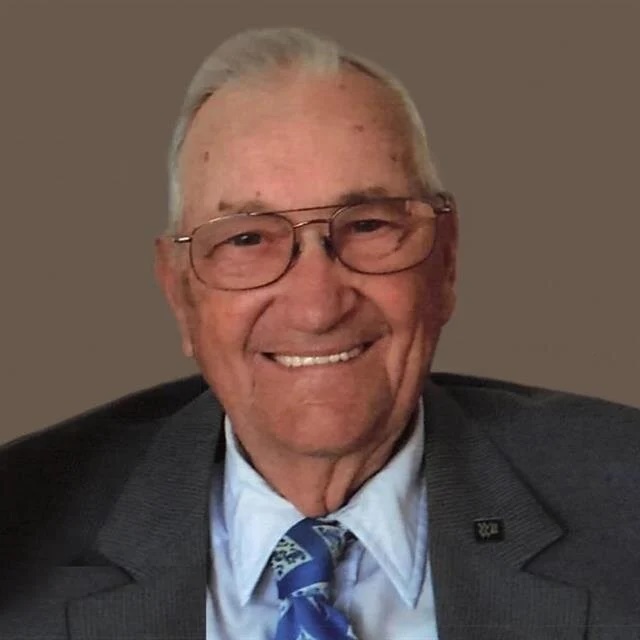
Wilford “Rex” Hickox, 98

Richard Alan Darr, 50

Illinois’ gun ban set for oral arguments in appeals court Monday

Law professor explains why Trump could win tariff case

Resident Raises Concerns Over Sunday Youth Football Games

WATCH: Los Angeles schools superintendent renews contract