Supreme Court rejects bid to overturn H-1B visa rule
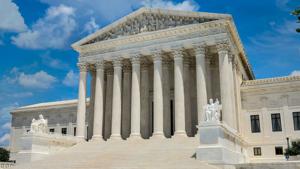
The U.S. Supreme Court on Tuesday declined to hear a case challenging a rule that allows spouses of H-1B workers to work in the United States.
In the case, Save Jobs USA challenged a 2015 rule allowing spouses of H-1B workers to get H-4 visas. The rule was put in place by the Obama administration.
“Its definition contains no indication of work authorization, and for forty-five years the executive interpreted it as not permitting work,” a petition to the court reads.
The H-1B program allows businesses to petition for high-skilled foreign workers, typically with at least a bachelor’s degree, to work and live in the United States.
The visa is most often used by companies in the technology industry. In fiscal year 2025, Amazon, Meta and Apple were among the top petitioners for H-1B visas, according to data from the U.S. Citizenship and Immigration Services website.
The high court’s denial to hear arguments in the case comes as President Donald Trump imposed a $100,000 fee on businesses that apply for new H-1B workers. The fee has already been challenged by a group of several unions.
The Department of Homeland Security granted more than 25,000 H-4 visa petitions to spouses of H-1B workers in fiscal year 2024, according to department data.
The District of Columbia circuit court previously rejected Save Jobs USA’s petition to change the rule allowing spouses to work in the country.
“Since announcing its claim of having unlimited authority to permit alien employment, DHS has promulgated regulations authorizing several massive alien employment programs entirely through regulation,” Save Jobs USA’s petition reads.
The petition pointed to the optional practical training program, which allows immigrant students to remain in the country after graduating from a U.S. college or university and before obtaining work authorization through the H-1B program.
“As long as aliens can work in the United States, they can afford to remain in the United States,” the petition reads. “This regulatory transformation of parole has subjected small communities to a huge influx of aliens that the communities have to support with increases in services.”




Mostly Sunny
Latest News Stories
TCS stories about Illinois’ diversity agency prompts call for audit
DOE issues emergency orders to mitigate blackouts in New England, Texas

First Annual Laker Academic Invitational to be Held for Local High School Students

Government Shutdown Causing Ambulance Billing Delays
Everyday Economics: Fiscal reality meets Central Bank caution in week ahead

Tariff uncertainty here to stay regardless of Supreme Court ruling

Nearly 1M without power as massive winter storm rages
Walz deploys 1,500 National Guard troops in Twin Cities
Epsilon Sigma Alpha Approved as New Student Organization
GOP looks to hold, expand U.S. House majority
Noem defends fatal shooting of armed man in DHS confrontation
Govt. funding process close to finish line as Senate preps for final vote