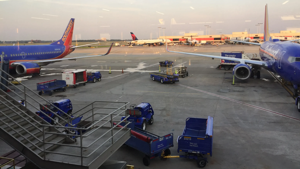

U.S. Chamber of Commerce sues Trump over H-1B visa fee
The U.S. Chamber of Commerce, one of the world’s largest business federations, filed a lawsuit against the Trump administration on Thursday over its proposed $100,000 H-1B visa fee.
On Sept. 19, President Donald Trump issued a proclamation imposing a one-time, $100,000 fee on new H-1B applications. The administration cited wage suppression and lack of jobs for American workers in its proclamation.
H-1B visas are typically issued to high=skilled foreign workers with bachelor’s degrees at minimum. Foreign workers are typically employed in technology, engineering and science fields. Amazon, Meta and Apple are among the top employers petitioning for H-1B workers in 2025.
Congress sets a cap of 65,000 H-1B visas per year but allows up to 85,000 for individuals with advanced degrees.
“If implemented, that fee would inflict significant harm on American businesses, which would be forced to either dramatically increase their labor costs or hire fewer highly skilled employees for whom domestic replacements are not readily available,” the chamber said in its court filing.
The chamber said competing countries could take advantage of fewer foreign workers being recruited in the United States due to the new visa fee.
China recently launched its new visa program, the K visa, to recruit workers in science, technology and engineering fields.
The visa is designed “to promote exchanges and cooperation between young science and technology talents from China and other countries,” said Guo Jiakun, Chinese foreign ministry spokesperson.
The chamber said imposing the fee goes beyond the president’s authority to issue rules related to immigration. The lawsuit cited the Immigration and Nationality Act, which gives Congress the authority to set fees for immigrant visas.
The business federation also argued the administration’s fee is unlawful by itself.
The lawsuit said allowing the fee to be implemented would give “the President blanket authority to create completely different classifications, rules, and procedures, and deny ‘entry’ to any noncitizen who did not comply with them.”
On Oct. 3 a coalition of unions also filed a lawsuit against the Trump administration’s H-1B fees in California.
“Most fundamentally, the President has no authority to unilaterally impose fees, taxes or other mechanisms to generate revenue for the United States, nor to dictate how those funds are spent,” the lawsuit reads.
The unions also argue imposing a fee on new petitions will harm hospitals, churches, schools and universities, on the basis that the law will lead to a workforce shortage in critical industries.
The U.S Chamber of Commerce filed its lawsuit in the district court of the District of Columbia.
“It blatantly contravenes the fees Congress has set for the H-1B program and countermands Congress’s judgment that the program should provide a pathway for up to 85,000 people annually to contribute their talents to the United States for the betterment of American society,” the lawsuit reads.
Events

Latest News Stories

WATCH: Trump, Mamdani meeting cordial with leaders finding common ground

Study: K-12 public spending nears $1 trillion in U.S.
WATCH: Power grid regulator says PNW in ‘crosshairs’ for potential winter blackouts

States push back on exclusion of noncitizens from SNAP
Pritzker suggests he’s open to tweaking SAFE-T Act after train passenger fire

Arizona attorney general to appeal ‘fake electors’ ruling

Illinois quick hits: Small business grants announced; new Naperville DMV
Clintons ordered to testify on connections to Jeffrey Epstein in December

CBO says foreign companies could pick up some tariff costs

Guidelines issued on how taxpayers can claim deductions on tips, overtime in 2025

GOP attorneys general back rail merger, splitting Republicans on deal
WATCH: Trump admin moving ahead with dismantling the U.S. Dept. of Education