IL State rep: Grants are paying off in effort to combat auto thefts, carjackings
(The Center Square) – A bipartisan group of elected officials are applauding a new round of state grants to help police crack down on auto thefts and carjackings.
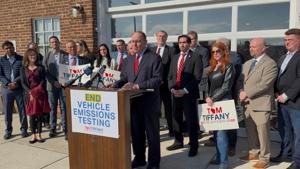
Illinois Secretary of State Alexi Giannoulias announced more than $11 million in new grants at a press conference Monday in Belleville.
“Distribution of these grants has coincided with a gradual drop in vehicle thefts throughout Illinois and a dramatic plummet in the number of carjackings in Chicago,” Giannoulias said.
According to the Secretary of State’s Office, carjackings in Chicago dropped from a high of 1,852 in 2021 to 379 reported so far this year.
Giannoulias said that the program helped recover $65 million in stolen vehicles in the last year, resulting in a $5.50 return for every dollar spent.
Insurance companies fund the grants by providing $1 for every passenger vehicle they insure to the Secretary of State’s Office.
Giannoulias said innovative initiatives employed by six agencies helped reduce crime and hold criminals accountable but admitted that crime remains a major problem throughout the state.
The secretary said it was a scarring moment in his life when he was carjacked more than 30 years ago.
Several law enforcement officials joined Giannoulias at Monday’s press conference, along with a number of Republican and Democratic state lawmakers representing districts in the Metro East area.
“To me, it represents the very best of law enforcement, of government, when Democrats and Republicans work together, when law enforcement works with the insurance industry to find best practices,” Giannoulias said.
State Rep. Patrick Sheehan, R-Homer Glen, has worked as a law enforcement officer for almost 19 years. In an interview with The Center Square, Sheehan pointed to the program’s success at bringing crime numbers down.
“A lot of it has to do with the investments in technology, whether it’s drones or the state police uses of Cessnas. Now we’re able to dedicate personnel and have different task force groups,” Sheehan explained.
Sheehan said the different groups now use a multi-jurisdictional approach.
“The collaboration between multiple law enforcement agencies have been able to really kind of put the brakes on a lot of these crimes that we saw the numbers going through the roof, especially during the pandemic and post-pandemic,” Sheehan explained.
Sheehan noted that the task force recovers vehicles for rental companies as well as for private citizens but does not utilize state tax dollars. He said more funding is needed.
“Whether that’s the insurance companies kicking it up another dollar and passing it on to the consumer, whether it’s having these rental companies being a part of the grant process and paying their fair share, that way we’re able kind of offset the costs of the officers’ salaries, the technology, whether it’s the drone technology, the license plate readers, the Cessna, able to use this multi-jurisdictional approach,” Sheehan said. “I think it’s only fair that some of these groups kick in their fair share.”




Slight Chance Showers And Thunderstorms then Chance Showers And Thunderstorms
Latest News Stories

Artemis II mission breaks records Monday as astronauts observe far side of the moon
Illinois quick hits: Illinois House speaker’s son to attend private school; AFSCME workers set strike date at Illinois State University; IDOT urges public to avoid distracted driving

Federal-state showdown looms over regulation of prediction markets

No-knock warrant legislation brings Chicago victim, Illinois gun group together
Trump promises ‘complete demolition’ in Iran as deadline looms

‘We leave no American behind’: President Trump details Easter rescue of downed airman

Michigan charges dentist in alleged ‘massive’ Medicaid fraud scheme

Illinois bill sparks debate over police privacy vs. public access

Signature process begins to ban large data centers in Ohio

U.S. Supreme Court agrees to hear veteran’s benefits challenge

Supreme Court declines to hear challenge to Illinois public transport gun ban

Illinois Quick Hits: Report says Pekin Bowling Center ‘taxed out of business’