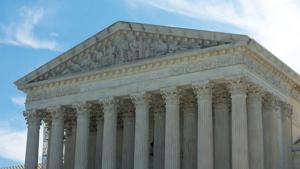
Supreme Court to consider drug user gun possession case
The U.S. Supreme Court agreed on Monday to hear a case regarding whether regular drug users can possess firearms.
The case, United States v. Hemani, challenges whether federal statutes barring a person who “is an unlawful user of or addicted to any controlled substance” violates the Second Amendment.
The case centers on a Texas man who was charged with a felony when FBI agents found a pistol, marijuana and cocaine in his home after obtaining a search warrant, a petition to the court read.
The Trump administration petitioned the high court to hear the case after a lower court struck down the law barring people who use drugs such as marijuana from possessing firearms.
The Trump administration argued that regular drug users can simply stop their use to regain access to firearms under the law.
“By disqualifying only habitual users of illegal drugs from possessing firearms, the statute imposes a limited, inherently temporary restriction—one which the individual can remove at any time simply by ceasing his unlawful drug use,” the Trump administration’s petition reads.




Sunny
Latest News Stories
DHS pushes back on Minnesota lawsuit over Metro Surge shootings
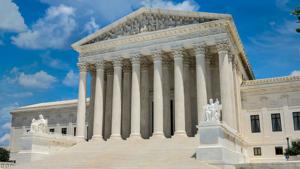
Supreme Court reverses $1B copyright lawsuit

U.S. Supreme Court rules against automatic prison release punishments

State Police address FOID, cyber security audit findings
Poll: Trump demonstrates stronger cognitive, communication skills compared to Biden
Illinois Quick Hits: Red Line funds ordered to be unfrozen
EXCLUSIVE: 5 years in, Operation Lone Star seizes 870 million lethal doses of fentanyl
Proposal to decrease reliance on paper documents passes House

Late Sixth-Inning Surge Lifts Casey-Westfield Baseball Past Altamont 4-1
Monroe Elementary Reading Initiatives Raise $13,000 as Students Log Nearly 91,000 Minutes

Gilbert Drives in Five as Casey-Westfield Outslugs Windsor/Stewardson-Strasburg 11-7
Meeting Summary and Briefs: Marshall C.U.S.D. C-2 Board of Education for March 12, 2026

Chicago can’t ditch airlines’ suit vs ‘disruptive’ paid sick leave rules
FEMA says funding debate didn’t affect response to Hawaii