Op-Ed: 340B needs transparency to fulfill Its mission
For the 5,000 people in Illinois living with sickle cell disease, access to affordable medical care and life-saving treatments is necessary. Yet far too many still struggle to get the medications and services they need.
The 340B federal drug discount program was created to address this very issue. By allowing eligible health care providers to purchase outpatient drugs at steep discounts, it was supposed to free up resources to better serve low-income and uninsured patients. But today, the program is at a crossroads – growing rapidly without a clear view of whether those funds are truly being used to help the people it was originally intended to serve.
Here in Illinois, lawmakers are considering expanding the 340B program to allow providers to contract with an unlimited number of outside pharmacies. Before expanding a system with such limited oversight, we need to ask a simple question: Where are the margins from these discounted drugs going?
Currently, Federally Qualified Health Centers (FQHCs) – true safety-net providers – are required to reinvest 340B savings directly into patient care. Their finances are transparent. But many large hospital systems, which now dominate the 340B landscape, are not held to the same standard. These hospitals can profit from the price difference between what they pay for discounted drugs and what insurers or patients are charged – without being required to show how or if that profit is spent on helping underserved communities.
The result? Some hospital systems appear to be leveraging the program for growth and revenue, not patient care. Many have expanded their clinical and pharmacy networks into wealthier, privately insured areas while downsizing or neglecting services in the low-income communities that originally qualified them for 340B in the first place.
A recent New York Times report spotlighted this troubling trend. In Richmond, Virginia, a hospital owned by Bon Secours Mercy Health used its 340B status to open satellite locations in affluent suburbs, all while essential services disappeared from the original site in a low-income, minority community. That hospital—still officially part of the 340B program—now only operates an emergency room and a psychiatric ward.
This is not what the program was meant to be.
Sickle cell patients, who are disproportionately Black and Latino, often rely on institutions like FQHCs to access affordable treatment. We can’t afford to let a program meant to protect vulnerable patients drift into a system that quietly redirects savings away from the people who need them most.
That’s why transparency is essential. We need common-sense reforms that show where 340B dollars go and how they’re used. Hospitals benefiting from 340B must be held to the same standard of accountability as FQHCs: If they’re making money off discounted drugs, they must prove that those dollars are being reinvested into care for underserved populations.
Illinois lawmakers must press pause on expanding the program until they can answer this basic question: Are 340B dollars helping patients, or just boosting hospital margins? Without transparency, we risk losing the trust—and the effectiveness—of a program that began with good intentions.
The 340B program was created to serve people like the patients in our community. Let’s make sure it still does.




Isolated Rain Showers
Latest News Stories

Casey-Westfield FCCLA Ranked No. 1 in Region for Service Hours
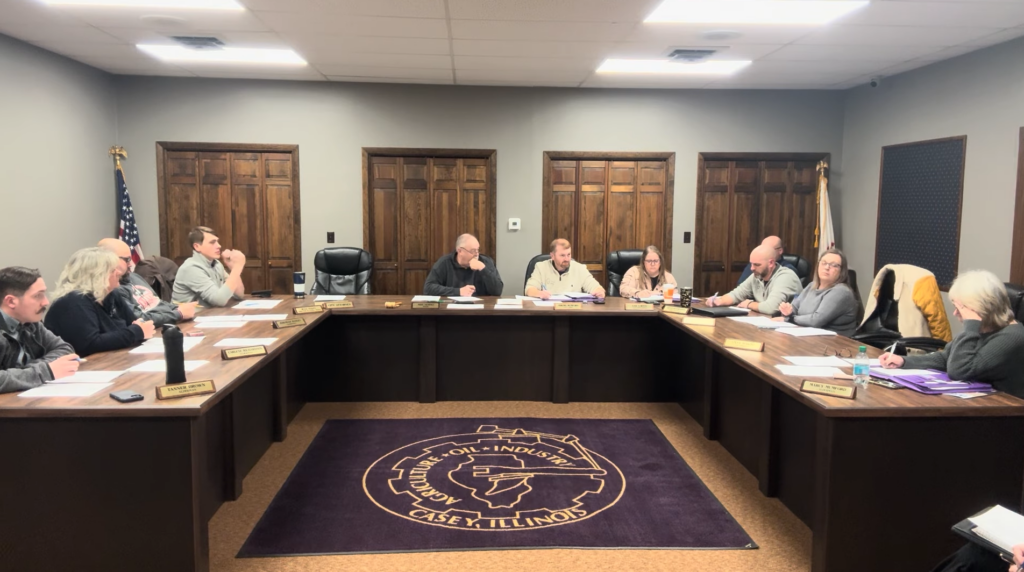
Senate Bill Secures $1 Million for Casey Sewer Improvements

EXCLUSIVE: 5 largest U.S. cities don’t have enough money to pay bills: report

INVESTIGATION: Wisconsin university closes DEI unit but keeps most staff working on equity issues
Board Approves Updated School Resource Officer Agreement
Casey Advances Housing Strategy with Land Bank Transfers and Inspection Contract

Chicago’s $41 billion financial hole exposes city’s pension crisis

Trump seeks $1B from Harvard in federal funding dispute

Lawmakers react to U.S. Supreme Court’s ruling on Prop. 50

WATCH: Senators slam fraud, call for welfare scrutiny in Minnesota

Nurses demand inclusion in professional degree definition

Early voting starts Thursday in most Illinois jurisdictions