Poll: Most voters against federal govt controlling education
A vast majority of Americans do not believe the federal government should have control over education policy, according to a new poll.
The Center Square Voters’ Voice Poll found that only 11% of American voters think the federal government should set standards for curriculum, testing and school choice.
Instead, 33% of American voters said local school districts should set curriculum, testing and school choice standards. About 23% of voters said parents should set educational standards.
About 32% of Republican voters supported allowing parents to set education policy whereas only 13% of Democrat voters said the same.
The Center Square’s Voters’ Voice Poll, conducted by Noble Predictive Insights, surveyed 2,565 registered voters between Oct. 2-6. The poll included 978 Republicans, 948 Democrats and 639 Independents, of which 262 lean toward neither major party.
At about 41%, a plurality of Democrats supported letting local school districts set education policy. About 36% of independent voters also supported allowing local school districts to set education policy.
“Voters across the board are clearly signaling ‘less D.C., more local control,’” said Mike Noble, founder and CEO of Noble Predictive Insights.
Respondents’ level of education also had little significant impact on the poll’s results. About 15% of college educated respondents said the federal government should control education policy and only 8% of respondents with no college degree said the same.
About 37% of respondents with no college degree said local school districts should set testing, curriculum and school choice standards. About 32% of respondents with college degrees think state governments should control education policy.
“That dovetails with the broader populist mood,” Noble said, “People want decisions about curriculum and standards made closer to their communities, not by federal bureaucrats.”
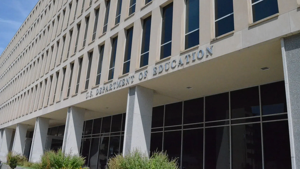
The lack of popular support for federal control over educational policy appears to align with the Trump administration’s efforts to reduce operations within the U.S. Department of Education.
In March, President Donald Trump signed an executive order giving Secretary Linda McMahon authority to dismantle the Department of Education.
McMahon spoke at the Defense of Freedom Institute and Federalist Society’s Education Law and Policy Conference in September about the Education Department’s efforts to withdraw federal funds from schools, expand trade and apprenticeship programs, and move its functions elsewhere to other agencies.
“I have changed now how we are talking about closing the department, really to returning education to the states, and in order to do that I think we have to continue to uphold the law,” McMahon said.
Even still, the department has launched investigations into universities and public school districts over policies allowing transgender students into women’s locker rooms in Virginia and DEI practices.
Ultimately, less federal control of educational policy appears to have popular support from a bloc of voters, according to the poll.
“His administration’s efforts to downsize the Department of Education and elevate ‘parents’ rights’ language resonated with that sentiment, especially among conservatives and independents,” Noble said.
Events

Latest News Stories

Foundation Receives One of its Largest Gifts of all Time

Expert: Illinois’ outdated tax law leaves homeowners, taxpayers on the hook

Illinois quick hits: Midway Blitz nabs nine drunk drivers; Madigan prosecutor to depart
Lawmakers divided after federal complaint targets student mental health screening law

Normal, IL fire and EMS challenges highlight need for statewide task force

Analysis: Chicago among worst cities to drive in
First lawsuit filed against Camp Mystic by parents of five campers, two counselors
Senate votes to reopen government, sending funding bills to House

Illinois quick hits: Bailey to stay in governor’s race

Airlines warn flight reductions could cost U.S. economy

Report: Less than half of CPS students performing at grade level

WATCH: IL comptroller candidates focus on transparency, timely reporting