
Texas leaders look to immigration reform
Local mayors in Texas are calling on state and federal leaders to implement worker protections for immigrant workers.
“This is not Republican, this is not Democrat, this is real time solutions to help our economy to keep our economy moving forward,” Alamo mayor J.R. Garza said at a recent roundtable.
The call from local leaders mirrors efforts throughout the state over the decade to address workforce shortages and protect immigrant workers.
In 2013, the Texas legislature introduced the “Texas Essential Workers Program.” The program was designed to provide employers in ranching, farming, dairy, food manufacturing, construction, landscaping and restaurant or food services with a “stable workforce.”
The bill highlighted that those industries often experience workforce shortages throughout the state and tend to exploit undocumented workers.
The legislature enacted the program to allow the Texas Workforce Commission to contact industries where workforce shortages exist and calculate how many workers it would take to address those shortages.
After determining how many workers would be needed in the industry, the commission would petition the federal government for the number of workers certain employers would need.
The program was designed for employers whose jobs were left unfilled for more than 30 days after a job was posted in ranching, farming, dairy, food manufacturing, construction, landscaping and restaurant or hotel services.
The Texas program would have marked a shift in immigration policy as state leaders petition the federal government for worker visas.
Michelle Waslin, assistant director of the Immigration History Research Center at the University of Minnesota, has studied state-based immigration solutions for years. She said states across the country have proposed many solutions to expand federal programs.
“We’re seeing states, regardless of political party, or rural or urban split or whatever geography, realizing that the current immigration system isn’t working for them,” Waslin said.
The Texas legislature’s program was never signed into law or implemented by the state government. The Texas legislature also issued a similar program in 2015 that did not get passed. Despite the unsuccessful attempts, Waslin sees the current debate over immigration policy as an opportunity to challenge the federal government’s immigration enforcement.
Waslin said she has recently noticed state and local leaders recognizing the harms that federal enforcement may be causing.
“We’re seeing this in industries like construction, like agriculture, sectors that have been really disproportionately dependent on immigration labor,” Waslin said. “We’re absolutely seeing now changes in the immigrant population, a lot more arrests and deportations.”
Dante Galeazzi, president of the Texas International Produce Association, said the deportations have impacted his industry and reduced the number of workers he has. Galeazzi also called for reforms to the federal immigrant work programs.
The recent calls for reform could bring about the introduction of another state-based visa program in Texas.
“It’s an expensive program. It’s not accessible for our small and medium farmers, there’s tons of problems and the government doesn’t run it incredibly well, but it’s the only program we have, so we’re forced into this pigeonhole,” Galeazzi said.






Sunny
Latest News Stories

Supreme Court rules for Texas in Rio Grande River lawsuit
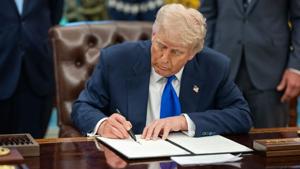
Trump appoints housing regulator as acting spy chief

Mullin defends $118B Homeland Security budget request

Bill loosens in-state tuition requirements

Illinois Quick Hits: Nine arrested during Naperville teen gathering
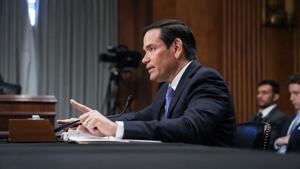
Rubio provides few answers to Congress on Iran conflict timeline

Pritzker housing proposal partly stalls amid overreach concerns from localities

HUD shifts $4B homelessness program from ‘Housing First’ to treatment

Poll: Democrats hold slight edge over Rogers in Michigan U.S. Senate race

Swipe fee battle continues after delay, court ruling

Walz appoints members to Operation Metro Surge ‘Truth Council’

$45M included in budget for previously unfunded property tax relief