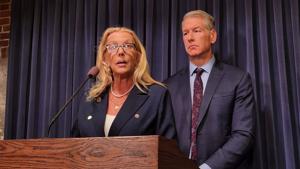
WATCH: GOP lawmaker: Pritzker-back energy omnibus will lead to higher bills
(The Center Square) – Illinois lawmakers are debating an energy omnibus bill during the final days of fall veto session, but the ratepayer impact of the legislation remains a question mark.
Several Illinois Democrats joined clean energy and organized labor groups to lobby support for Senate Bill 25 in Springfield Tuesday.
State Rep. Jay Hoffman, D-Swansea, said the electric price increases Illinoisans experienced last summer were unacceptable.
“We have to act and we have to act today and we have to act tomorrow and get this through this veto session, because we can’t go through another summer of these horrendous spikes in electricity bills,” Hoffman said.
Citizens Utility Board Executive Director Sarah Moskowitz joined Hoffman at the press conference and said the bill provides tools to protect consumers.
“These tools such as energy efficiency, battery storage, virtual power plants and optional time-of-use rates can work on a system-wide level to cost-effectively help us avoid electric price volatility,” Moskowitz said.
Lawmakers on both sides of the aisle have expressed opposition to a bill provision that would have consumers pay for the cost of battery storage.
Climate Jobs Illinois Executive Director Joe Duffy said the energy omnibus bill is a win for union workers.
“It ensures that major wind, solar and thermal energy projects will be built by skilled local union labor, benefiting Illinois communities,” Duffy said.
Climate Jobs Illinois is a coalition of labor organizations advocating for a pro-labor, pro-climate agenda.
According to clean energy advocates, Illinois Power Agency analysis shows SB 25, also known as the Clean and Reliable Grid Affordability Act (CRGA) will save consumers more than $13 billion over the next 20 years.
Illinois Senate Deputy Minority Leader Sue Rezin, R-Morris, said SB 25 is being pushed by Gov. J.B. Pritzker’s administration and was written by special interests.
“This proposal will lead to higher electric bills, less reliability and fewer options for families and manufacturers alike,” Rezin said.
Rezin said the bill lifts price caps on rates and consumers will pay the price.
According to Rezin, energy prices have gone up because capacity is being forced offline.
“Natural gas plants in this state are being forced offline. Natural gas is the cheapest way to provide capacity, which is what we need because of the new economy, the [artificial intelligence] economy that you hear about,” Rezin said.
Rezin said other states are building out natural gas combined-cycle plants to power their data centers.
Illinois Industrial Energy Consumers Chairman Phillip Golden called on the state legislature to delay a vote on the bill in order to clarify the economic impact it will have on electricity consumers.
Golden said in a statement that any benefits from the legislation would take decades to see, but “the real costs would start immediately.”
The fall veto session is scheduled to conclude Thursday.




Partly Sunny
Latest News Stories

Do No Harm claims racial discrimination in civil rights complaints against 2 health groups

Clark County Bans Kratom Sales in Unincorporated Areas

Senate Judiciary confronts rise in child trafficking and sextortion

WATCH: Gov. Ferguson signaling income tax bill may be dead for session

Lawmakers consider SNAP, other amendments to 2026 farm bill

Los Angeles school board borrows $250M for settlements
WATCH/EXCLUSIVE INTERVIEWS: California Voter ID measure gets over 1 million signatures

As fighting intensifies overseas, Republicans push harder to get DHS funded

Reported debt deal, credit downgrades may add to Chicago budget woes

State financial officers protect, recover $28B in tax dollars in 2025

Iran war, Saudi outage to boost U.S. propane, butane exports

Pritzker announces $2B in medical debt erased, half in Cook County