
Economists say Trump’s tariff play could boost trade deficits
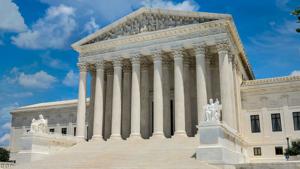
Economists told the U.S. Supreme Court that President Donald Trump’s plan to reduce U.S. trade deficits will backfire, exacerbating the underlying issue the president used to justify the sweeping tariffs.
The economists filed a friend-of-the-court brief arguing that Trump’s trade policies won’t address the trade deficit emergency the president says gives him authority to impose broad tariffs that apply to nearly every imported product.
Trump said Tuesday that his use of tariffs generated $20 trillion in pledged U.S. investments from foreign countries. Those pledged investments would increase U.S. trade deficits, according to the economists.
“Thus, when the United States receives $1 trillion in foreign investments, it receives $1 trillion in imports,” attorneys for the economists wrote. “Increasing net foreign investment in the U.S. means increasing the U.S. trade deficit.”
The economists further argue that trade deficits aren’t unusual and don’t qualify as an emergency. The government has argued that the president has broad discretion to determine emergencies and that the courts can’t second-guess those decisions.
The economists used bananas to explain some U.S. trade deficits.
“The United States has the dominant technology sector in the world and, as a result, has been running a persistent surplus in trade in services for decades,” the attorneys wrote. “Conversely, the United States has long run banana trade deficits because the climate in the United States is not good for banana farming.”
Neither constitutes a national emergency, they argue.
Trump said the opposite when he declared a national emergency on April 2, the day he first announced his so-called reciprocal tariffs on every U.S. trading partner. Those rates have since been suspended and modified.
The economists further argued that Trump’s tariffs are so sweeping that they could not help but violate the major questions doctrine, which essentially says that an issue of major national significance must be supported by clear congressional authorization.
They say a 76-word provision of the 1977 International Emergency Economic Powers Act doesn’t explicitly authorize congressional authorization to “fundamentally transform the U.S. economy.” In fact, the 1977 law doesn’t mention tariffs at all.
“These sweeping tariffs, which apply to almost every good that enters the United States, will have massive budgetary, allocative, and distributive effects across the country,” attorneys for the group wrote. “Their impact on government revenue alone is one or two orders of magnitude greater than that of programs that this Court has already determined triggered the ‘major questions doctrine,’ whereby explicit Congressional authorization is required to impose programs of significant economic impact.”
An August report from the Congressional Budget Office estimated tariffs could generate $4 trillion over the next decade. However, the report came with caveats, noting that tariffs would raise consumer prices and reduce the purchasing power of U.S. families.
Trump has said that U.S. trade deficits are so large that the nation stands at a tipping point that could lead to economic disaster.
The economists said that’s not the case.
“They know of no ‘tipping point theory’ of trade deficits, or a clear causal pathway from persistent trade deficits to an undefined ‘national security catastrophe,’ and the government has not identified any,” attorneys wrote in the brief.
Dozens of economists signed on to the brief, including some notable names: former Federal Reserve Chairman Ben Bernanke, former Council of Economic Advisers Chairman N. Gregory Mankiw, Nobel Prize winner Roger Myerson, and former Treasury Secretary Janet Yellen.
The economists were represented by attorneys from Chicago-based Jenner & Block. That firm sued Trump in March after the president issued an executive order that threatened penalties against the firm. In May, a judge issued a permanent injunction in favor of Jenner & Block, holding the order unconstitutional. The Trump administration has appealed that ruling.


Chance Showers And Thunderstorms
Latest News Stories

Ava Goble’s Complete-Game Shutout Powers Casey-Westfield Past Richland County 8-0

Casey-Westfield Blanks Richland County 2-0 Behind Masterful One-Hit Shutout

U.S. Navy intercepts, seizes Iranian cargo ship

Everyday Economics: Retail sales and housing suggest a resilient consumer

Authorities: 8 children killed in domestic shootings in NW Louisiana

Reentry housing bill draws support from advocates; debate centers on cost, public safety
Supreme Court to hear migrant parole case Wednesday
U.S., Iran to resume talks; Trump issues dire threat

Trump admin seeks health-care price transparency

Energy industry celebrates Supreme Court ruling in favor of Chevron
Massive Fourth Inning Powers Casey-Westfield Past North Central 13-4

Illinois proposal aims to improve detection of potentially staged deaths