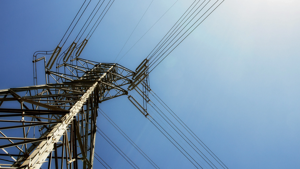
Report: PJM power grid electrification faces bumpy transition
(The Center Square) – The nation’s power grid is entering a new era of soaring demand – the full extent of which remains uncertain – and energy leaders warn that investments in new generation, efficiency, and infrastructure must begin now to prevent future shortfalls.
U.S. electricity demand is projected to rise 25% by 2030 and up to 78% by 2050, with peak demand growing 14% and 54% over the same period, according to a new report by consulting and technology firm ICF.
The report, “Rising Current: America’s growing electricity demand,” highlights three main concerns – reliability, affordability, and new generation – and suggests how grid planners can work together to meet those challenges.
Most new demand is driven by data centers and industrial sites, which require steady baseload generation, such as natural gas and nuclear plants, and robust demand-side management.
The report notes that in PJM’s region, data centers, building electrification, and semiconductor manufacturing, along with electric vehicles, account for 35% of projected load growth through 2040.
Reliability and Affordability
Reserve margins, the cushion between available generation and peak demand, average 24% nationally but could fall below the 15% reliability threshold by 2030.
Interconnection delays and firm generation like natural gas, nuclear, and hydropower lag behind retirements, so new capacity isn’t coming online fast enough to match accelerating demand.
ICF notes that it’s unlikely the U.S. will run out of electricity, but the next few years could be especially challenging as new projects take years to complete.
In one scenario based on estimated capacity reserves – and assuming some near-term power plant additions and retirements – ERCOT’s region, in Texas, was projected as the first to experience tighter conditions by 2026, followed by MISO, which covers the Midwest, and PJM by 2028. By 2040, the combined markets could collectively face a total shortfall of more than 150 GW, which is enough electricity to power as many as 37.5 million homes.
Rising demand will likely drive up both wholesale electricity and capacity prices, which are, inevitably, passed on to customers.
The extent will vary by utility based on underlying market dynamics, but ICF projects residential rates could climb 15% to 40% by 2030 compared to 2025, and some could double by 2050.
Roughly 80 GW of new capacity, or enough power to supply as many as 24 million homes, must be added each year, which is double the 40 GW installed annually over the past five years.
Planners are turning to demand-side management programs and behind-the-meter resources such as rooftop solar and battery storage, which can be deployed quickly and could supply more than 10% of demand by 2030.
Utility-scale projects will still be essential, and ICF calls for an all-of-the-above mix. Capacity growth must average 3.3% annually through 2050, up from the historical average of 1.8%.
Renewables and energy storage will see the largest installation gains, but fossil fuels, especially natural gas, will remain vital for round-the-clock power. Interest in nuclear is returning, though hurdles remain.
Transmission and Distribution
New power plants can increase supply, but the additional power still requires an infrastructure that can accommodate it as it moves from the generation source to the transmission grid and then to customers via the distribution grid.
As retail prices rise, more homes and businesses are expected to consider behind-the-meter resources, such as rooftop solar and battery storage, further complicating distribution grid investment decisions.
New infrastructure is essential, but utilities must also maximize the performance of what’s already in place. One proposed solution is to deploy technologies like dynamic line ratings.
By attaching dynamic line rating sensors to transmission lines, utilities can adjust the amount of electricity that safely flows through power lines based on real-time weather conditions rather than relying on static, worst-case assumptions.
ICF stresses that agencies need advanced planning tools to assess policy impacts, guide infrastructure development, avoid overbuilding and stranded assets.
“This is a pivotal moment as rising demand creates urgent challenges for the grid,” said Anne Choate, ICF executive vice president for energy, environment and infrastructure in a press release. “Meeting this demand will take a coordinated effort from across the energy sector on an ‘all-of-the-above’ strategy. Success will require nuanced pricing, temporal considerations, and customer engagement, including demand-side management programs which can deliver fast, affordable solutions while scaling for long-term capacity, reliability, and affordability.”






Mostly Sunny
Latest News Stories

Marshall School Board Approves Major Changes to Football Seating and Junior High Track

Meeting Summary and Briefs: Casey City Council for Feb. 2, 2026

Council Votes to Reclaim Downtown Properties After Development Stalls
Meeting Summary and Briefs: Casey-Westfield Board of Education for Jan. 26, 2026

Casey-Westfield FCCLA Ranked No. 1 in Region for Service Hours

Senate Bill Secures $1 Million for Casey Sewer Improvements

EXCLUSIVE: 5 largest U.S. cities don’t have enough money to pay bills: report

INVESTIGATION: Wisconsin university closes DEI unit but keeps most staff working on equity issues

Board Approves Updated School Resource Officer Agreement

Casey Advances Housing Strategy with Land Bank Transfers and Inspection Contract

Chicago’s $41 billion financial hole exposes city’s pension crisis

Trump seeks $1B from Harvard in federal funding dispute