Everyday Economics: Is AI to blame for the layoffs – or a late-cycle hangover?
(THE Center Square) – U.S. employers announced 153,074 job cuts in October – the worst October since 2003 – and headlines rushed to blame AI. Fair question: were the recent layoffs really caused by AI? Mostly, no. Cost-cutting was the top reason in October, with AI a distant second (roughly 20% of those layoffs). The sectors leading reductions – tech and warehousing – are also the ones that over-hired during the boom and are now normalizing.
Meanwhile, the Atlanta Fed’s GDPNow model is tracking -4.0% real GDP growth again, keeping the “reacceleration” narrative alive. But a big slice of that strength reflects front-loaded AI capex – data centers, chips, power – whose spillovers into day-to-day production are still thin on the ground. Multiple sell-side trackers estimate AI investment added -0.5 to 1.1 percentage points to growth in the first half of 2025; impressive, but not the same as broad-based productivity gains. Without complementary investments – manager training, workflow redesign, data plumbing – this boost risks being temporary, and growth will fall to reflect the weak state of the labor market.
That framing matters for how we read AI’s macro impact. The promise is real, but the productivity boom isn’t, yet. The economics literature and firms’ own data point to rapid experimentation and shallow, concentrated adoption where it counts: the gritty day-to-day production processes inside companies. Even official data suggest in-production use remains modest. The Census Bureau’s Business Trends and Outlook Survey (BTOS) – our most conservative gauge – shows single-digit to low-double-digit adoption, with small firms near 5.8-7% and large firms around 11-13.5% in mid-2025. “Using AI somewhere” (a pilot, a Slack bot, a marketing test) is not the same as rewiring workflows, retraining managers, and budgeting for error modes.
Economic theory helps translate buzz into growth math. In The Simple Macroeconomics of AI, Daron Acemoglu shows that gains to total factor productivity (how efficiently we turn labor and capital into output) depend on two numbers: what share of tasks is actually transformed and how big the cost savings are on those tasks. Dazzling demos don’t move GDP unless they change a large slice of work, at scale, for a sustained period. On plausible assumptions from today’s evidence, the implied TFP lift over the next decade looks modest – tenths of a percentage point, not whole points.
Micro evidence is encouraging, but narrow. In a Fortune 500 support center, giving agents a chat assistant boosted productivity ~14–15% on average, with the largest gains for less-experienced workers. In randomized writing experiments, generative AI cuts time ~40% while lifting quality. Those are serious, repeatable wins, especially for standardized, well-scoped tasks. But they’re not the same as economy-wide transformation.
The shallow adoption story explains why AI related layoffs remain low and concentrated. Instead, it is a slowing economy that is to blame for the bulk of layoffs. As the economy slows and margins get squeezed, managers pull familiar late-cycle levers: freeze hiring, consolidate roles, and cut costs – especially in sectors that over-expanded in 2020–2022.
Here’s the bottom line: The economy is slowing. And as the government shutdown continues, the risk of recession rises. October’s layoffs weren’t mostly “because of AI.” They look like a late-cycle hangover in sectors that hired ahead of themselves – with AI as a visible, secondary catalyst. Yes, GDPNow near 4% reflects a meaningful AI-capex tailwind, but without the complements, that lift is temporary. Until adoption is deep (and wide) and workflows are rebuilt, the macro math won’t add up – and growth will settle back toward the labor market’s reality.
Events

Latest News Stories

Illinois quick hits: Arlington Heights trustees pass grocery tax
Casey Joins Land Bank, Secures EPA Grant for Sewer Planning
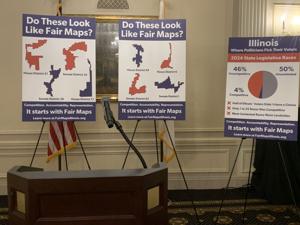
Plan launched to place redistricting amendment before voters in 2026

Rose G. (Crandall) Penrod
Casey Targets Two Dilapidated Properties for Remediation
Illinois GOP U.S. Senate candidates point to economy, Trump gains
Lawmaker criticizes $500 student board scholarships amid lowered K‑12 standards

Illinois news in brief: Work begins on $1.5 billion O’Hare expansion; Police catch man accused of road rage, shooting
Newsom files FOIA request on border patrol’s appearance
Soaring utility bills, solar federal tax credit cuts dominate Illinois energy debate

Illinois quick hits: Pritzker signs crypto regulations

Trucking industry leader: New law may drive business out of Illinois