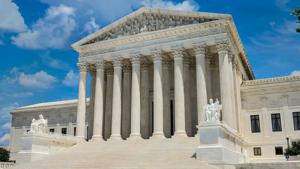
Supreme Court agrees to hear election law challenge
The U.S. Supreme Court agreed on Monday to hear a case challenging state laws that allow ballots to be counted if they are received after Election Day.
The case, Watson v. Republican National Committee, specifically challenges a law in Mississippi that allows mail-in ballots to be counted within five business days after an Election Day as long as the ballot is postmarked by an election’s date.
Thirty-one states and the District of Columbia also allow mail-in ballots to be received after Election Day as long as they are postmarked by that day. A decision in this case would set a precedent for other state election laws.
“The stakes are high: ballots cast by – but received after – election day can swing close races and change the course of the country,” lawyers for the RNC wrote in a petition to the court.
The lawyers argued federal law appoints the Tuesday after the first Monday in November as Election Day.
A federal judge in Mississippi denied the Republican National Committee’s initial challenge to its mail-in ballot counting statute. An appeals court later overturned the ruling and said all ballots must be counted by the federal Election Day.
Mississippi then appealed to the Supreme Court. A coalition of 19 states and the District of Columbia wrote in a petition urging the court to uphold state election laws.
“States have the constitutional authority to make individualized judgments on how best to receive and count votes in federal elections,” representatives for the state wrote.
The Supreme Court wrote a brief order that granted hearing of the case on Monday. Oral arguments will likely occur next year and a decision will be released in June.





Sunny
Latest News Stories

Human capabilities focused in student, teacher artificial intelligence guide

U.S. House to vote on bills targeting fraudulent, foreign election donations

Responses due in Virginia redistricting appeal

Illinois Republicans blame taxes, lawsuits after Morton Salt exits Chicago

Data center regulations weighed; some worry over jobs, energy, taxes

Illinois ranks 46th out of 50 states for financial transparency

Solutions differ for Chicago Public Schools’ potential $1B deficit

U.S. Supreme Court rules against trucking industry

Illinois Quick Hits: Dems look at Chicago for national conventions

Judge sets up high stakes baby formula NEC trial vs Mead Johnson

Offensive Explosion Powers Casey-Westfield to 20-12 Victory Over Newton

Illinois Quick Hits: Home insurance regulations approved by Illinois Senate