
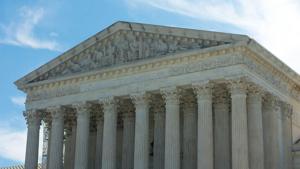
Supreme Court declines to hear same-sex marriage challenge
The U.S. Supreme Court declined a petition on Monday to hear a case aimed at overturning the legalization of same-sex marriage.
Kim Davis, a former Kentucky county clerk, filed a petition to the nation’s high court requesting it review Obergefell v. Hodges, the 2015 ruling that legalized same-sex marriage.
The case against Davis began when she denied a court order to issue same-sex marriage licenses after the Supreme Court’s decision in Obergefell v. Hodges. She also asked the court to reverse an order that required her to pay more than $300,000 to a couple whom she denied a marriage license.
In a legal filing to the court, lawyers for Davis argued that the legalization of same-sex marriage goes against the U.S. Constitution. The lawyers said the decision should be considered by each state individually.
“The damage done by Obergefell’s distortion of the Constitution is reason enough to overturn this opinion and reaffirm the rule of law and the proper role of this Court,” lawyers for Davis wrote in a petition to the court.
The court declined Davis’ request without explanation.



Mostly Sunny
Latest News Stories

Medical device manufacturer invests $110M to expand Nebraska plant, boost drug supply

Chicago council considers ‘not a tax’ surcharge on hotels

IL Senate GOP: Pritzker, not Trump, raised power bills

SC weighs whether Amazon must pay workers for mandatory COVID screenings

WATCH: Tax increase talk at Statehouse; Bost’s election lawsuit against Illinois wins standing

Illinois Quick Hits: Indiana governor ‘working hard’ to attract Bears
Vance’s tie-breaking vote tanks resolution restricting Venezuela military actions

Federal court upholds California congressional redistricting

Trump orders new mediation for New York rail contract dispute

U.S. House passes two more govt funding bills, sending to Senate

Governors seek delay on sharing cost of food stamp errors
Supreme Court ruling allows Bost to challenge Illinois election law

Illinois quick hits: Illinois auto insurance rates dropping
SCOTUS rules on warrantless searches, double convictions and election suits