
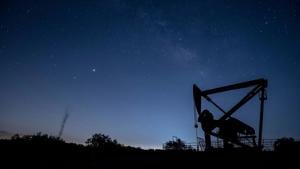
Revenues from energy production at $14.6B for 2025
Energy production on federal lands and waters and in U.S. tribal areas generated $14.61 billion in government revenues in the 2025 fiscal year, according to the Department of the Interior’s Office of Natural Resources Revenue.
Revenues generated from royalties, rents, and bonuses paid by energy and mineral producers are disbursed to a wide range of initiatives and programs, including those that support public infrastructure, education, emergency services, conservation and reclamation projects and historic preservation.
The amount represents the fifth-largest disbursement since 1982, according to the Interior Department.
The revenues were down from $16.45 billion in the 2024 fiscal year and $18.24 billion in the 2023 fiscal year. In the 2022 fiscal year, revenues reached a record-high $21.53 billion, according to the department.
A decrease in this year’s disbursements was mostly due to a drop in commodity prices, according to the department.
Just over $5 billion was disbursed to the Treasury Department, $4.07 billion was allocated to 34 states and $2.98 billion went to the Bureau of Reclamation, which builds and operates dams, power plants, canals and other water resources in the western U.S. About $1.0 billion went to tribes and individual Native American minerals owners during the 2025 fiscal year.
New Mexico received $2.76 billion, the highest amount of royalties from energy production on federal lands within its borders.
It was followed by Wyoming at $544.87 million, Louisiana at $162.42 million, North Dakota at $114.95 million and Texas at $99.83 million.
The revenues disbursed to 33 federally recognized tribes and approximately 31,000 individual Native American mineral owners represent 100% of the revenues received from energy and mining activities on tribal lands in the 2025 fiscal year, according to the Interior Department.
Tribes use the revenues to fund infrastructure development, provide health care and education and support other community programs such as senior centers, public safety projects and youth initiatives, according to the department.
Events
Latest News Stories

Bill blocks Federal Reserve members’ dual appointments
Lawmakers call for changes to cashless bail as Illinois faces federal funding loss

WATCH: House committee debates D.C. crime after Trump emergency order

Illinois quick hits: Unemployment down; Rivian supplier gets tax incentives

Pritzker’s office ‘extremely troubled’ by photo with suspect ‘peacekeeper’
Democrats’ CR could cost up to $1.4 trillion, add millions to Obamacare plans
Treasury goes after fentanyl-producing Sinaloa Cartel faction
Pritzker touts quantum future, state senator urges caution for taxpayers
Supreme Court sets oral arguments in tariff case
Dems release funding counterproposal full of partisan policy riders

Erika Kirk named CEO of Turning Point USA
Assembly leadership condemns violence, pleads for peaceful future