
Amid key holiday shopping season, some pick ‘pay later’ option
Early projections suggest Americans will spend more than $1 trillion over the holiday season, a crucial time for businesses, but not everyone is paying right away.
The National Retail Federation’s annual holiday forecast projects retail sales in November and December will grow between 3.7% and 4.2% above 2024. Total spending is estimated at between $1.01 trillion and $1.02 trillion.
Adobe for Business says “buy now, pay later” options are important for some consumers. Adobe forecasts $20.2 billion will be spent through this way from Nov. 1 through Dec. 31. That’s projected at 11% growth over 2024.
Klarna, a Swedish company that allows customers to pick interest-free payment plans and customizable payment options, said the season was off to a good start.
The flexible payments provider announced record Black Friday sales growth in the U.S. on Monday. The company said volume was up 45% year-over-year for Nov. 1 through Nov. 28.
“Growth has been seen across all categories, with footwear, technology, beauty and home goods performing particularly strongly as Americans made the most of Black Friday discounts,” the company reported.
Klarna reported strong gains for Birkenstock and Timberland in footwear. Apple AirPods 4 dominated as 2025’s top tech product.
In gaming, Sony’s new PS5 Slim and Pro models led the category, followed by Nintendo Switch 2. The luxury fragrance Baccarat Rouge 540 climbed to the No. 1 position, while Sabrina Carpenter’s Sweet Tooth perfume became the lone celebrity fragrance to break into the Top 10.
For home goods, the brand Ninja dominated while mattresses bounced from sixth place in 2024 to second in 2025.
Some Democrats are concerned about Klarna and other buy now, pay later companies, called BNLP.
U.S. Sens. Elizabeth Warren, D-Mass., Richard Blumenthal, D-Conn., Cory Booker, D-N.J., Tammy Duckworth, D-Ill., and Mazie Hirono, D-Hawaii, sent letters to seven major companies offering BNPL services ahead of the holidays. They asked for data to understand the risks and economic impact of BNPL products.
“BNPL loans are becoming increasingly common with consumers, with up to half of Americans having used a BNPL loan,” they wrote.
In a letter to Klarna and six similar companies, they warned of risks.
“BNPL loans are typically short-term loans that allow consumers to make a specific purchase and pay off the purchase in four payments,” they wrote. “If the consumer misses or is late on a payment, they can be charged fees. Often the consumer is required to authorize autopay to cover their payments. While these loans theoretically make it easier for consumers to smooth payment of large purchases, we are concerned that BNPL loans may also cause consumers to overextend themselves and take on additional, expensive debt.”
They noted that BNPL providers originated an estimated $24.2 billion of loans in the United States in 2021 and have only grown since then. The senators also noted that some consumers relied on BNPL to buy necessities.
“Consumers are depending on BNPL to pay for essentials such as groceries, healthcare, and to make payments on other forms of consumer debt, further demonstrating how intertwined BNPL loans have become in consumers’ financial lives,” they wrote.
The senators requested the companies provide answers to questions about their services by Dec. 9.
Events

Latest News Stories
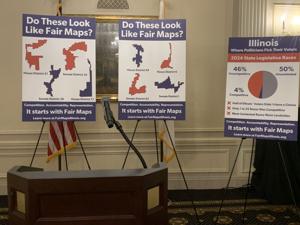
Plan launched to place redistricting amendment before voters in 2026

Rose G. (Crandall) Penrod
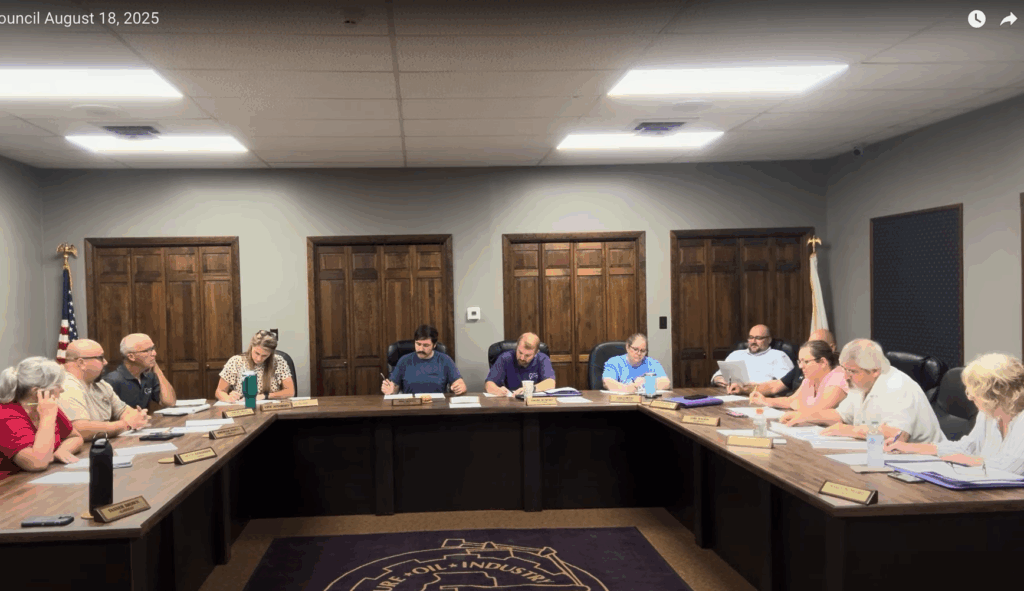
Casey Targets Two Dilapidated Properties for Remediation
Illinois GOP U.S. Senate candidates point to economy, Trump gains
Lawmaker criticizes $500 student board scholarships amid lowered K‑12 standards

Illinois news in brief: Work begins on $1.5 billion O’Hare expansion; Police catch man accused of road rage, shooting
Newsom files FOIA request on border patrol’s appearance
Soaring utility bills, solar federal tax credit cuts dominate Illinois energy debate

Illinois quick hits: Pritzker signs crypto regulations

Trucking industry leader: New law may drive business out of Illinois

DEA targets drug smuggling corridors in work with Mexico

Planned restart of California oil production faces legal challenges