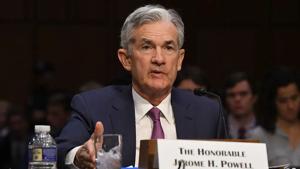
Everyday Economics: A divided Fed heads into a critical data week
The Federal Reserve cut interest rates again last week, lowering the target range for the federal funds rate by 25 basis points to 3½–3¾ percent. The decision reflects a growing concern about downside risks to the labor market, even as inflation remains above the Fed’s 2% target.
A closer look at the Summary of Economic Projections (SEP) helps explain why the decision was far from unanimous. While the median projection for the unemployment rate is essentially unchanged from September, inflation in 2026 is now expected to be modestly lower than previously thought. The median projection for the fed funds rate path, however, was left unchanged relative to the September SEP.
What did change meaningfully was the degree of disagreement within the Committee.
At the December meeting, three policymakers dissented from the 25-basis-point cut – Austan Goolsbee and Jeffrey Schmid favored no change, while Stephen Miran argued for a larger 50-basis-point cut. That marks a notable increase in dissent from September, when only one participant dissented, also in favor of a larger cut.
The growing split is also visible in the Fed’s “dot plot.” The range of projections for the appropriate level of the federal funds rate at the end of 2026 widened to 175 basis points, up from 125 basis points in the September SEP. That wider dispersion signals rising disagreement over how quickly – and how far – policy should ease once inflation is clearly on a path back toward target.
Why the Fed Is Increasingly Split
The source of the division is straightforward: inflation is still too high, but the labor market is becoming harder to read.
Inflation has moved up modestly this year and remains elevated, according to the Fed’s own assessment, but there is limited evidence so far of a persistent re-acceleration. At the same time, the labor market appears to be losing momentum. Job gains slowed earlier this year, and the unemployment rate edged higher through September. Since then, a lack of official data – caused by the government shutdown – has increased uncertainty around current conditions.
That uncertainty puts more weight on the data arriving this week.
The Week Ahead: Jobs and Inflation Take Center Stage
This week brings two critical releases: the November jobs report and the November Consumer Price Index (CPI).
Private-sector indicators suggest further cooling in the labor market. ADP and Revelio Labs both point to a decline in employment in November, while Gusto reports that hiring among small businesses was flat over the month. Combined with ongoing declines in federal government employment, these signals raise the risk that overall job growth has stalled – and may now be turning negative – potentially resulting in a higher unemployment rate.
On inflation, the CPI report is expected to show continued pressure in goods prices and healthcare costs. However, housing inflation remains a key offset. Measures of shelter inflation have been steadily easing, reflecting a deceleration in market rents over recent months.
According to Zillow’s forecasts, Rent of Primary Residence inflation is expected to end the year up 3.0% year over year, before slowing sharply to 1.6% in 2026. In September, that measure was running at 3.4%. Owner’s Equivalent Rent (OER) is expected to end the year up 3.6%, down from 3.8% in September, and to decelerate further to 2.6% in 2026.
That continued cooling in housing inflation should help limit upside surprises in core CPI, even if other categories remain firm.
Why It Matters
The Fed’s December decision makes clear that policymakers are now navigating a narrower and more uncertain path. Inflation is still above target, but the balance of risks has shifted. With demand cooling, housing inflation easing, and labor-market momentum fading, the cost of keeping policy too tight for too long is rising.
This week’s jobs and CPI reports will go a long way toward determining whether December’s cut proves to be a cautious adjustment or the beginning of a more sustained easing cycle.






Partly Sunny then Isolated Rain Showers
Latest News Stories

Meeting Summary and Briefs: City of Casey City Council for March 16, 2026

U.S.-Israel-Iranian conflict escalating global energy, supply chain crisis

Casey-Westfield Completes Wild Walk-Off Comeback to Edge Teutopolis 16-15

Trump endorses Hilton in California gubernatorial primary

Feds award $1M for Rose Bowl upgrade ahead of Olympics

Trump defends Section 122 in latest tariff legal challenge
Education department rescinds Title IX resolution agreements

Illinois gun owners plan rally in wake of Supreme Court order

Artemis II mission breaks records Monday as astronauts observe far side of the moon
Illinois quick hits: Illinois House speaker’s son to attend private school; AFSCME workers set strike date at Illinois State University; IDOT urges public to avoid distracted driving
Federal-state showdown looms over regulation of prediction markets

No-knock warrant legislation brings Chicago victim, Illinois gun group together