Senators weigh American privacy risks in FBI Investigations
The Senate Judiciary Committee heard testimony on Wednesday to consider the reauthorization of a surveillance tool that has improperly collected citizens’ private conversations.
The Foreign Intelligence Surveillance Act was first established by Congress in 1978 to mitigate foreign terrorist threats.
Section 702, established in 2008 to amend FISA, only permits the targeting of non-U.S. citizens for surveillance purposes and does not require a warrant. However, accusations of civilians’ privacy being invaded by the FBI have continued.
“It appears that Americans don’t care for that any more than they did at the time of the British controlling this country,” said Sen. Dick Durbin, D-Ill. “It appears that people want to know, ‘By what right are you doing this to me?’ And that is a legitimate question when it comes to questions of privacy.”
U.S. Sen. Mike Lee, R-Utah, said that issues regarding Section 702 have been repeatedly discussed with similar arguments being made without real progress in protecting U.S. citizens.
“The arguments go something like this: Yes, there have been problems in the past. Yes, there have been abuses of FISA 702, but you need not worry, because we now have procedures in place, administrative procedures, that will fix the problem once and for all. We now have to have even more layers of administrative approval within the agencies charged with administering this framework, and so you need not worry. What you ought to be worried about is another 9/11. What you ought to be worried about is that we are all going to die unless the US government has the ability to collect content of private communications involving US citizens without a warrant,” Lee said. “I find this rather troubling, because that’s that’s not what the Constitution sets up.”
Adam Klein, a professor at the University of Texas in Austin, argued that requiring warrants for queries, which are searches through government databases for information the government already collected, may delay investigations that could potentially prevent future terrorism. He also said American citizens could find comfort if queried, as they are not the subjects of investigation, despite their private conversations being observed by the FBI to investigate foreigners.
Sen. Josh Hawley, R-Mo, rebuffed this idea, arguing that just because U.S. citizens are not the primary targets of investigation does not mean their privacy was not improperly targeted and abused.
“The idea that we would renew 702 without some sort of reforms to protect U.S. citizens, I think, is just totally irresponsible,” Hawley said.





Partly Sunny
Latest News Stories

Trump administration resumes visa processing despite shutdown

Muslims in Virginia, New York face decades in prison for supporting Houthis, ISIS

Indian reservation focus of human smuggling probe at U.S.-Canada border
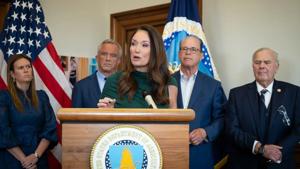
‘Temporary Band-Aid’: USDA able to cover 50% of November SNAP benefits

WATCH: Family, friends remember Bailey family at celebration of life

Duffy: We are going to go after the CDL mills

WATCH: Amid criticism, Pritzker defends using expletive to tell Trump where to go

Election integrity advocates urge reform after Illinois scores low in global survey

WATCH: Pritzker’s rhetoric criticized; tax amnesty program; status of Guard lawsuit
Trump predicts ‘ruination’ if Supreme Court rules against his tariffs

Illinois quick hits: Pritzker uses expletive with teachers union; Paprocki reacts to assisted suicide bill
Congressional Perks: House account spending jumped 21% in 2022