Chicago homelessness on rise; advocates push for change
(The Center Square) – Chicago Coalition to End Homelessness City Policy Manager M Nelson is looking to change the way city officials combat the issue as a new report authored by the organization highlights rising numbers of unhoused residents.
“One of our pieces of advocacy that we’ve worked on with partners over the last several years is to work to create a Chicago policy and a Chicago system that would create a Chicago-based resource to work on initiatives that could prevent and end homelessness,” Nelson told TCS. “Chicago would be able to determine its own definitions, its own flexibility and work with the people who are experiencing homelessness to determine what it is that they need and how we best as a community can work on that problem rather than being dictated by federal policy.”
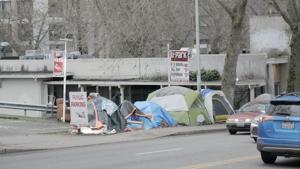
As part of their annual report, Coalition officials pegged 2024 homeless numbers at more than 58,000, outpacing the number of all such residents officially counted the city during its recent point-in-time tally three times over.
Nelson argues the widening discrepancy can largely be attributed to the methods used, with Coalition officials also counting such forms of homelessness as couch surfers and doubling-up, while point-in-time figures solely stem from the number of individuals found sleeping outside or in shelters on a night in January.
Nelson said it’s critical that authorities get as close as they can to accurate numbers because their point-in-time count is what’s used by lawmakers to create policy and allocate resources related to the issue.
“Anytime we’re trying to address any type of problem, we need to know what the problem is we’re actually dealing with,” he said. “The Department of Housing and Urban Development, which is the primary funder for homelessness services federally, really only considers people who are staying in shelter or outside in their resource allocations. Instead of just trying to identify or even blame individuals for their experiences of homelessness, we can understand the better trends and patterns that are causing homelessness.”
Nelson points out that blacks and other minorities are among those most impacted, with African Americans accounting for more than half of all those experiencing homelessness while comprising just one-third of the city’s overall population.
“One of the things that we see is that homelessness is very clearly an issue of racism,” he said. “We still are seeing increasing rates of homelessness amongst people who identify as black and African American and we can see how that overlaps with socioeconomic status, gentrification, how people are being pushed out of the city and lack of access to education.”
Nelson adds what he sees as the criminalization of the problem poses yet another issue.
“When we criminalize people that are experiencing homelessness, we’re ignoring the problem, we’re disappearing people rather than disappearing the problem,” he said. “It’s absolutely crucial that we continue to fight bans on sleeping outside and other ways that people that are experiencing homelessness are criminalized.”
Coalition data also shows as homelessness has continued to spiral across the area in 2024 the number of city housing units left vacant topped 109,000 structures.




Partly Sunny
Latest News Stories
Systematic organization behind riots in Minnesota probed by FBI

Malibu continues to rebuild one year after Palisades Fire

‘Promises kept’: American energy dominance has advanced in Trump’s first year
Illinois millionaire’s tax would direct 50% of revenue to public schools
Group seeks clarity on local IL governments using tax dollars for polling
Illinois congressmen call for accountability after fatal Minneapolis shooting
Kavanagh: Mayes must resign, her comments endanger ICE

Riots continue in Twin Cities
Former GOP lawmaker urges regulators to block potential Netflix-Warner Bros. merger
U.S. withdrawal from WHO completed over COVID-19 mishandling
Judge ends anti-ICE case, jumps into IL Dems’ bid to freeze ICE
U.S. Supreme Court to define decades-old consumer law