House GOP leaders face pushback from own members on funding bill
As the federal government enters its third day of a partial shutdown, House Republicans are bickering over Senate changes to the $1.2 trillion funding package, jeopardizing the upcoming vote.
The Senate-passed package includes five of the six remaining appropriations bills – funding State-Foreign Affairs, Financial Services, Defense, Labor-HHS-Education, and Transportation-HUD – and a short-term Continuing Resolution in place of the Homeland Security bill.
But that deal, brokered by Senate party leaders and the White House, received no input from either party in the House, and many lawmakers on both sides are taking issue with it.
The CR will freeze DHS funding at current levels for the next two weeks. During that time, lawmakers will restructure the House-passed Homeland Security bill to appease Democrats’ demands for immigration reform.
Those include barring agents from wearing masks, requiring body-worn cameras, and implementing stricter warrant requirements, among other changes.
Dozens of House Republicans, represented by the House Freedom Caucus, are vehemently rejecting such a plan, arguing it will cripple immigration enforcement efforts.
“We are not going to let Chuck Schumer defund Homeland Security to protect criminal illegal aliens,” the lawmakers said in a statement. “One way or another, we will make sure that ICE, Border Patrol, FEMA, TSA, Coast Guard, Secret Service, etc. get the funding they need.”
The planned changes to the Homeland Security bill are not the only Republican holdup, however.
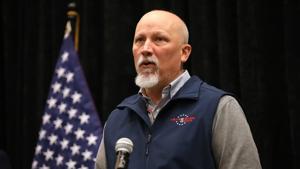
Republicans have a one-vote margin in the House, and three Republican House members – Reps. Anna Paulina Luna, R-Fla.; Tim Burchett, R-Tenn.; and Chip Roy, R-Texas; – are insisting that the appropriations bill include the SAVE Act.
The bill, widely popular with Republicans but decried by Democrats, would mandate voters present identification at the polls.
But if the SAVE Act amendment passes, the entire funding package would have to return to the Senate for approval. The legislation would be “dead on arrival,” Senate Majority Leader Chuck Schumer, D-N.Y., said.
“House Republicans shouldn’t let Schumer dictate the terms of government funding,” Burlison fired back Monday. “If Dems want to play games, no spending package should come out of the House without the SAVE Act attached—securing American elections must be a non-negotiable.”
Before the package can even make it to the House floor for a vote, the House Rules Committee must pass it. Republican leaders are hoping the committee can do so Monday night, enabling a vote as soon as Tuesday.
President Donald Trump said he supported the measure and didn’t want delays or changes.
“We need to get the Government open, and I hope all Republicans and Democrats will join me in supporting this Bill, and send it to my desk WITHOUT DELAY,” Trump wrote in a social media post. “There can be NO CHANGES at this time. We will work together in good faith to address the issues that have been raised, but we cannot have another long, pointless, and destructive Shutdown that will hurt our Country so badly — One that will not benefit Republicans or Democrats.”





Chance Showers And Thunderstorms
Latest News Stories

Energy affordability report ranks Illinois 31st, warns of ‘burdensome’ mandates
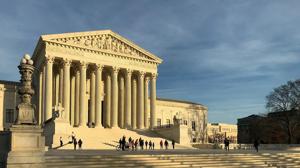
Illinois voices weigh in on birthright citizenship case

U.S. rep.: Mexico still not delivering water to South Texas, despite claims

Supporters say will storage option would streamline judicial process

Dallas Fed: Geopolitical conflicts creating uncertainty for U.S. oil and gas industry
Illinois Quick Hits: Pritzker pushes for E15

Clark County Ambulance Service Faces Critical Level Zero Instances Amid Medicaid Collection Issues

Trump addresses nation on Iran strikes; signals conflict nearing end

IL biometrics privacy reforms apply to past cases, too: Appeals court

Artemis II heads to the moon with first crewed mission since 1972

Pro-life org to Trump: Taxpayers should not be forced to fund killing of unborn children
Birthright citizenship advocates confident in SCOTUS hearing

College funding bill draws dissent from big Illinois universities