
Report says California’s bond debt load exceeds $99 billion
Amid a projected $18 billion budget shortfall for the 2026-27 fiscal year, the state is also dealing with $99.1 billion in bond debt, according to a new report.
The report released by the California Debt & Investment Advisory Commission shows that the state and local debt load sits at $99.1 billion, and long-term debt across the state makes up $90.1 billion. That debt load is up 11.6% over the five-year average, the report states, and is up 8.8% year-over-year.
“I always say the insidious thing about taking a loan out is that you’ve got to pay it back,” state Sen. Roger Niello, R-Roseville and vice chair of the Senate Budget and Fiscal Review Committee, told The Center Square on Monday. “I tend to be very conservative on that because of that fact that you have to pay it back. If there’s any part of today’s budget difficulties that are motivating us to go to the bond market to help pay for things that the general fund can’t, that’s a huge mistake.”
An additional $7 billion in debt has been proposed statewide, according to the report. Local governments in California, additionally, have taken on $71.3 billion in local debt. That is driven, in large part, by the energy sector, the report states.
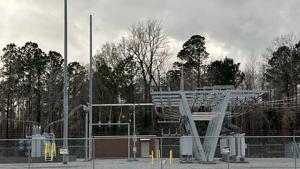
Electricity demand increased significantly between 2021 and 2024 in places where artificial intelligence data centers were built or expanded, according to the report. Debt issuance went up by 30% in that time, mostly to help pay for supporting electric systems, renewable energy projects and grid modernization.
Government-run joint power authorities that help supply energy to private electrical companies took on the most debt in that time period. Approximately 40% of the electricity consumed by private utility companies is purchased through these agencies, and those agencies are able to get tax-free bonds to help pay for increased electricity infrastructure to meet the higher demand generated by AI data centers, according to the report.
Those bonds essentially pre-paid renewable energy for customers of these agencies for the next 30 years, the report states.
“My first impression is that we’re kicking off our problems to the future,” said Wayne Winegarden, a senior fellow in business and economics at Pasadena-based Pacific Research Institute.
“We keep adding on more debt,” Winegarden told The Center Square on Monday. “In theory, some of the electric grid or power investments should be good, that’s what you use debt for.”
But Winegarden added bond money has to be invested in something that yields a higher return.
“And it certainly doesn’t seem like our investments have been doing that,” Winegarden told The Center Square. “When you take this growth in debt and combine it with the fact that we’re already very indebted, it’s really setting us up for long-term fiscal troubles.”
Lawmakers who sit on taxation and revenue-related committees told The Center Square Monday that despite the multi-year budget deficit and the increasing debt burden, it shouldn’t be residents of the state who ultimately pay the price of those bonds.
“I will avoid putting the burden on ratepayers and taxpayers,” Sen. Jerry McNerney, D-Stockton and chair of the Senate Revenue and Taxation Committee, told The Center Square. “If there’s going to be a burden, it should be placed on the people that are making the money on these data centers.”
In total, $25.7 billion were issued in bonds to joint power authorities, $21.2 billion were issued to publicly-owned utilities, while more than $4.57 billion worth of bonds were issued to other electricity supply programs.
Silicon Valley Power, a publicly-owned utility owned by the city of Santa Clara, is working on a system upgrade that the commission said will cost $450 million. The upgrade is necessary to meet the demand of data centers, among other users, the report said. The system upgrade will be done in 2028, according to the report.
Private utility companies like Pacific Gas & Electric, which utility industry experts refer to as investor-owned utilities, often don’t use bonds to pay for system upgrades and infrastructure projects. Because these companies pay for those projects with their own company revenues, no bond debt issuance to these companies was included in the report.
Officials with the California Debt & Investment Advisory Commission were unavailable to answer questions from The Center Square. Assemblymember Mike Gipson, D-Gardena and chair of the Assembly Revenue and Taxation Committee, was also unavailable.



Isolated Rain Showers
Latest News Stories
State attorneys general blame feds for rising gas prices, Trump admin pushes back

Union president: TSA workers want to be paid, not replaced by ICE

Illinois Quick Hits: DHS wants migrant charged with killing to remain in custody

IL U.S. Rep says health care crisis caused by failing to extend ACA tax credits

Judge declines CTU’s motion to dismiss financial audit lawsuit

Illinois pushes rate-hike protections forward despite consumer cost fears
Illinois bill aims to delay 2024 tax sales, protect homeowners’ equity

Illinois Quick Hits: Man on pretrial release charged with fireman’s murder

Casey-Westfield High School Students Secure Top Honors at Regional Academic Competitions

Comptroller, state lawmaker call for federal tax credit scholarships

Early Surge and Defensive Miscues Propel Casey-Westfield Past Centennial 11-1

Karras and Goble Lead the Way as Casey-Westfield Softball Downs Clifton Central 6-1
Power Surge and Goble’s Arm Lead Casey-Westfield Softball Past St. Anthony, 7-1

Marshall School Board Approves Adjusted 2025-26 Schedule, Sets 2026-27 Calendar