U.S. Supreme Court appears skeptical of drug user gun ban
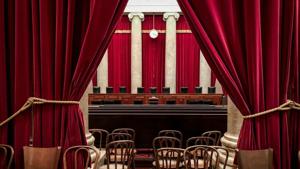
U.S. Supreme Court justices appeared skeptical during arguments on Monday over a law that disarms habitual drug users.
The case, U.S. v. Hemani, challenged a law that prohibits a person who “is an unlawful user of or addicted to any controlled substance” from possessing a firearm. The case centers on a Texas man who was charged with a felony when FBI agents found a pistol, marijuana and cocaine in his home after obtaining a search warrant, a petition to the court read.
The Trump administration petitioned the high court to hear the case after a lower court struck down the law barring people who use drugs such as marijuana from possessing firearms.
Lawyers for the U.S. government argued founding era laws against drunkards compel a similar standard to prohibit habitual drug users from possessing firearms. Sarah Harris, deputy solicitor general for the Department of Justice, said early 20th century drug use laws could be read similarly to founding era drunkard laws.
“Drugs are similar in the sense that there is a similar tradition by use of the intoxicants on a habitual basis,” Harris said.
Justices on the court appeared skeptical of Harris’ claim. Justice Neil Gorsuch argued that founding era laws against drunkards categorized the term drunkard very differently than what it is understood as in the modern era. He also questioned how the Trump administration defined a habitual user.
“The government has not been able to define what a user is,” Gorsuch said.
Justice Ketanji Brown Jackson appeared to agree with Gorsuch and further questioned the frequency of drug use in determining whether someone should be barred from possessing a firearm.
“Someone who only drinks or takes an intoxicant once every other day and is not doing so while he is using a firearm is irrelevant,” Jackson said. “The dangerous people at the founding were well beyond just one item every other day.”
Justice Amy Coney Barrett also agreed and posed a hypothetical question where an individual used a prescription drug that did not belong to them. She asked whether this law would disarm that individual.
Harris indicated that an individual could be disarmed if they regularly engage in using another person’s prescription. She also mentioned marijuana – the drug primarily at issue in the case – was under consideration by the government to be rescheduled to be included for research purposes, which would lessen the seriousness of this case.
Marijuana is a Schedule I drug under the Controlled Substances Act, a policy that deems the substance as having a high potential for abuse and no accepted medical use. Heroin is also considered a schedule I drug.
“The government has not made any final decisions for what to do with marijuana,” Harris said.
Justice Clarence Thomas questioned Harris’ reliance on the legal status of marijuana in making a determination in the case.
“You seem to rely quite a bit on the illegality of marijuana,” Thomas said.
Lawyers for Hemani further refuted the idea that drunkard standards could equate to the use of a controlled substance. Erin Murphy, a lawyer for Hemani, said drunkard laws had to be based on specific public displays of drunkenness before rights were taken away.
“The habitual drunkard tradition,” Murphy said, “cannot support disarming someone based on the fact he consumes a few times a week a controlled substance.”
Jackson questioned whether the law against drug users from possessing firearms meaningfully contributed to less overall violence.
“Congress’ purpose here to prevent dangerous people from having guns is not furthered by including this kind of person under this statute,” Jackson said.
The court is expected to decide the drug use gun possession case by July.



Partly Sunny
Latest News Stories
Meeting Summary and Briefs: Casey City Council for July 6, 2026
Grijalva, Butierez headed for rematch in congressional race

Biggs wins Arizona gubernatorial primary with 71.5% of vote
Trump endorsements score wins for Arizona candidates
Republicans advance bill to make Trump border policy permanent

Trump admin investigates five medical schools over DEI

Lawyer: Billionaire tax could cost California $1 trillion

Hegseth defends Trump’s request for $67B to fund Iran conflict
Official: Agreement could come soon on Colorado River
Trump gives boost to Lebanese relations; puts squeeze on Iran in the process
Illinois news in brief: State police use grant money to recover 342 stolen vehicles; State launches Blue Envelope program; Treasurer: State returned $307.8 million in I-CASH
Biden recordings case could head to U.S. Supreme Court