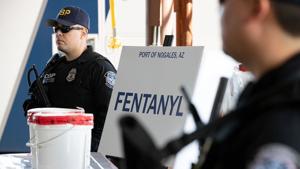
Coroners warn bill renaming fentanyl overdoses could distort death certificates
(The Center Square) – Illinois lawmakers want to rebrand fentanyl deaths as “poisoning” instead of “overdose,” but coroners say the change would force them to lie on death certificates.
Senate Bill 3014 would direct coroners and medical examiners to classify deaths involving fentanyl as “poisoning” instead of “overdose.” Under the bill, each fentanyl-related death would have to be reported separately to the Illinois Department of Public Health, and the department would be required to publish these fatalities distinctly in its monthly overdose reports, rather than grouping them with other drug overdoses.
The bill’s sponsor Sen. Sue Rezin, R- Morris, says the change is intended to reduce stigma and give families a more accurate way to describe the deaths of loved ones who unknowingly ingested fentanyl-laced substances.
“Too many angel families feel forced into silence because of the stigma surrounding… ‘overdose death,’” Rezin said. “This bill helps to elevate the conversation…and give families some peace in properly describing what happened to their loved ones, by renaming or reclassifying their death as a poisoning,” Rezin told The Center Square.
David Harris, coroner of Fayette County and president of the Illinois Coroners and Medical Examiners Association, called the proposal “basically lying.”
“If the tox report comes back fentanyl, it’s a fentanyl overdose, basically you’re not telling the truth on the death certificate [if you call it a ‘poisoning’],” Harris said.
Harris explained that while coroners can distinguish between intentional overdoses and cases where fentanyl is unknowingly ingested, the term “poisoning” could encompass a wide range of causes, chemical, environmental, or otherwise, making it misleading when applied to every fentanyl death.
Rezin emphasized that the bill could be implemented in a way that distinguishes between different types of fentanyl deaths.
“I do believe that there is a process that we can put into place that will allow for the proper classification in certain circumstances as overdoses,” said Rezin. “For instance, somebody has an Adderall pill laced with fentanyl—and the student dies from it. These stories are common, and I’m happy to work with the coroners to put language in place that distinguishes between the two examples.”
Harris framed the bill as a semantic adjustment, but one with serious implications for accuracy.
“I believe the family doesn’t want to see in the ‘contributing factors’ that it [the death] was caused by an overdose. We don’t have that problem in my area, but maybe in some larger cities, they don’t want that on the death certificate for some reason, whether it’s life insurance or something else,” said Harris.
Peoria County coroner Jamie Harwood said the proposed bill would force coroners to report deaths in a way that conflicts with their professional standards. With nearly 30 years in critical care and nine years as coroner, Harwood emphasized the oath coroners take to ensure “justice and integrity” in every death investigation.
“Here in Peoria County, when our forensic pathologist determines a cause of death based on toxicology for a presumptive overdose, she lists every drug that contributed, such as heroin and fentanyl, as an intoxication. It’s not a poisoning – it’s an intoxication,” said Harwood. “Whatever is on the forensic autopsy is what we are required to put in line A of the death certificate. Anything that isn’t consistent with that is counterintuitive and simply not correct. I stand with the association in opposition.”
Harwood noted that there is currently no uniform standard across Illinois for labeling overdose deaths. Each coroner may follow slightly different practices depending on the forensic pathologist’s report.






Chance Showers And Thunderstorms
Latest News Stories

Clark County Audit Reveals Strong Financials, $20M in Expenditures for FY 2024

Illinois quick hits: DHS responds to migrant release order

As Trump considers rolling back some tariffs, trade groups want in

New Mexico attempts to counter Trump’s deportation agenda

WATCH: Newly released Epstein emails discussing Trump ‘prove nothing,’ says Leavitt

Pritzker disagrees with Durbin on vote to end shutdown

Pritzker open to conversation with Trump on alderman’s immigration proposal

Foundation Receives One of its Largest Gifts of all Time

Expert: Illinois’ outdated tax law leaves homeowners, taxpayers on the hook

Illinois quick hits: Midway Blitz nabs nine drunk drivers; Madigan prosecutor to depart
Lawmakers divided after federal complaint targets student mental health screening law

Normal, IL fire and EMS challenges highlight need for statewide task force