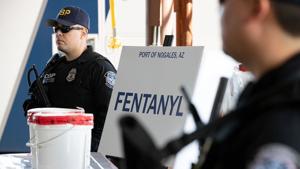
Coroners warn bill renaming fentanyl overdoses could distort death certificates
(The Center Square) – Illinois lawmakers want to rebrand fentanyl deaths as “poisoning” instead of “overdose,” but coroners say the change would force them to lie on death certificates.
Senate Bill 3014 would direct coroners and medical examiners to classify deaths involving fentanyl as “poisoning” instead of “overdose.” Under the bill, each fentanyl-related death would have to be reported separately to the Illinois Department of Public Health, and the department would be required to publish these fatalities distinctly in its monthly overdose reports, rather than grouping them with other drug overdoses.
The bill’s sponsor Sen. Sue Rezin, R- Morris, says the change is intended to reduce stigma and give families a more accurate way to describe the deaths of loved ones who unknowingly ingested fentanyl-laced substances.
“Too many angel families feel forced into silence because of the stigma surrounding… ‘overdose death,’” Rezin said. “This bill helps to elevate the conversation…and give families some peace in properly describing what happened to their loved ones, by renaming or reclassifying their death as a poisoning,” Rezin told The Center Square.
David Harris, coroner of Fayette County and president of the Illinois Coroners and Medical Examiners Association, called the proposal “basically lying.”
“If the tox report comes back fentanyl, it’s a fentanyl overdose, basically you’re not telling the truth on the death certificate [if you call it a ‘poisoning’],” Harris said.
Harris explained that while coroners can distinguish between intentional overdoses and cases where fentanyl is unknowingly ingested, the term “poisoning” could encompass a wide range of causes, chemical, environmental, or otherwise, making it misleading when applied to every fentanyl death.
Rezin emphasized that the bill could be implemented in a way that distinguishes between different types of fentanyl deaths.
“I do believe that there is a process that we can put into place that will allow for the proper classification in certain circumstances as overdoses,” said Rezin. “For instance, somebody has an Adderall pill laced with fentanyl—and the student dies from it. These stories are common, and I’m happy to work with the coroners to put language in place that distinguishes between the two examples.”
Harris framed the bill as a semantic adjustment, but one with serious implications for accuracy.
“I believe the family doesn’t want to see in the ‘contributing factors’ that it [the death] was caused by an overdose. We don’t have that problem in my area, but maybe in some larger cities, they don’t want that on the death certificate for some reason, whether it’s life insurance or something else,” said Harris.
Peoria County coroner Jamie Harwood said the proposed bill would force coroners to report deaths in a way that conflicts with their professional standards. With nearly 30 years in critical care and nine years as coroner, Harwood emphasized the oath coroners take to ensure “justice and integrity” in every death investigation.
“Here in Peoria County, when our forensic pathologist determines a cause of death based on toxicology for a presumptive overdose, she lists every drug that contributed, such as heroin and fentanyl, as an intoxication. It’s not a poisoning – it’s an intoxication,” said Harwood. “Whatever is on the forensic autopsy is what we are required to put in line A of the death certificate. Anything that isn’t consistent with that is counterintuitive and simply not correct. I stand with the association in opposition.”
Harwood noted that there is currently no uniform standard across Illinois for labeling overdose deaths. Each coroner may follow slightly different practices depending on the forensic pathologist’s report.






Clear
Latest News Stories

Summer 2025 Graduates Announed

Meeting Summary and Briefs: Lake Land College Board of Trustees for August 18, 2025

Department of Energy returning $13B climate agenda funding to taxpayers
Trump directs war secretary to send troops to Portland to protect ICE

Trump says he won’t back down on Antifa terrorism designation

Exclusive: DOJ ‘weaponization’ victim still in jail, asking for Trump pardon
Champaign stabbing raises concerns over Illinois mental-health law

Lake Land College Invests Over $360,000 in Allied Health Program Technology

Colorado tops nation for millennial migration, report finds
Congress unmoved by imminent government shutdown threat

Illinois quick hits: DHS apprehends ICE protester with firearm; bill allows campaign funds for security
Exclusive: BlackRock pressured ‘woke’ ideology on companies

Trump’s tariffs on imported drugs could raise prices

Lawmaker responds to IL’s push for adult COVID shots against CDC guidance