
Arizona, others back birthright citizenship in amicus brief
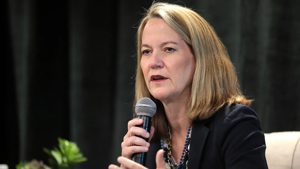
Arizona Attorney General Kris Mayes joined her fellow Democratic attorneys general from 22 other states and the District of Columbia in filing an amicus brief in support of birthright citizenship.
The brief was filed in the Trump v. Barbara case the U.S. Supreme Court is reviewing. President Donald Trump signed an executive order last year that banned birthright citizenship, which allows kids born in America to become citizens regardless of their parents’ immigration status.
“The Fourteenth Amendment has always excluded from birthright citizenship persons who were born in the United States but not ‘subject to the jurisdiction thereof,’ ” the executive order said.
According to Mayes, the 14th Amendment is “crystal clear: If you are born in the United States, you are an American citizen.
“President Trump does not have the power to change that with the stroke of a pen — no matter what he thinks,” she said.
“I will always fight to protect the constitutional rights of every child born in Arizona, and I’m proud to stand with my fellow attorneys general in defense of the constitutional principles our nation has upheld for over 150 years,” the attorney general added.
In the brief, the attorneys general noted birthright citizenship dates back centuries and that the Supreme Court has upheld it in previous cases.
They also worried about how children would be affected if the Supreme Court ruled in Trump’s favor.
“It is difficult to overstate the devastating impacts of the Order,” the amicus brief said about the president’s executive order. “It profoundly harms the States, and it threatens to create a new and vulnerable underclass of children across the country. It does so by flagrantly violating the Citizenship Clause and INA [the Immigration and Nationality Act] alike.”
In addition to Arizona, the brief was filed by attorneys general from New Jersey, Washington state, Massachusetts and California, who co-led the amicus brief, as well as attorneys general from Colorado, Connecticut, Delaware, the District of Columbia, Hawaii, Illinois, Maine, Maryland, Michigan, Minnesota, Nevada, New Mexico, New York, North Carolina, Oregon, Rhode Island, Vermont, Virginia and Wisconsin. City Attorney David Chiu of San Francisco is also among those filing the amicus brief.
Jeremy Beck, co-president of the immigration nonprofit NumbersUSA, told The Center Square this week that the Supreme Court has “never ruled directly” on the birthright citizenship question, noting the closest the court came to doing that was in the 1898 case United States v. Wong Kim Ark.
Beck said the Supreme Court ruled a child born to Chinese parents who were lawful permanent residents was a citizen at birth.
He noted the 14th Amendment was not supposed to be “a universal policy.”
Birthright citizenship has nothing to do with “protecting the enfranchisement of foundational Black Americans,” Beck explained.
Birthright citizenship is a “subversion of the system, and it doesn’t honor the letter of the intent of the 14th Amendment,” according to Beck.
Beck said the 14th Amendment was not meant to apply to “anyone standing on U.S. soil.”
As an example, Beck said the 14th Amendment doesn’t apply to the children of foreign diplomats.
Beck stated NumbersUSA thinks birthright citizenship is a “matter of federal statute” rather than the 14th Amendment.
Birthright citizenship has turned into an “international industry where people pay sometimes big money to come and take a vacation to America and then get a green card for their child who can then one day vote in U.S. elections and sponsor extended family members to come and join them here,” Beck noted.
He highlighted that America and Canada are the only “developed nations in the world” that allow birthright citizenship.
“It’s a rare policy. It’s really not compatible with modern travel or society,” Beck explained.
The Center for Immigration Studies released a report last year showing that an estimated 225,000 to 250,000 babies were born to illegal immigrants in 2023, which accounted for almost 7% of all American births.
Furthermore, CIS found that in 2023, an estimated 70,000 people on temporary visas in America gave birth.
CIS also estimated that another 33,000 women who are on a tourist visa give birth in America annually.
According to Beck, NumbersUSA supported Trump’s executive order banning birthright citizenship and “expects a positive ruling from the Supreme Court.
He said if the court rules against the executive orders, NumbersUSA believes “it’s Congress’ responsibility to set the record straight.”




Sunny
Latest News Stories

Illinois Gov. Pritzker signs assisted suicide bill

Hochul weighs AI regulations as Trump sets federal rules

EXCLUSIVE: First Nation police chiefs want to participate in border security efforts
Justice Department sues Fulton County over election records

USPS electric fleet push sparks cost, security and job concerns

WATCH: Use of Guard debated; Trump singles out Pritzker on AI; Property tax ruling

Illinois quick hits: Chicago Fed president explains vote; Treasurer encourages Bright Start gifts

EXCLUSIVE: Canadian groups, First Nation police support stronger border security

More than 9,500 commercial truckers taken off U.S. roads nationwide

WATCH: ‘Unfortunate accident’: Miss. senator blasted for comment on Guard troop shootings
WATCH: House Homeland Security hearing filled with tense exchanges

Judge rules against Trump’s freeze on wind energy

