Casey Council Implements Municipal Grocery Tax to Replace State Levy
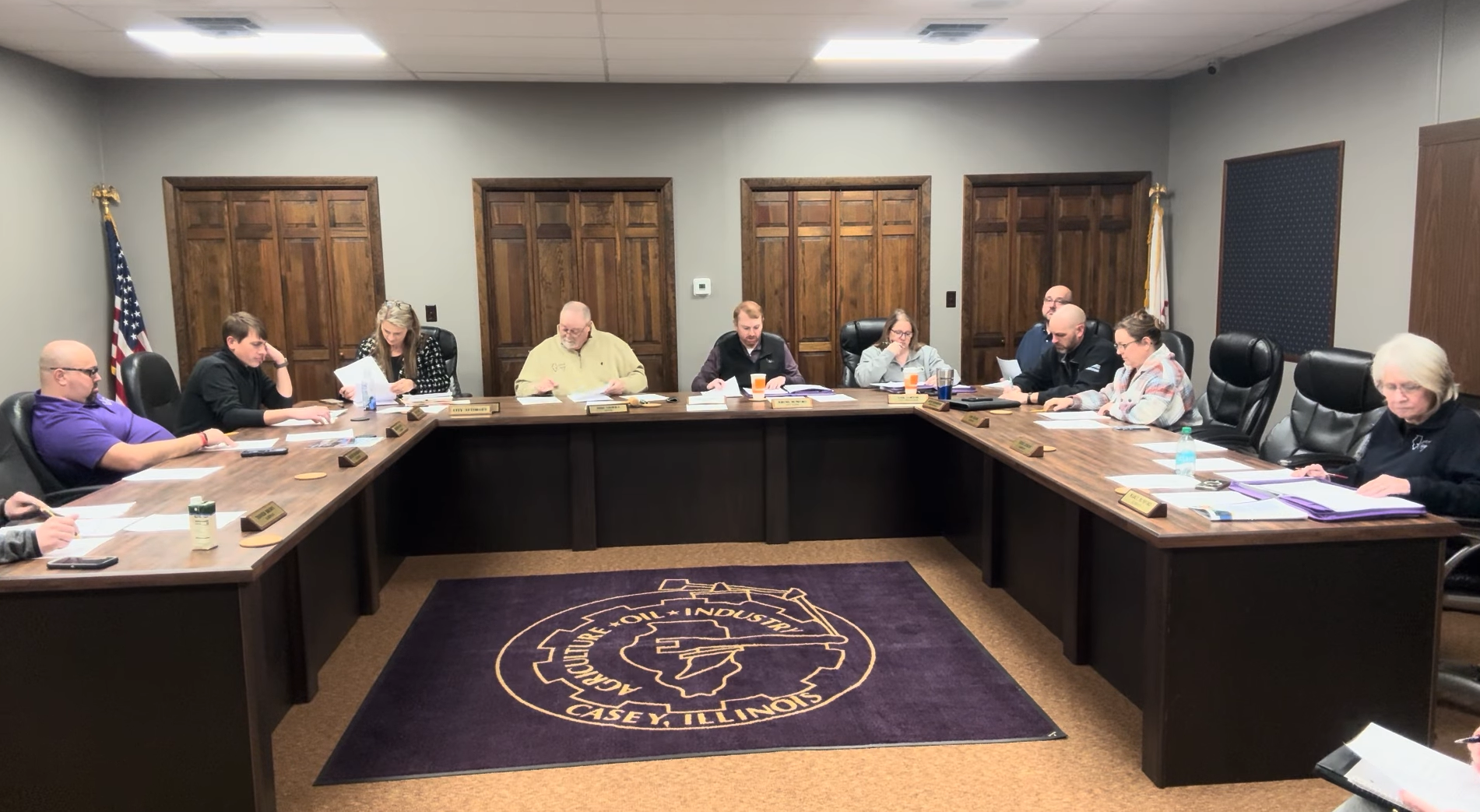
Casey City Council Meeting | March 2, 2026
Article Summary: The Casey City Council voted to implement a 1% Municipal Grocery Retailers’ Occupation Tax to replace the grocery tax recently eliminated by the State of Illinois. The new tax will take effect on July 1, 2026, with revenue directed to the city’s corporate fund.
Grocery Tax Ordinance Key Points:
-
Tax Rate: A 1% tax on gross receipts from the sale of groceries.
-
Reasoning: The State of Illinois eliminated the state-level 1% grocery tax and authorized municipalities to implement their own to recapture the revenue.
-
Effective Date: July 1, 2026.
-
Vote Result: Passed in a 3-1 split vote.
The Casey City Council on Monday, March 2, 2026, approved Ordinance #610, establishing a local tax on grocery sales to maintain revenue levels following changes in state legislation.
Mayor Mike Nichols introduced the measure, explaining that the State of Illinois had stopped the collection of the 1% food tax as of January 1, 2026, but provided municipalities the authority to create their own ordinance to keep that 1% revenue stream intact.
“The state just passed it on to the municipalities and said, ‘You guys do it yourselves instead of through the state,'” Nichols told the Council. He noted that while the city had not initially discussed the tax because Casey lacks a large chain grocery store, the tax applies to grocery products sold at other retailers, such as convenience stores and butcher shops.
According to the ordinance included in the agenda packet, the tax applies to “all persons engaged in the business of selling groceries at retail in the municipality.”
During discussion, Alderman Tanner Brown asked for clarification on where the generated funds would be allocated. Nichols confirmed the revenue would go into the corporate fund, which supports general city operations including the police department.
“I don’t anticipate it being much, but still, if it’s enough to help with some things through corporate… it’s not adding more. It’s picking up what [was there],” Nichols said.
The Council discussed the timeline for implementation. The Ordinance Committee reported that because the January 1 deadline was missed, the tax cannot go into effect until July 1, 2026.
The measure passed in a split 3-1 vote. Aldermen Jeremiah Hanley, Marcy Mumford, and Lori Wilson voted in favor. Alderman Tanner Brown voted against the measure. Aldermen Steve Jenkins and Carlene Richardson were absent.
Sunny
Latest News Stories

‘I don’t have anything to negotiate:’ Johnson holds firm on GOP shutdown strategy

Analyst points to inefficiencies as Pritzker touts record spending on infrastructure
Federal judge blocks cuts in anti-terror funding to NYC transit

Businesses seek more time to address ‘diverging interests’ in tariff challenge
Israel-Hamas peace deal in limbo as clock ticks away on deadline
Trimming the fat: Trump boasts of shuttering government agencies amid shutdown

Trump freezes $18 billion in NYC infrastructure over DEI policies

Illinois quick hits: DHS announces more than 800 illegals arrested; utility prices drop slightly

WATCH: Officials shift shutdown blame; agreed-bill process upended; GOP offers solutions
Critics: Democrat Senators supporting “Democracy’ amendment would curtail free speech

LA skyscrapers for homeless could cost federal taxpayers over $1 billion

Fall 2025 Enrollment Reaches Highest Level in Many Years